
TL;DR

Get business pricing on office and shipping supplies
- Business-only prices and quantity discounts
- Tax-exempt purchasing
- Multiple users, one account, clear invoices
Anthropic’s $65B Series H isn’t just a valuation milestone—it’s a capacity bet. The company is pouring money into massive compute infrastructure, signaling that hardware is now the main hurdle between AI’s potential and its reality.
Imagine a startup raising nearly a trillion dollars. It sounds like a bubble, right? But what if this isn’t just about bragging rights or inflated valuations? What if it’s a clear sign that the real race in AI now hinges on one thing: compute power.
Anthropic’s latest $65 billion round isn’t just a record-smashing headline. It reveals a deeper story about where AI’s future is headed — towards building massive, powerful infrastructure to run models like Claude at scale. In this article, I’ll walk you through what this means for AI’s landscape, why compute is the real prize, and what you should be watching next.
$965B and climbing — it’s really a compute bet
The viral headline is the valuation. The interesting story is in the press release’s middle paragraphs — and in three chipmakers Anthropic just named as strategic partners. This is a capacity round dressed as a funding round.
The numbers nobody can quite parse in sequence
Read together they describe a trajectory with no precedent in enterprise software. Read individually, each looks like a typo.
From $61.5B to $965B in fourteen months
Salesforce took roughly two decades to reach revenue numbers Anthropic just blew past. The sequence below is the part most coverage skips — it’s not the size, it’s the shape.
Anthropic’s valuation ladder · Mar 2025 → May 2026
Five rounds, fourteen months. Bar height is the valuation; the climb itself is the story. Tap any milestone for context.
The multiple actually got cheaper
Bubbles look like multiples expanding while revenue lags. Anthropic’s pattern is the inverse — the valuation tripled, but revenue grew faster, and the multiple compressed.
Revenue-to-valuation multiple · Series G → Series H
Same company, three months apart. The denominator (revenue) is outrunning the numerator (valuation) — exactly the opposite of what a bubble narrative predicts.
10+ gigawatts and three chipmakers
When you name Micron, Samsung & SK hynix alongside your equity backers, you’re saying the binding constraint isn’t demand or model quality — it’s the physical supply of memory chips. The Series H is a capacity round.
Compute commitments backing Anthropic’s capacity bet
$200B+ in announced compute spend across multi-year contracts. The $65B Series H raise has to be read against that bill, not against operating losses.
A genuinely durable bet — or a structural exposure?
Both readings can be true at once. The answer arrives over the next 18–24 months as the gigawatts come online and either fill with paying demand or don’t.
Revenue growth has no precedent in B2B software ($1B → $47B in 17 months). The multiple is compressing, not expanding. Claude is the only frontier model on all 3 major clouds. Enterprise AI spend share went from ~10% to >65% in a year. Compute commitments are tied to specific contracts with capacity dates.
20× revenue is not cheap by any historical software-investing standard. Revenue is reported gross of cloud-reseller pass-throughs, which inflates the top line. Profitability is 2 years out. Amodei’s own warning: a 12-month delay in AI progress “would make him bankrupt” — the compute commitments are a structural exposure to demand persistence.
The valuation race — and the IPO context
Anthropic shipped Opus 4.8 the same morning as Series H — not a coincidence. One week after OpenAI filed confidentially for IPO. The late-2026 frame is set: two frontier AI companies racing to public markets, each pitching durability.
Key Takeaways
- Anthropic’s $65 billion raise is primarily a massive investment in compute infrastructure, not just a valuation milestone.
- Revenue is growing faster than valuation, compressing the multiple and signaling a focus on scaling capacity.
- Strategic partnerships with chipmakers and commitments of thousands of GPUs are central to this capacity race.
- The real competition now revolves around building the hardware backbone for frontier AI models, not just developing new algorithms.
- AI’s future depends heavily on how quickly and cheaply companies can scale compute — this round underscores that shift.
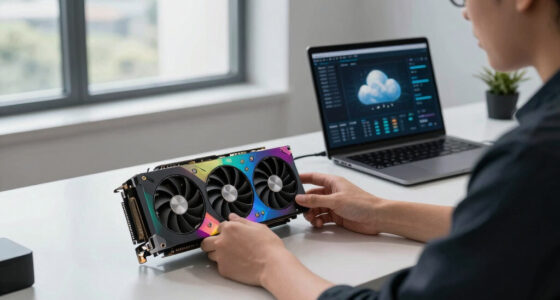
AI compute infrastructure hardware
As an affiliate, we earn on qualifying purchases.
As an affiliate, we earn on qualifying purchases.
Why a $965B valuation is really a compute investment, not a hype headline
When Anthropic announced its $65 billion Series H at a $965 billion valuation, many saw just another tech bubble milestone. But scratch beneath the surface, and it’s clear that this is about much more than numbers. It’s a massive commitment to expanding compute capacity — the engine behind AI growth.
Think of it like building a highway system for AI models. The more powerful and widespread the roads, the faster and bigger your AI can go. Anthropic is pouring cash into GPUs, data centers, and infrastructure partnerships to make that highway ready. This move signals that the real bottleneck isn’t just talent or data — it’s hardware.
Why does this matter? Because hardware limitations directly impact how quickly and efficiently AI models can be trained and deployed. If a company can’t access enough GPUs, it’s like trying to build a skyscraper without enough cranes — progress stalls. By investing heavily in infrastructure, Anthropic aims to remove these bottlenecks, enabling faster innovation and larger models that can handle complex tasks like natural language understanding at unprecedented scales. This shift from purely algorithmic improvements to hardware capacity reflects a strategic focus on the fundamental limits of AI development, and it indicates where the industry is heading: towards infrastructure dominance.

high performance GPU for AI training
As an affiliate, we earn on qualifying purchases.
As an affiliate, we earn on qualifying purchases.
How Anthropic’s revenue is exploding — and what it means for the valuation
Here’s the crazy part. Anthropic’s revenue shot from around $9 billion at the end of 2025 to over $30 billion in early April 2026. That’s a 3.3x jump in just a few months. And some reports suggest the company’s run-rate revenue could surpass $50 billion by mid-year.
This rapid growth makes its valuation look less like a bubble and more like a reflection of real, accelerating demand. Yet, the valuation soared while the revenue grew faster, pushing the multiple down from about 27x at Series G to roughly 20.5x now. That’s a sign that investors see this as a capacity play — they want the infrastructure to handle future growth, not just a quick profit.
Why does this matter? Because it indicates a shift in investor mindset. Instead of valuing AI companies solely based on current revenue or profit, investors are now looking at potential capacity — how much hardware can be built and scaled to meet future demand. This means the company’s valuation is increasingly tied to its ability to deploy massive models quickly, highlighting the importance of infrastructure in the AI economy. It’s akin to investing in a power grid before the demand for electricity skyrockets; the value isn’t just in the current usage but in the capacity to support future needs.

As an affiliate, we earn on qualifying purchases.
The real story: a capacity round dressed as a funding round
This isn’t just about raising money for product development. It’s a capacity round — a strategic move to dominate compute infrastructure. Anthropic named three chipmakers — Micron, Samsung, and SK hynix — as partners. They committed over 10 gigawatts of compute power, enough to support thousands of large models running in parallel.
Picture thousands of data centers humming with high-powered GPUs, each costing millions. The goal? To meet skyrocketing demand for Claude, especially as enterprises rush to deploy AI at scale. This is about locking in the hardware supply chain and building a moat around the infrastructure needed for the next wave of AI innovation.
Why is this important? Because in the AI hardware game, control over supply chains and hardware capacity can determine who leads in scalable AI deployment. For example, if a company secures exclusive access to a new generation of chips or data center resources, it gains a competitive edge that is hard for others to match. This strategic focus on infrastructure is a recognition that future AI breakthroughs will depend as much on hardware as on algorithms. It’s essentially a race to build the backbone of AI, where the winners will be those who can supply the most compute at the lowest cost and fastest speed.

As an affiliate, we earn on qualifying purchases.
Compare Anthropic with OpenAI: Why the multiples matter less now
| Metric | Anthropic | OpenAI |
|---|---|---|
| Valuation | $965B | $852B (March 2026) |
| Run-rate Revenue | $47B | about $13B |
| Multiple on Revenue | 20.5x | ~65x |
Despite surpassing OpenAI in valuation, Anthropic’s multiple on revenue is significantly lower. This indicates that investors are valuing the company’s future capacity and infrastructure potential more than just its current revenue. It’s akin to investing in a power company not just for its current sales but for its ability to expand and meet future energy demands. This lower multiple suggests a strategic shift: the focus is moving from hype-driven valuations to tangible infrastructure scaling, which is critical for supporting the next generation of AI models that require immense compute resources.

Where is all the money going? GPUs, safety, or acquisitions?
Anthropic’s press release makes it clear: most of the capital will go into expanding compute capacity. Think of thousands of high-end GPUs powering Claude and future models. But a chunk will also fund safety research and interpretability work — critical for making AI safer and more transparent.
Investments in hardware like custom chips and data centers aren’t just about capacity; they are about ensuring that AI can scale reliably and securely. For example, deploying AI at a national or enterprise level requires not only raw compute but also robust safety protocols and interpretability tools to prevent harmful outcomes. Funds allocated to safety research serve as a safeguard, ensuring that as models grow larger and more powerful, they remain aligned with human values and remain understandable. This balanced approach underscores that infrastructure isn’t just about speed but also about responsible AI deployment, which is essential for public trust and widespread adoption.

What this means for AI’s future — faster models, bigger deployments, more safety
With this level of investment, we can expect larger models, more enterprise deployments, and faster iteration cycles. Claude could become a ubiquitous tool across industries, from healthcare to finance, powered by a robust hardware backbone.
Moreover, the focus on safety and interpretability funding signals a recognition that as models become more capable, ensuring their alignment with human values becomes equally critical. For instance, a healthcare AI assisting in diagnostics must be both fast and transparent to gain trust. This infrastructure enables not only rapid development but also safer AI systems that can be audited and explained, reducing risks of errors or misuse. The tradeoff here is clear: faster, larger models can unlock tremendous benefits, but they require parallel investments in safety to prevent unintended consequences. This holistic approach aims to balance innovation with responsibility, shaping a future where AI is both powerful and trustworthy.

What should you watch next? The infrastructure arms race
The key takeaway? The AI race is shifting from just building smarter models to building smarter hardware. Companies like Anthropic, OpenAI, and Google are investing heavily in GPU supply chains, custom chips, and data centers.
Watch how the chipmakers and cloud providers respond — this is where the next battleground lies. The winner? The one who can supply the most compute at the lowest cost, fastest. This arms race isn’t just about technology; it’s about strategic control over the infrastructure that will power AI for years to come. For example, securing exclusive deals with chip manufacturers or developing proprietary hardware could create significant barriers to entry for competitors, much like how a dominant oil company might control critical pipelines. The implications are profound: the companies that master this hardware game will shape the future landscape of AI innovation and deployment, making the infrastructure the ultimate strategic asset.
Frequently Asked Questions
Why is Anthropic raising so much money now?
Anthropic is investing heavily in expanding compute capacity to meet skyrocketing demand for Claude and future models. The funds will secure hardware supply, support safety research, and accelerate large-scale deployment.
Is this more about infrastructure or product growth?
It’s primarily a capacity and infrastructure bet. While product growth is happening rapidly, the core driver behind this round is ensuring the hardware can keep up with demand for massive models.
How does this compare to OpenAI’s valuation?
Anthropic now surpasses OpenAI in valuation, but its valuation multiple on revenue is lower. This signals a shift from hype to real infrastructure scaling, focusing on building the hardware backbone for AI’s future.
Where will most of the money go?
Most funds will go into GPUs, data centers, and hardware partnerships to expand compute capacity. Some will also support safety research to ensure AI remains trustworthy as it scales.
Is this a sign of an AI bubble?
Not necessarily. The focus on infrastructure suggests a strategic move to address real bottlenecks. It’s less about inflated valuations and more about securing the hardware needed for AI’s next phase.
Conclusion
This isn’t just a big number — it’s a bold statement. The future of AI isn’t just about smarter models, but about building the infrastructure to run them at scale. For investors, startups, and giants alike, the real race is now in hardware, not just code.
Keep an eye on chipmakers, data centers, and GPU supply. That’s where the next big leaps in AI will happen — and where the real value will be built.

Halloween Picks
halloween
As an affiliate, we earn on qualifying purchases.