
📊 Full opportunity report: Software-Defined Warfare: How Ukraine’s Delta Turned the Battlefield Into a Shared, Real-Time Map on ThorstenMeyerAI.com — validation score, market gap, and execution plan.
TL;DR
Ukraine has deployed Delta, a cloud-native, browser-based battlefield management system, enabling real-time data fusion across units. This shift exemplifies software-defined warfare, emphasizing data and software over hardware. Its success could reshape military operations globally.
Ukraine’s military has confirmed the deployment of Delta, a cloud-native, browser-based battlefield management system designed to fuse real-time intelligence from diverse sources. This innovative system significantly enhances Ukraine’s combat coordination and situational awareness, representing a major shift toward software-defined warfare that other militaries are now studying.
Delta was developed through a collaboration involving Ukraine’s NGO Aerorozvidka, the Defense Ministry’s Digital Transformation Ministry, and a defense innovation center. It integrates inputs from drones, satellites, sensors, and civilian reports, geolocates and maps enemy assets in real time, and facilitates command and control through a simple web browser accessible on common devices like phones and laptops. Unlike traditional military systems, Delta runs on a cloud backend hosted outside Ukraine to mitigate cyber and missile threats, ensuring resilience and operational continuity.
Ukraine’s Defense Ministry claims Delta helped identify approximately 1,500 enemy targets daily during the early counteroffensive near Kyiv. The system shortens the decision loop by linking reconnaissance, identification, and response into a rapid cycle, enabling dispersed units to act swiftly. The approach reflects a broader move away from hardware-dependent systems towards flexible, software-driven military operations, inspired by NATO interoperability principles established in 2017.
Software-defined warfare: how Ukraine’s Delta turned the battlefield into a shared, real-time map
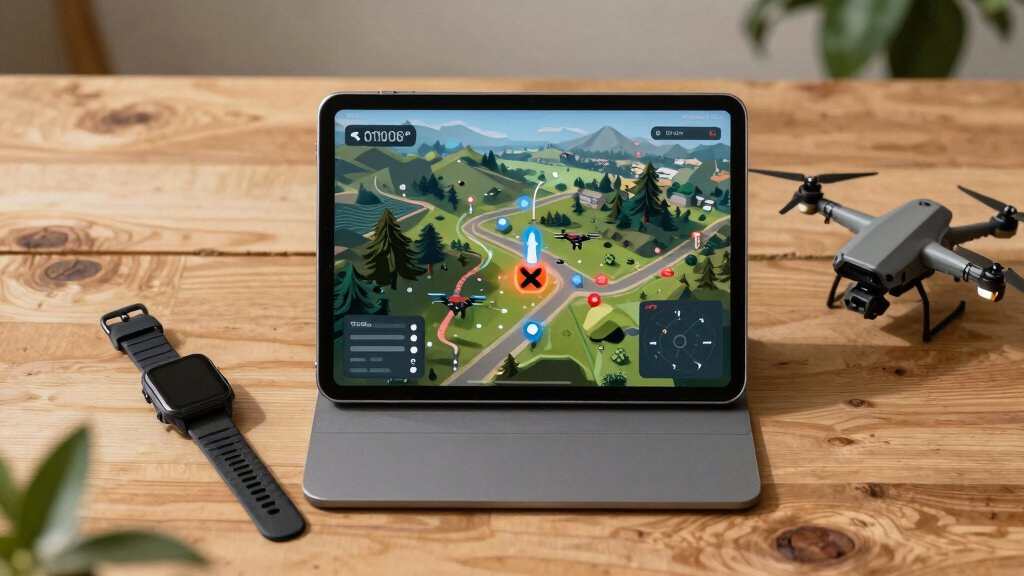
A soldier opens a browser and sees the fused war — drones, satellites, sensors and vetted reports on one live map. The backend is a cloud deliberately hosted abroad so a missile can’t take it down. The clearest case yet of treating warfare as software.
Optical sensors go blind in cloud & dark; an all-weather SAR radar layer — the kind VigilSAR produces — slots into a picture like this as one resilient, sovereign input. vigilsar.com · And note the paradox: to survive missiles & cyberattack, Ukraine hosted its crown-jewel cloud outside its own borders — trading physical sovereignty for operational survivability. Resilience through distribution.
Delta’s lasting lesson isn’t a piece of software — it’s a model of how to build: commodity clients, cloud backend, open standards, relentless iteration, fusion over hardware, and resilience through distribution. It’s why a wartime NGO out-shipped procurement bureaucracies on a fraction of the budget. The platform mattered less than the picture — and the picture is software. Own the fusion layer, own the sovereign feeds into it, and get it to the edge.
Impact of Cloud-Based, Software-Driven Military Systems
Delta’s deployment demonstrates a shift in military technology, prioritizing data, software, and rapid iteration over traditional hardware platforms. Its cloud-based architecture and browser accessibility allow wider dissemination of situational awareness, potentially enabling frontline troops to operate with greater independence and coordination. This approach enhances resilience against cyber and physical attacks, while also reducing costs and procurement delays. As other nations observe Ukraine’s success, Delta could influence future military software development and battlefield management strategies worldwide.
real-time battlefield mapping software
As an affiliate, we earn on qualifying purchases.
As an affiliate, we earn on qualifying purchases.
Evolution Toward Software-Defined Warfare
The concept of software-defined warfare traces back to a 2017 NATO initiative aimed at breaking down information silos inherited from Soviet-era systems. Ukraine’s Delta system embodies this evolution, moving away from bespoke, hardware-locked systems to an agile, software-centric model. The collaboration among NGOs, government agencies, and defense tech firms reflects a startup-like operational tempo, enabling rapid development and deployment that traditional military procurement often cannot match. This model emphasizes interoperability, fusion, and resilience, aligning with NATO standards and modern combat requirements.
“Delta is a game-changer. It shortens the decision cycle, giving our troops real-time, fused intelligence directly on their devices.”
— Mykhailo Fedorov, Ukraine’s Digital Transformation Minister

The Fourth Star: Four Generals and the Epic Struggle for the Future of the United States Army
As an affiliate, we earn on qualifying purchases.
As an affiliate, we earn on qualifying purchases.
Unverified Claims and Operational Security Limits
While Ukraine reports that Delta identified 1,500 targets daily, these figures are self-reported and lack independent verification. Details about the precise integration with drone operations and the system’s full capabilities remain classified. The extent of its deployment across different units and its performance in varied combat scenarios are still emerging.

Police Drone & Pilot Detection Kit– Handheld Drone Detection & Tracking Tool | Real-Time Alerts for Law Enforcement, Event Security & Emergency Response | Portable Airspace Awareness Device
- Real-Time Drone Detection: Detects drones via remote ID signals instantly
- Portable & Compact Design: Handheld, lightweight, and easy to carry
- Immediate Threat Alerts: Provides real-time drone presence notifications
As an affiliate, we earn on qualifying purchases.
As an affiliate, we earn on qualifying purchases.
Next Steps for Delta’s Development and Adoption
Ukraine plans to expand Delta’s deployment and refine its capabilities, including integrating additional sensor feeds and enhancing user interfaces. International interest in software-defined warfare is likely to grow, prompting other countries to explore similar models. Monitoring how Delta performs in ongoing combat and its influence on NATO and allied military doctrines will be crucial in the coming months.

Satellite Remote Sensing for Archaeology
As an affiliate, we earn on qualifying purchases.
As an affiliate, we earn on qualifying purchases.
Key Questions
How does Delta differ from traditional military systems?
Delta runs on a cloud backend and is accessible via standard web browsers, unlike traditional systems that rely on proprietary hardware and isolated networks. It emphasizes data fusion, rapid updates, and operational flexibility.
What are the security implications of hosting Delta’s cloud outside Ukraine?
Hosting the cloud externally enhances resilience against cyberattacks and missile strikes, but raises questions about sovereignty and data security. Ukraine has prioritized operational security while balancing these risks.
Can other countries adopt similar systems?
Yes, the modular, software-centric approach demonstrated by Delta offers a blueprint for modernizing military command and control, and other nations are studying its architecture and operational model.
What limitations does Delta currently face?
Details about its full operational capabilities, integration with other systems, and performance in diverse combat conditions remain classified or unverified. Its scalability and adaptability are still being tested.
Will Delta influence future NATO military strategies?
Potentially. Its emphasis on interoperability, rapid data fusion, and resilience aligns with NATO’s evolving doctrines, and Ukraine’s success could accelerate adoption of similar software-defined systems across allied forces.
Source: ThorstenMeyerAI.com