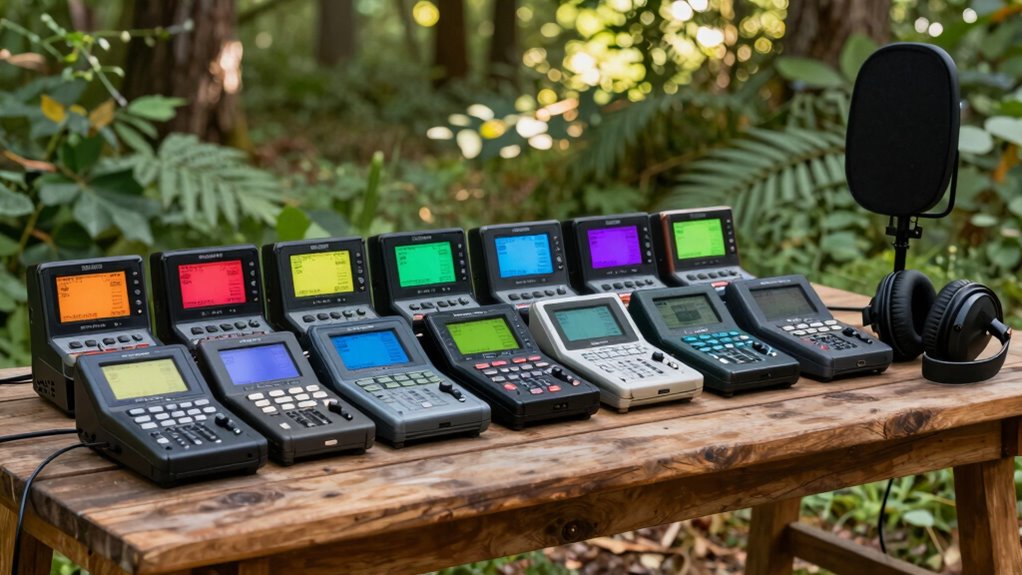
When it comes to capturing high-quality audio in the field, choosing the right multichannel recorder is essential. The best models offer reliable performance, versatile inputs, and durable build quality, but tradeoffs often involve complexity, size, and price. The Zoom F3 stands out for its 32-bit float recording, making it ideal for unpredictable environments. The Sound Devices MixPre-6 II offers professional-grade features for those who need top-tier sound quality and expandability. Meanwhile, the Zoom H6 provides a flexible, user-friendly experience suitable for a range of users. Keep reading for a detailed breakdown of these options and what factors matter most in your decision.

Get business pricing on office and shipping supplies
- Business-only prices and quantity discounts
- Tax-exempt purchasing
- Multiple users, one account, clear invoices
Key Takeaways
- The Zoom F3 excels in dynamic environments thanks to 32-bit float recording, reducing the need for precise gain staging.
- The Sound Devices MixPre-6 II offers superior build quality and professional features, making it the best choice for serious field recording professionals.
- The Zoom H6 provides a versatile, all-in-one solution with multiple interchangeable microphones, suitable for varied field scenarios.
- Budget constraints influence the choice; models like the Tascam DP-006 offer basic multi-track recording at a lower cost but lack advanced features.
- Ease of use varies: simpler units are better for beginners, but advanced features often come with steeper learning curves and higher prices.
| Zoom F3 Professional Field Recorder with 32-bit Float Recording and Accessories |  | Best Overall for Professional-Grade Field Recording | Recording Resolution: 192kHz/32-bit WAV | Inputs: 2 XLR/TRS with locking connectors | Storage: Supports microSD cards up to 1TB | VIEW ON AMAZON | See Our Full Breakdown |
| Zoom H6 Handy Recorder Bundle with Podcast Mic, Headphones, and Accessories |  | Best for Versatile Field and Studio Use | Recorder Type: Handheld | Microphone Capsule: Modular Capsule System 3.0 | Number of Tracks: 8 | VIEW ON AMAZON | See Our Full Breakdown |
| Tascam DP-006 6-Track Digital Pocketstudio Multi-Track Audio Recorder |  | Best Compact Choice for Music Creators | Tracks: 6 | Recording Quality: 16bit/44.1kHz | Built-in Microphones: 2 omni-directional condenser microphones | VIEW ON AMAZON | See Our Full Breakdown |
| Zoom H5 Handy Recorder for Filmmakers & Musicians |  | Best for Filmmakers and Musicians Needing Interchangeable Capsules | Compatible Devices: Laptop | Hardware Interface: USB | Microphone Form Factor: Built-In | VIEW ON AMAZON | See Our Full Breakdown |
| Zoom H6 Handy Recorder Bundle with Microphones and Accessories |  | Best for Multi-Track Professional Field Recording | Microphone Capsules: Interchangeable Capsule System 3.0 | Number of Tracks: Up to 8 | Preamps: F-Series, ultra-low-noise, 132 dB dynamic range | VIEW ON AMAZON | See Our Full Breakdown |
| Sound Devices MixPre-6 II Portable 32-Bit Float Multichannel Audio Recorder and USB Interface |  | Best Overall for Professional Field and Studio Use | Microphone Preamps: 4 Kashmir preamps | Bit Depth: 16 to 32-bit float | Sampling Rate: 44.1 kHz to 192 kHz | VIEW ON AMAZON | See Our Full Breakdown |
| Zoom H6 All Black 6-Track Portable Recorder with Microphones and SD Card Recording |  | Best for Versatile, On-the-Go Recording and Content Creators | Number of Inputs: 4 XLR/TRS | Microphone Operation Mode: Stereo | Memory Storage Capacity: 128 GB | VIEW ON AMAZON | See Our Full Breakdown |
| Zoom R4 Multi-Track Recorder for Musicians with 2 XLR/TRS Combo Inputs, 32-Bit Float, Built-In Microphone, Effects, Rhythms, Battery Powered, USB Audio Interface |  | Best for Musicians and Creative Jammers on the Move | Inputs: 2 XLR/TRS | Bit Depth: 32-bit float | Built-in Microphone: Yes | VIEW ON AMAZON | See Our Full Breakdown |
| multichannel audio recorders for field work | Inputs |
|---|---|
| Zoom F3 Professional Field Rec | 2 XLR/TRS with locking connectors |
| Zoom H6 Handy Recorder Bundle | 4 XLR/TRS combo, stereo microphone capsule |
| Tascam DP-006 6-Track Digital | — |
| Zoom H5 Handy Recorder for Fil | — |
| Zoom H6 Handy Recorder Bundle | 4 XLR/TRS combo with +48V phantom power |
| Sound Devices MixPre-6 II Port | — |
| Zoom H6 All Black 6-Track Port | — |
| Zoom R4 Multi-Track Recorder f | 2 XLR/TRS |
More Details on Our Top Picks
Zoom F3 Professional Field Recorder with 32-bit Float Recording and Accessories
The Zoom F3 stands out for its ability to capture ultra-high-quality audio through 32-bit float recording, making it ideal for professionals who need maximum flexibility and clarity. Compared to the Zoom H6, which offers modular input options, the F3’s advantage lies in its professional-grade preamps and high-resolution recording up to 192kHz. However, its bulkier size and complex microSD management may challenge less experienced users. This recorder’s dual XLR/TRS inputs with locking connectors and long battery life make it suitable for demanding environments, especially when portability isn’t the top priority. It excels in situations requiring maximum audio fidelity, though some may find its setup more involved.
Pros:- High-quality 32-bit float recording for professional clarity
- Dual XLR/TRS inputs with locking connectors ensure secure connections
- Long battery life with rechargeable AA batteries supports extended shoots
- Expandable storage via microSD up to 1TB allows for large projects
Cons:- Requires understanding of professional audio equipment, which may be daunting for novices
- Bulkier design compared to handheld recorders like the H5 or H6
- MicroSD card management can be complex for less experienced users
Best for: Professional field recordists needing high-resolution, versatile, and reliable audio capture in varied environments
Not ideal for: Beginners or casual users seeking a simple, lightweight recorder without extensive technical setup
- Recording Resolution:192kHz/32-bit WAV
- Inputs:2 XLR/TRS with locking connectors
- Storage:Supports microSD cards up to 1TB
- Battery Life:Over 8 hours on 4 AA rechargeable batteries
- Included Accessories:4 AA rechargeable batteries, charger, microfiber cloth, XLR cable, 64GB microSD card, headphones
Our verdict“This pick is best suited for seasoned professionals who prioritize top-tier audio quality and flexible inputs in their field work.”
Zoom H6 Handy Recorder Bundle with Podcast Mic, Headphones, and Accessories
The Zoom H6 excels in delivering flexible, multi-microphone setups with its modular capsule system and 32-bit float technology, making it a top choice for versatile recording needs. Unlike the Zoom F3, which is more suited for professional field recordings, the H6’s modular design offers greater adaptability for multi-mic configurations, ideal for podcasting, live events, or music. Its multiple inputs, including phantom power, support a wide range of microphones, but its setup can be complex for beginners. The included accessories and portable design make it a strong contender for those who need both field and studio versatility in one device. Still, its bulk and learning curve may deter less experienced users.
Pros:- Modular capsule system allows for customized microphone configurations
- Supports four-track simultaneous recording with phantom power
- 32-bit float recording prevents distortion even in loud environments
- Includes comprehensive accessories for immediate use
Cons:- Setup complexity may be challenging for beginners
- Bulkier than simpler handheld recorders like the H5
- Additional investment needed for diverse microphone capsules
Best for: Podcasters, musicians, or field recordists needing flexible, multi-mic recording in dynamic environments
Not ideal for: Users seeking a straightforward, simple recorder without extensive microphone options or setup complexity
- Recorder Type:Handheld
- Microphone Capsule:Modular Capsule System 3.0
- Number of Tracks:8
- Inputs:4 XLR/TRS combo, stereo microphone capsule
- Phantom Power:Yes (+48V)
- Memory:2× 64GB microSDXC cards
Our verdict“This device suits those who need adaptable, multi-mic recording capability combined with professional-grade audio quality.”
Tascam DP-006 6-Track Digital Pocketstudio Multi-Track Audio Recorder
The Tascam DP-006 offers a compact, portable solution for musicians and songwriters, providing six tracks of CD-quality recording. Its built-in microphones simplify setup, making it ideal for quick demos or on-the-go songwriting sessions. When compared with multi-input options like the Zoom H6, the DP-006’s simplicity is appealing, though it limits external microphone flexibility and only supports 16-bit/44.1kHz quality, less suitable for professional field recordings. Its straightforward interface allows easy operation, but the lower recording resolution and lack of external mic input options are tradeoffs for portability and ease of use.
Pros:- Portable and battery-powered, ideal for mobile recording
- Supports six tracks and simultaneous playback
- Built-in microphones simplify quick setup
- Supports CD-quality (16bit/44.1kHz) recording
Cons:- Limited to lower 16-bit/44.1kHz resolution, less suitable for professional work
- No external microphone input options
- Learning curve for users new to multi-track recording
Best for: Musicians and songwriters seeking a lightweight, easy-to-operate device for basic multi-track recording
Not ideal for: Field recordists or professionals needing high-resolution, external microphone support or advanced features
- Tracks:6
- Recording Quality:16bit/44.1kHz
- Built-in Microphones:2 omni-directional condenser microphones
- Simultaneous Recording:2 tracks
- Supported Playback:6 tracks
- Dedicated Master Track:Yes
Our verdict“This device is best for musicians needing a simple, portable multi-track recorder for demos and songwriting, not for high-end field recording.”
Zoom H5 Handy Recorder for Filmmakers & Musicians
The Zoom H5 offers high versatility through its interchangeable input capsules, including a detachable X/Y microphone, making it a flexible tool for filmmakers and musicians. It supports four-track simultaneous recording and records directly onto SD/SDHC cards, similar in function to the Zoom H6, but with a more compact and lightweight design. Its ability to connect to computers via USB extends its use as an audio interface. However, the H5’s limited 32GB SD card capacity and reliance on batteries may restrict long recording sessions. Its array of features can be overwhelming for newcomers, but experienced users will appreciate its adaptability for multiple recording scenarios.
Pros:- Interchangeable input capsules for versatile recording setups
- Supports four-track simultaneous recording
- Compact, lightweight design ideal for field work
- Functions as a USB audio interface for computer recording
Cons:- Limited to 32GB SD card capacity, restricting recording time
- Requires 2 AA batteries, which may need frequent replacement
- Feature set may be complex for newcomers
Best for: Filmmakers and musicians who need quick, interchangeable microphone options and portable multi-track recording
Not ideal for: Beginners or those seeking a simple, single-mic recorder without complex features
- Compatible Devices:Laptop
- Hardware Interface:USB
- Microphone Form Factor:Built-In
- Format:WAV
- Headphones Jack:3.5 mm
- Digital Recording Time:10 hours
Our verdict“This recorder is best suited for professionals needing flexible, portable recording options with quick-mic swaps.”
Zoom H6 Handy Recorder Bundle with Microphones and Accessories
The Zoom H6 provides a comprehensive multi-track recording platform with professional-grade 32-bit float technology and expandable modular capsules, making it well-suited for demanding field work. Its support for up to 8 tracks with high-quality preamps surpasses many competitors, including the Zoom F3, which is more focused on single or dual-channel recordings. The H6’s ability to function as a USB audio interface enhances its versatility, although its extensive feature set and multiple accessories may be overwhelming for those just starting out. Battery life could be limited during extended outdoor sessions, but its overall flexibility makes it a top choice for serious field recordists who need multi-mic setups and high fidelity.
Pros:- High-quality 32-bit float recording prevents distortion
- Expandable capsule system for versatile microphone configurations
- Supports up to 8 tracks with professional preamps
- Acts as a USB audio interface for computer recording
Cons:- Complex interface may require some learning curve
- Bulkier setup with multiple accessories included
- Battery life may be limited during lengthy outdoor recordings
Best for: Musicians, podcasters, and professional field recorders needing multi-track, high-quality, expandable recording options
Not ideal for: Casual users or beginners seeking a straightforward, plug-and-play device without extensive features or setup
- Microphone Capsules:Interchangeable Capsule System 3.0
- Number of Tracks:Up to 8
- Preamps:F-Series, ultra-low-noise, 132 dB dynamic range
- Inputs:4 XLR/TRS combo with +48V phantom power
- Memory:2× 64GB microSDXC cards
- Batteries:4× AA batteries included
Our verdict“This device is ideal for professionals needing multi-mic, high-fidelity recording with expansion capabilities in challenging environments.”
Sound Devices MixPre-6 II Portable 32-Bit Float Multichannel Audio Recorder and USB Interface
The Sound Devices MixPre-6 II stands out for its combination of professional-grade quality and versatile connectivity, making it the most capable option for those who need high-fidelity multichannel recording in the field or studio. Its four Kashmir preamps deliver exceptionally low noise, which is a step above the more consumer-focused Zoom H6, especially when capturing delicate sounds or quiet environments. The support for 16 to 32-bit float recording at up to 192 kHz ensures maximum dynamic range and flexibility in post-production. The built-in 6 x 2 mixer and multiple I/O options make it suitable for complex setups, while its lightweight, durable design supports mobility. However, this level of sophistication means it can be daunting for beginners and may carry a higher price tag. Compared to the Zoom R4, it offers more professional features but at the cost of simplicity. This pick makes the most sense for professionals or advanced users who prioritize audio quality and extensive connectivity over ease of use, accepting a steeper learning curve.
Pros:- Exceptional Kashmir preamps with very low noise floor
- Supports flexible 16-32 bit float recording at high sampling rates
- Built-in portable mixer with multiple I/O options
- Lightweight and rugged for demanding environments
Cons:- Complex interface may be overwhelming for newcomers
- Higher price point may be prohibitive for casual users
Best for: Professional field recordists, filmmakers, or studio engineers needing top-tier multichannel audio
Not ideal for: Beginners or casual users who prefer simple, plug-and-play solutions without extensive setup
- Microphone Preamps:4 Kashmir preamps
- Bit Depth:16 to 32-bit float
- Sampling Rate:44.1 kHz to 192 kHz
- Mixer Channels:6 x 2
- USB Interface:8-in, 4-out USB-C
- Timecode Generator:Internal LTC
Our verdict“This device is best for experienced professionals who need high-quality, flexible multichannel recording in demanding environments.”
Zoom H6 All Black 6-Track Portable Recorder with Microphones and SD Card Recording
The Zoom H6 is a flexible choice for those who need reliable multichannel recording in a portable package, especially for musicians, podcasters, or journalists. Its four interchangeable mic/line inputs provide adaptability for different recording scenarios, making it more versatile than the Zoom R4, which is limited to two inputs. The large LCD and gain controls make operation straightforward, and its long battery life ensures extended sessions without power concerns. While it offers high-quality 24-bit/96kHz recording, it doesn’t match the higher bit-depth and sampling rates of the MixPre-6 II, limiting its suitability for critical post-production work. The absence of a headphone jack may inconvenience some users, and its bulkier size compared to pocket-sized recorders like the R4 makes portability a consideration. Overall, this makes the most sense for content creators who prioritize ease of use and flexibility over the utmost technical specifications.Pros:- Interchangeable mic/line inputs for versatile setups
- Long battery life suitable for extended use
- Large LCD display with intuitive gain controls
- Reliable recording at 24-bit/96kHz
Cons:- No dedicated headphone jack for real-time monitoring
- Relatively bulky compared to pocket recorders
- Uses 4 AA batteries which may require frequent replacement
Best for: Field journalists, podcasters, or musicians needing a portable, all-in-one recording solution
Not ideal for: Users requiring the highest possible audio fidelity or compact size for discreet recordings
- Number of Inputs:4 XLR/TRS
- Microphone Operation Mode:Stereo
- Memory Storage Capacity:128 GB
- Battery Type:4 AA batteries
- Battery Life:20 hours
- Format:WAV
Our verdict“This recorder is ideal for creators needing a flexible, portable device that balances quality and ease of operation.”
Zoom R4 Multi-Track Recorder for Musicians with 2 XLR/TRS Combo Inputs, 32-Bit Float, Built-In Microphone, Effects, Rhythms, Battery Powered, USB Audio Interface
The Zoom R4 offers a creative edge with its built-in effects, drum patterns, and flexible recording features tailored for musicians and hobbyists. Its 32-bit float recording capability allows for forgiving levels, similar to the MixPre-6 II, but with only two inputs, it falls short of multichannel demand for larger setups. The inclusion of a built-in microphone and effects makes it a compact all-in-one device for spontaneous songwriting or practice sessions, and its USB interface functionality supports quick sharing or multi-tracking. However, the limited input count can be restrictive for complex field recordings, and battery life can vary depending on usage intensity. Compared to the Zoom H6, the R4 excels in portability and creative features but sacrifices some input flexibility. This makes it better suited for small-scale projects, creative experiments, or solo performers who don’t need extensive inputs.Pros:- 32-bit float recording for high dynamic range and forgiving levels
- Built-in microphone and effects for quick demos
- Battery and USB-C power options for portability
- Over 80 drum patterns for creative layering
Cons:- Limited to 2 inputs, restricting multi-source recording
- Learning curve for beginners due to multiple features
- Battery life can be inconsistent with intensive use
Best for: Musicians, songwriters, or content creators requiring portable multi-track recording with creative options
Not ideal for: Professional field recordists or those needing many simultaneous inputs for complex soundscapes
- Inputs:2 XLR/TRS
- Bit Depth:32-bit float
- Built-in Microphone:Yes
- Drum Patterns:Over 80
- Power:4 AA batteries or USB-C
- Functions:Recorder, interface, effects
Our verdict“This device is best for musicians and creative users who want a portable, feature-rich recorder with built-in tools for spontaneous creation.”

How We Picked
The products included in this roundup were evaluated based on performance, usability, build quality, and value for field work. Priority was given to devices with reliable multi-channel inputs, durable construction, and features that accommodate unpredictable environments, such as high-resolution recording and battery life. We also considered expandability, interface simplicity, and overall versatility. Products were ranked by balancing these technical merits with real-world practicality, ensuring each offers a clear advantage for different user needs in the field.Factors to Consider When Choosing Multichannel Audio Recorders For Field Work
Choosing the right multichannel audio recorder for field work involves several important considerations. Not all recorders are created equal—some prioritize portability, others focus on expandability or advanced features. Understanding these factors helps ensure you pick a device that suits your specific recording environment and skill level, preventing costly mistakes such as overpaying for unnecessary features or buying a model that doesn’t hold up in rugged conditions.Number of Inputs and Expandability
Assess how many channels you need to capture simultaneous sources. More inputs provide greater flexibility but often increase size and cost. Consider models that support external microphones or additional accessories if your setup might grow over time. Think about future needs and whether you might want to add wireless or shotgun mics, which can influence your choice toward more expandable options.
Recording Quality and Format
High-resolution recording options, such as 24-bit or 32-bit float, help maintain audio fidelity in challenging conditions. These formats reduce the risk of clipping and allow for more forgiving gain adjustments in post-production. Decide if you need professional-grade quality or if basic 16-bit recording suffices for your project, as this impacts both cost and complexity.
Durability and Power
Field environments demand rugged construction—look for shock-resistant bodies, weatherproofing, and long-lasting batteries. Some recorders operate on AA batteries or rechargeable packs; consider your access to power sources. A device with efficient power management can extend recording sessions significantly, especially in remote locations.
Usability and Interface
A straightforward interface minimizes setup time and reduces user error during critical moments. Touchscreens, physical controls, and clear displays matter depending on your familiarity with audio gear. Those new to field recording should favor models with intuitive controls, while experienced users may prefer advanced customization options.
Additional Features and Connectivity
Built-in microphones, effects, and onboard editing can add convenience but may increase complexity and cost. Connectivity options like USB interfaces or Bluetooth enable seamless integration with other gear and software. Weigh the importance of these extras based on your workflow and whether they justify the added expense or complexity.
Frequently Asked Questions
How do I choose the right number of channels for my field recordings?
The number of channels you need depends on the scope of your project. For simple interviews or single-source recordings, a 2- or 4-channel recorder might suffice. However, if you’re capturing multiple sources like ambient sounds, multiple microphones, or stereo arrays, a device with 6 or more inputs will be more suitable. Consider future expansion and whether you might need additional external mics or wireless receivers, which can influence your choice toward more capable models.
Is 32-bit float recording necessary for field work?
32-bit float recording is a significant advantage in unpredictable environments because it dramatically reduces the risk of clipping and distortion. This format allows you to adjust gain levels in post without losing fidelity, making it ideal for situations where you can’t control input levels precisely. However, it typically comes with a higher cost and complexity. If your work involves highly variable sound levels or you prefer maximum flexibility, this feature is worth prioritizing.
What’s the best way to ensure my recorder survives rugged conditions?
Durability in field recording depends on a combination of robust build quality and protective accessories. Look for devices with shock-resistant casings, weatherproofing, and dust seals. Using protective cases, windshields, and carrying gear in padded backpacks can extend the lifespan of your equipment. Also, consider models with long battery life or options for external power sources to avoid interruptions during long shoots.
Are built-in microphones worth considering in a multichannel recorder?
Built-in microphones can add convenience, especially for spontaneous recordings or when traveling light. However, their quality often doesn’t match dedicated external mics, especially in noisy environments or critical recording situations. If you need the highest fidelity or specific mic characteristics, investing in separate, high-quality microphones and using the recorder primarily as a multi-channel interface can deliver better results. Balance convenience against your quality requirements and workflow preferences.
When should I consider a more expensive, professional-grade recorder?
If your work demands the highest audio quality, reliable performance under tough conditions, and advanced features, investing in a professional-grade recorder makes sense. These models often offer superior build quality, more inputs, higher dynamic range, and better interfaces, reducing the risk of technical issues during critical recordings. For hobbyist or casual use, however, a mid-range or budget option might provide sufficient quality without overextending your budget.
Conclusion
For users seeking the best overall performance in challenging environments, the Sound Devices MixPre-6 II offers professional-grade features and unmatched durability. Budget-conscious beginners or those new to field recording will find the Tascam DP-006 or Zoom H6 to be accessible, versatile choices. If portability and advanced formats like 32-bit float are priorities, the Zoom F3 stands out. Ultimately, your choice depends on your specific needs—whether it’s professional quality, ease of use, or budget considerations. Carefully match your recording environment, experience level, and feature requirements to find the best fit.