📊 Full opportunity report: What’s Driving Interest In Backyard Homes And ADUs? on IdeaNavigator AI — validation score, market gap, and execution plan.

Get business pricing on office and shipping supplies
- Business-only prices and quantity discounts
- Tax-exempt purchasing
- Multiple users, one account, clear invoices
TL;DR
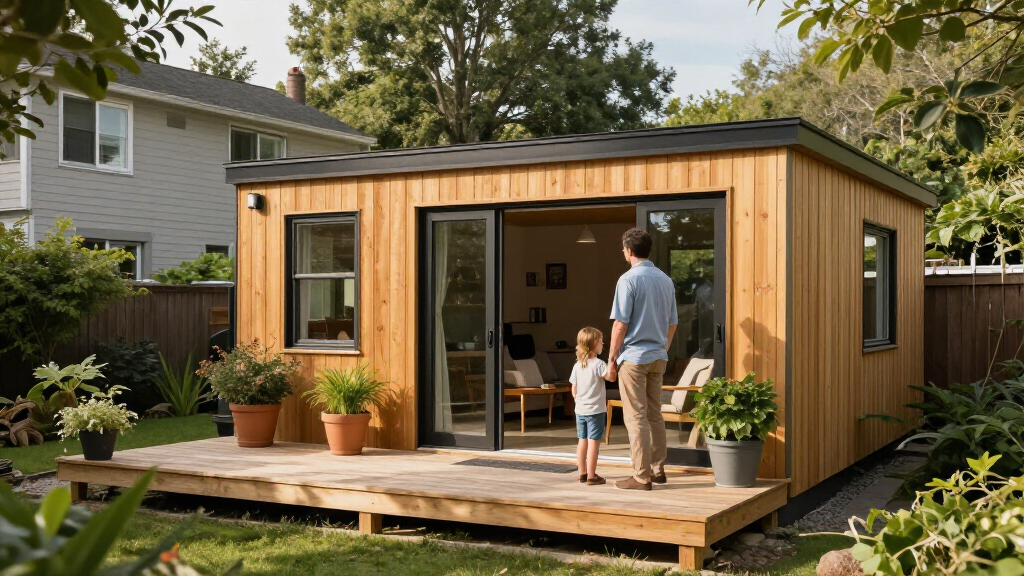
IdeaNavigator AI has outlined a proposed business for paid reports that estimate whether a specific property can support an accessory dwelling unit, or ADU. The concept responds to a difficult early decision for homeowners, but its demand, report accuracy and builder referral revenue have not been demonstrated.
IdeaNavigator AI has proposed testing paid feasibility reports for homeowners considering a backyard home, or accessory dwelling unit (ADU). The reports would assess a property’s zoning constraints, possible building area, estimated costs and rental potential, addressing an early-stage question that can require homeowners to research local rules and contact builders before deciding whether to proceed.
The proposed service would let a homeowner enter a property address and receive a PDF report. For an initial market, the product would combine county parcel data—such as lot boundaries, lot size and existing building footprints—with state ADU law and a manually curated set of local zoning rules. It would estimate which ADU types may be allowed, potential size limits, setbacks, lot coverage and buildable area.
The report could also include a construction-cost range and projected rental income based on local comparisons. IdeaNavigator AI proposes starting in one metro or a few counties, where rules could be reviewed and maintained by hand, and adding an option to connect homeowners with a vetted ADU builder. The outline does not describe an operating service or provide accuracy results.
The proposed revenue streams are a one-time homeowner fee of about $25 to $75 per report, subscriptions or white-label and API access for builders and architects, and referral payments from ADU firms or renovation lenders. To test demand, the proposal calls for manually researching the first 25 paid orders, tracking purchases and builder-introduction requests, and asking three to five local builders whether they would pay for qualified leads.
The Early Feasibility Decision
A lot-specific answer could help homeowners decide whether to spend time and money on design and contractor consultations. The current research burden described by IdeaNavigator AI includes interpreting municipal zoning rules, setbacks and lot-coverage limits, as well as arranging a site visit. A report that narrows those questions could make the first step easier and help builders spend less time on properties that cannot meet basic requirements.
That value depends on the report being accurate enough to guide a preliminary decision. A zoning estimate is not necessarily a permit approval, and a cost or rent projection is not a guarantee of what a project will cost or earn. For prospective buyers, the important test is whether the information is both reliable and useful before they pay for professional advice. For builders and lenders, the business case depends on whether the service delivers leads that are genuinely relevant and feasible.
The proposal therefore describes a potential service and a way to test it, rather than evidence that homeowners will buy reports or that referral income can support the business. Its suggested price and buyer groups are hypotheses until paid orders and partner commitments are recorded.
Top picks for "driv interest backyard"
As an affiliate, we earn on qualifying purchases.
California’s ADU Policy Shift
The proposal places the idea against changes to ADU rules and housing demand. It says California began legalizing ADUs statewide in 2016 and has loosened rules repeatedly since then, while other states and cities have also moved toward allowing them. Those changes can create a patchwork of local requirements, which is part of the problem the proposed address-based report aims to address.
IdeaNavigator AI says Los Angeles County permitted more than 45,000 ADUs in 2023 and that ADUs represented roughly one in five new housing units produced in California. It also describes the U.S. housing shortage as being in the millions. These figures are presented in the proposal; it gives no underlying datasets or definitions for the counts, so they should be read with that attribution and context.
The proposal argues that parcel and zoning data, combined with language models that can parse building rules, may make rapid reports practical. It does not identify the data providers, explain how rule changes would be tracked, or show that automated interpretation has been validated for a particular city. Its suggested manual rule curation is intended to limit the initial geographic scope while the service is tested.
Accuracy, Demand and Local Rules
No customer results are reported. The proposal does not say that a report product has launched, that homeowners have paid for one, or that builders and lenders have agreed to purchase leads. The suggested 25 orders and three to five builder conversations are proposed tests, not completed milestones.
It is also unclear how the service would handle parcels with unusual conditions, conflicting rules, incomplete records or zoning changes. The outline does not specify how often data would be updated, how estimates would be checked against planning departments or what level of confidence a report would communicate. Construction costs and potential rents can vary by design, site conditions and market timing; no estimation method or projection period is supplied.
Finally, the proposal does not identify a launch location, price selected for testing, or evidence that users would treat a report as worth buying. Until those details are tested, the size of the paying market and the reliability of any revenue estimates remain unknown.
Testing the First Local Market
The next step set out in the proposal is a concierge test in a single ADU-friendly metro, potentially a county in the Los Angeles or Bay Area region. A landing page would offer a feasibility and return estimate for a fixed fee, with the first 25 reports researched manually. The test would track whether visitors pay, whether buyers request a builder introduction and whether local firms will pay for those introductions.
No schedule is provided for that work, and no launch or results have been announced in the material available here. The proposed business would have stronger evidence of demand if the test records paid purchases and confirms that builders value the resulting leads. Report accuracy and the handling of local rule changes would also need to be established as the service moves beyond manual research.
Source: IdeaNavigator AI
Key Questions
What is an ADU feasibility report?
It is a proposed property-specific report estimating whether a lot may accommodate an accessory dwelling unit under applicable rules, along with possible size, cost and rental information.
Is the report service available now?
The proposal outlines a product and a test plan. It provides no launch date or evidence that the service is operating.
Would a report confirm that a homeowner can get a permit?
No permit determination is described. The proposed report would offer an initial estimate based on parcel data and curated rules; the proposal does not say it would replace review by local officials or professionals.
How would the proposed service make money?
IdeaNavigator AI suggests homeowner report fees of about $25 to $75, subscriptions or data access for industry firms, and payments for qualified referrals.
Source: IdeaNavigator AI
Fall Picks
fall essentials
As an affiliate, we earn on qualifying purchases.