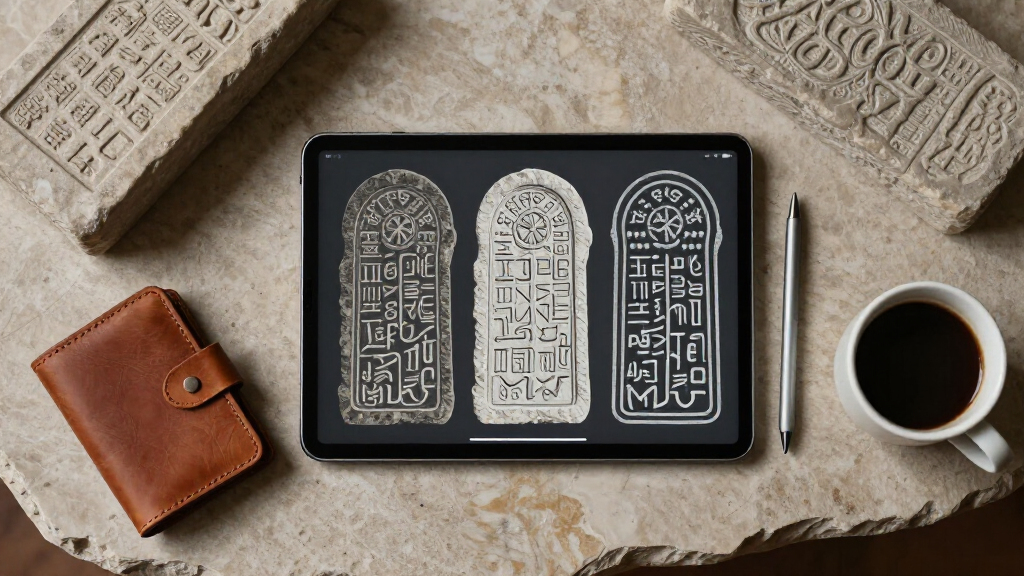

🔍 Read the full analysis: The Evolution Of SVG Carving: AI's Role In 'The Runestone Field' on ThorstenMeyerAI.com
TL;DR
Artificial intelligence has played a key role in developing advanced SVG carving techniques for ‘The Runestone Field,’ a digital project that merges history and innovation. This development demonstrates how automation enhances storytelling and artistic expression, with ongoing exploration of its full potential.
Artificial intelligence has been harnessed to advance SVG carving techniques in the project ‘The Runestone Field,’ creating dynamic animations that bring ancient runic carvings to life. This development highlights the growing role of AI in digital art and storytelling, offering new ways to interpret and present historical narratives.
The project, developed by a team led by Thorsten Meyer, integrates AI-powered algorithms with SVG (Scalable Vector Graphics) to produce fluid, detailed animations of runic carvings. These animations allow viewers to explore the carvings as if they are being actively inscribed or speaking, providing an immersive experience that bridges the gap between ancient craftsmanship and modern technology.
According to Meyer, the AI system was trained on extensive datasets of traditional runic inscriptions and carving patterns, enabling it to generate highly precise SVG paths that mimic the intricacies of real stone carvings. The project also employs automation to animate the carving process, creating a sense of movement and life that static images cannot achieve.
While the technical process has been successfully demonstrated, experts acknowledge that this represents an early but significant step toward integrating AI into digital storytelling and visual arts. The project’s full case study details the challenges faced, such as ensuring historical accuracy and achieving natural animation flows, as well as breakthroughs in AI-generated precision and fluidity.
The Evolution of SVG Carving: AI’s Role in ‘The Runestone Field’
Artificial intelligence is reimagining how ancient runic inscriptions are preserved and presented. By integrating AI-powered algorithms with Scalable Vector Graphics, Thorsten Meyer’s team animates thousand-year-old carvings — making the stones speak again.
Transforming Ancient Art with Modern Automation
This development exemplifies how AI can elevate traditional art forms by automating complex tasks. It opens new avenues for storytelling, positioning AI as a creative partner rather than just a tool.
Immersive Viewing
Audiences explore runic carvings as if they are being actively inscribed or speaking — a bridge between ancient craftsmanship and modern technology.
Creative Partnership
AI serves as a collaborator in the arts, preserving craftsmanship while enhancing artistic expression through sophisticated automation.
Broad Influence
These techniques could shape future projects across museums, educational platforms, and entertainment media.
From Stone to Screen: How It Works
The Runestone Field builds on centuries-old runic traditions — artifacts conveying myths, laws, and histories — and translates them into dynamic digital form.
Stone Origins
Runic inscriptions carved over a millennium ago serve as cultural source material.
Datasets
The AI is trained on extensive collections of traditional inscriptions and carving patterns.
SVG Path Generation
Algorithms produce highly precise SVG paths mimicking the intricacies of real carvings.
Animated Carving
Automation animates the carving process, giving the stones movement and life.
“By integrating AI with SVG carving, we can animate the ancient carvings as if they are speaking, creating a bridge between past and present.”— Thorsten Meyer, Project Lead
Challenges & Breakthroughs
The full case study documents both the hurdles the team faced and the advances they achieved in AI-generated precision and fluidity.
What Remains Unclear About AI-Driven Carving
Experts caution that, although the technology is advancing rapidly, broader adoption may face challenges related to data quality and interpretative authenticity.
Wide Applicability
How transferable are these AI techniques beyond this specific case? Scalability and artistic limitations remain under discussion.
Long-Term Preservation
The durability of AI-created animations and their integration into physical artifacts or virtual environments need further exploration.
Interpretative Authenticity
Ensuring AI-generated carvings remain faithful to cultural sources is an active area of scrutiny among historians.
Data Quality
Broader adoption depends on rich, reliable datasets of runic inscriptions and carving patterns.
Roadmap for Broader Adoption
Moving forward, the team aims to refine algorithms, pursue institutional collaborations, and extend the approach to other historical art forms.
| Initiative | Objective | Status |
|---|---|---|
| Algorithm refinement | Improve naturalness and accuracy for more complex, realistic animations | In progress |
| Museum & education partnerships | Incorporate techniques into exhibits and digital collections | Planned |
| Scaling research | Extend the technology to larger projects while maintaining cultural integrity | Planned |
| Other art forms | Explore inscriptions, murals, and sculptures as new applications | Under study |
| Physical artifact workflows | Potentially inform real carving via automated manufacturing and 3D printing | Exploratory |
Transforming Ancient Art with Modern Automation
This development matters because it exemplifies how AI can elevate traditional art forms by automating complex tasks like SVG carving. It opens new avenues for digital storytelling, allowing artists and historians to present historical narratives in more engaging, interactive formats. The project also demonstrates the potential for AI to serve as a creative partner, not just a tool, in the arts.
For viewers, this means a more immersive experience that makes ancient history accessible and compelling. For the broader field of digital art, it signals a shift toward more sophisticated automation that preserves craftsmanship while enhancing artistic expression. The ongoing evolution of these techniques could influence future projects across museums, educational platforms, and entertainment media.
As an affiliate, we earn on qualifying purchases.
Historical Roots and Technological Breakthroughs
‘The Runestone Field’ builds upon centuries-old traditions of runic inscription, a form of storytelling carved into stone that dates back over a millennium. Historically, these carvings served as cultural artifacts conveying myths, laws, and histories. The challenge has always been to interpret and preserve these symbols accurately.
In recent years, digital techniques have begun to enable more detailed preservation and presentation of runic art. However, the integration of AI into SVG carving represents a significant leap, allowing for dynamic, animated recreations that were previously impossible. This approach aligns with broader trends in digital humanities, where AI is increasingly used to analyze, interpret, and animate historical artifacts.
Thorsten Meyer’s team has been at the forefront of this movement, combining traditional craftsmanship with automation to create a new form of storytelling that is both educational and visually captivating. This project is part of a larger effort to explore how AI can preserve and reinterpret cultural heritage through innovative digital methods.
“By integrating AI with SVG carving, we can animate the ancient carvings as if they are speaking, creating a bridge between past and present.”
— Thorsten Meyer
As an affiliate, we earn on qualifying purchases.
Unanswered Questions About AI-Driven Carving
While the project demonstrates promising results, it remains unclear how widely applicable these AI techniques are beyond this specific case. Questions about the scalability, historical accuracy, and potential artistic limitations of AI-generated SVG carvings are still under discussion. Additionally, the long-term preservation of AI-created animations and their integration into physical artifacts or virtual environments are areas needing further exploration.
Experts caution that, although the technology is advancing rapidly, it is still in early stages, and broader adoption may face challenges related to data quality and interpretative authenticity.
scalable vector graphics carving kit
As an affiliate, we earn on qualifying purchases.
As an affiliate, we earn on qualifying purchases.
Future Developments and Broader Adoption
Moving forward, the team plans to refine the AI algorithms to improve naturalness and accuracy, aiming for more complex and realistic animations. They also intend to explore collaborations with museums and educational institutions to incorporate these techniques into exhibits and digital collections.
Further research will focus on scaling the technology for larger projects and ensuring that AI-generated carvings maintain cultural integrity. The potential for expanding this approach to other forms of historical art, such as inscriptions, murals, or sculptures, is also being considered.
digital carving pen for SVG design
As an affiliate, we earn on qualifying purchases.
As an affiliate, we earn on qualifying purchases.
Key Questions
How does AI improve SVG carving in ‘The Runestone Field’?
AI algorithms generate highly detailed SVG paths from datasets of traditional runic carvings, enabling precise and fluid animations that mimic real stone inscriptions, enhancing storytelling and visual engagement.
Can this technology be used for physical artifacts?
Currently, the project focuses on digital recreations. However, the techniques could inform physical carving processes in the future, especially with advancements in automated manufacturing and 3D printing.
What are the main challenges faced in this project?
Key challenges include ensuring historical accuracy, achieving natural animation flow, and scaling the technology for broader use while maintaining cultural integrity.
Will this change how we interpret ancient artifacts?
Yes, by providing dynamic visualizations, AI-driven SVG carving can deepen understanding and engagement with historical artifacts, making them more accessible and vivid for modern audiences.
Source: ThorstenMeyerAI.com