
🔍 Read the full analysis: How To Compare The 10 Best Portable Power Stations For 2027 on ThorstenMeyerAI.com

Get business pricing on office and shipping supplies
- Business-only prices and quantity discounts
- Tax-exempt purchasing
- Multiple users, one account, clear invoices
TL;DR
The supplied buying guide compares 10 portable power stations, from the 88Wh MARBERO to high-capacity home-backup models, using capacity, output, charging speed and portability. It names the Jackery Solar Generator 1000 v2 as its overall pick, but provides no independent test data, prices or citations to verify its rankings and performance claims.
A buyer’s guide framed for 2027 compares 10 portable power stations by capacity, output, recharge speed and portability, naming the Jackery Solar Generator 1000 v2 as its general-use pick, as detailed in the original analysis. The guide also recommends larger units for home backup and smaller models for charging electronics, with more options covered in this portable power station guide. It provides no cited tests or pricing to substantiate its rankings and performance claims.
According to the supplied guide, the Jackery Solar Generator 1000 v2 has 1,070 watt-hours (Wh) of capacity and 1,500 watts (W) of output, and is suitable for camping and light home backup. The guide recommends the Jackery HomePower 3600 Plus for higher-demand backup and the EF ECOFLOW DELTA 3 Ultra for users prioritizing fast charging. It provides no detailed test results or full specification sheet for each model.
The guide also names the Anker SOLIX C1000 Gen 2, MARBERO 88Wh, Jackery Explorer 300 and Jackery Solar Generator 300 bundle. It claims the Anker and EcoFlow models can recharge in under an hour, but gives no charging conditions or test methods. The guide characterizes units below 300Wh as mainly suitable for electronics rather than heating or cooking appliances; it does not provide supporting test data for that guidance.
Although the title promises 10 picks, the supplied material does not provide a complete, clearly itemized list of 10 distinct models with individual specifications and explanations. The guide says its selection method considers capacity, output, recharge speed and build quality, and favors versatility and compatible solar bundles, including options for film sets. It identifies no testing date, prices, warranty terms or evidence for its durability and safety assessments.
The 10 picks
- 1
 Jackery HomePower 3600 Plus Portable Power Station, 3584Wh, 3600WView on Amazon →
- 2
 EF ECOFLOW DELTA 3 Ultra 3072Wh Portable Power StationView on Amazon →
- 3
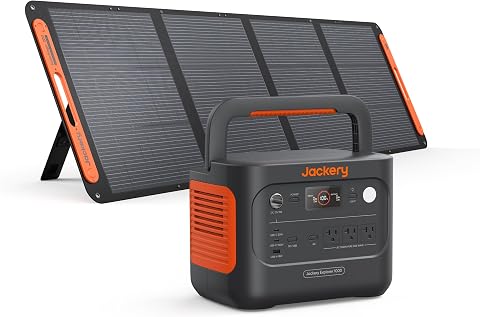 Jackery Solar Generator 1000 v2 with 200W Solar PanelView on Amazon →
- 4
 Anker SOLIX C1000 Gen 2 Portable Power Station with 200W Solar PanelView on Amazon →
- 5
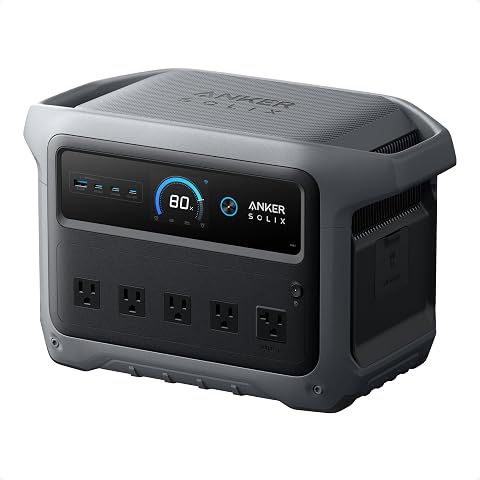 Anker SOLIX C1000 Gen 2 Portable Power StationView on Amazon →
- 6
 Jackery Explorer 1000 v2 Portable Power Station,1070Wh,1500WView on Amazon →
- 7
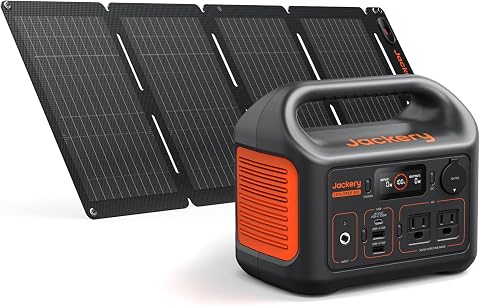 Jackery Solar Generator 300 and 40W Solar Panel,292Wh,300W ACView on Amazon →
- 8
 Jackery Explorer 300 Portable Power Station, 293Wh Lithium Battery, Solar Gen…View on Amazon →
- 9
 Anker SOLIX C300 DC Portable Power Station (288Wh, 300W)View on Amazon →
- 10
 MARBERO Portable Power Station 88Wh, 120W Surge, Solar Generator 24,000mAhView on Amazon →
Match Capacity to the Job
The guide distinguishes between capacity, measured in Wh, which describes stored energy, and output, measured in W, which limits which appliances a station can power at once. A high-capacity battery does not necessarily provide enough output to start a high-demand device.
That distinction applies to both emergency use and camping. A lightweight unit may power phones or laptops but not household appliances; a higher-capacity model may serve more needs but be harder to carry. Buyers evaluating the guide’s recommendations can compare their devices’ running and startup demands, along with the duration of expected use, rather than relying on a “best overall” label alone.
Popular right now

Dyson V12 Detect Slim Absolute Cordless Stick Vacuum

Sony WH-1000XM6 Wireless Noise-Canceling Headphones, Black

Breville Barista Express Espresso Machine with Built-In Grinder, Brushed Stainless Steel
As an affiliate, we earn on qualifying purchases.
The Guide’s Four Comparison Measures
The guide says it assessed products using energy capacity, output power, recharge speed and build quality. It also says it considered whether products were sold with solar panels or as standalone stations. According to the guide, fast recharging can matter for frequent use, while solar-input limits affect how quickly a station can recharge away from a wall outlet.
The guide discusses LiFePO4 battery chemistry as a longer-cycle option and contrasts it with older lithium-ion batteries, but supplies no product-by-product chemistry table or supporting test records. It also says solar bundles can simplify compatibility, without specifying panel output, cable standards or charging conditions for each named bundle.
Missing Tests and Model Details
The supplied guide does not establish that the products were independently tested, and includes no linked measurements, prices or publication date. Its claims about recharging in under an hour, battery cycle life, safety and durability cannot be verified from the information provided. Charging times can vary with input power, battery state, settings and temperature; the guide does not specify those conditions.
The supplied text ends during an FAQ about running a CPAP machine and does not include the full answer. It also does not explain whether the 2027 label reflects a new product release, an updated ranking or the guide’s intended shopping year. Product availability and specifications can change, so buyers should check current manufacturer information.
Verify Specs Before Buying
Readers can compare current manufacturer specifications for the exact model and bundle under consideration. Check continuous and surge output, usable capacity, charging inputs, battery chemistry, weight and warranty, and confirm compatibility between the solar panel and cables. For backup use, calculate the expected load and runtime rather than treating category rankings as a substitute for a power plan.
The supplied material identifies no follow-up testing or update schedule. It does not include a fully itemized 10-model list with dated specifications and test conditions, so its recommendations should be read as an unverified comparison rather than a substantiated ranking.
Key Questions
Which station does the guide recommend for general use?
The guide names the Jackery Solar Generator 1000 v2 as its general-use pick, citing 1,070Wh capacity and 1,500W output. The supplied material includes no independent test results or pricing to substantiate the ranking.
What is the difference between watt-hours and watts?
Watt-hours (Wh) describe stored energy and help estimate runtime. Watts (W) describe output and indicate how much power the station can supply at once. Both matter when matching a station to appliances.
Can a small power station run a heater or cooking appliance?
The guide says units under 300Wh are mainly for electronics and are not suited to heating or cooking appliances. Check an appliance’s running and startup wattage against the station’s output before use.
Are the guide’s charging-speed claims independently verified?
Not in the supplied material. The guide says the Anker SOLIX C1000 Gen 2 and EF ECOFLOW DELTA 3 Ultra recharge in under an hour, but provides no test conditions, measurement data or source links.
Does the source provide all 10 picks?
No. It names several models but does not present a complete, clearly itemized list of 10 distinct stations with specifications and reasons for each selection.
Source: ThorstenMeyerAI.com