📊 Full opportunity report: Cash-Pay GLP-1 Prices: A US Pharmacy And Direct-Channel Index on IdeaNavigator AI — validation score, market gap, and execution plan.

Get business pricing on office and shipping supplies
- Business-only prices and quantity discounts
- Tax-exempt purchasing
- Multiple users, one account, clear invoices
TL;DR
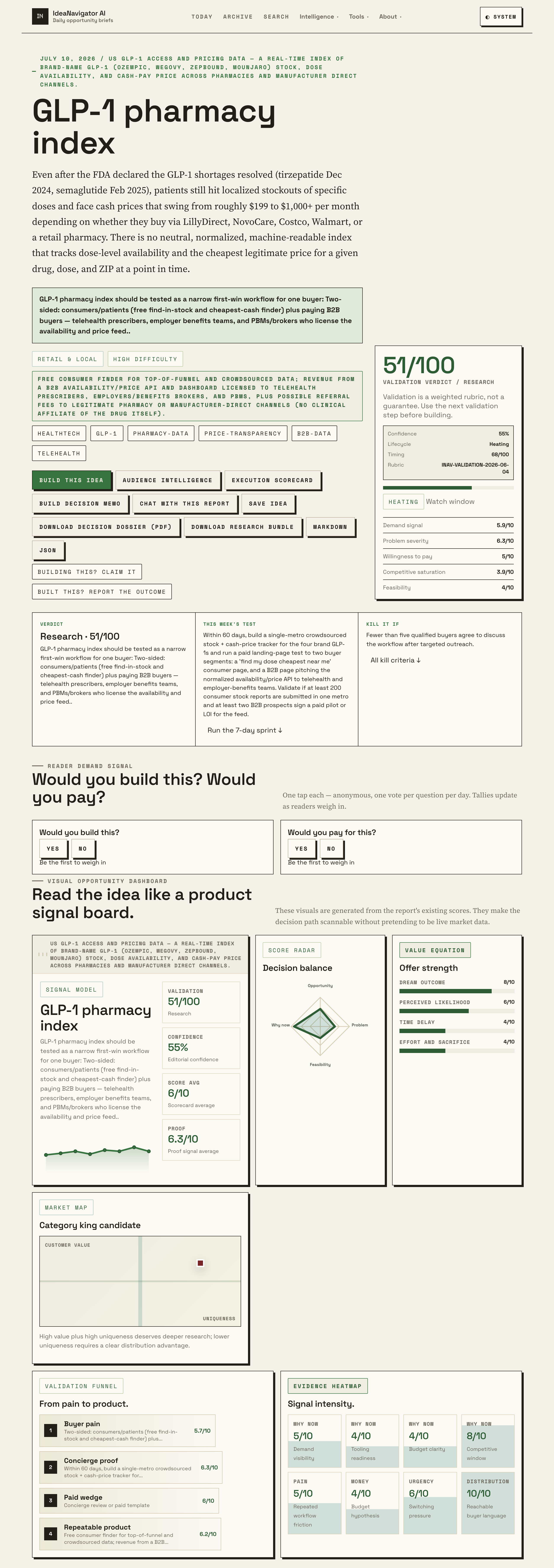
IdeaNavigator AI has proposed a US pharmacy index that would help patients compare cash prices and dose availability for four brand-name GLP-1 drugs. The concept would pair a free consumer search tool with a paid data feed for health care and benefits buyers; it remains a proposal, with no operating index or validated demand described.
IdeaNavigator AI has proposed a US index for comparing cash prices and dose-level availability of four brand-name GLP-1 drugs across pharmacies and manufacturer direct channels. The proposed tool would give patients a free way to search by drug, dose and ZIP code, while offering a licensed data feed to telehealth providers, employers and pharmacy benefit buyers; the index is not described as an operating service.
The proposed index would cover Ozempic, Wegovy, Zepbound and Mounjaro, combining public cash-price information from manufacturer programs, Costco, Walmart and retail pharmacies with reports from users about local stock. Its aim is to show whether a specific dose is available and compare legitimate cash prices at a given time and location. The proposal says prices can range from roughly $199 to more than $1,000 per month, depending on the channel, but does not specify a common price date, dose, package or eligibility criteria for that range.
The suggested first version would be limited to one US metro area. It would launch a consumer search page and dose-level availability alerts, then offer the normalized price and availability data through an API or dashboard to one or two prospective business customers. Proposed buyers include telehealth prescribers, employer benefits teams, pharmacy benefit managers and brokers. The plan also raises referral fees from legitimate pharmacy or manufacturer-direct channels as a possible revenue source.
IdeaNavigator AI proposes testing demand over 60 days. Its stated validation thresholds are at least 200 consumer stock reports in one metro and at least two business prospects signing a paid pilot or letter of intent. Those are proposed targets, not results: no consumer submissions, signed pilots or launched product are reported in the material describing the idea.
Price Data After Shortage Listings
The proposal addresses a potential change in the access problem: even after federal shortage listings were resolved, patients may still encounter local gaps for particular doses and widely varying cash prices. A searchable, regularly updated comparison could help patients locate stock and understand the listed cost across channels. Its usefulness would depend on timely, accurate reports and clear explanations of what each price includes.
For employers and other benefits buyers, the proposal frames the index as a way to see prices and availability across a fragmented market. The material says GLP-1s account for roughly 20% of pharmacy spending reported by employers, but does not identify the employers, measurement period or underlying study. If validated, a consistent feed could support purchasing or access decisions; the proposal provides no evidence yet that buyers would subscribe or that the data would reduce costs.
Direct Channels and Local Supply
The proposal says the FDA declared the tirzepatide shortage resolved in December 2024 and the semaglutide shortage resolved in February 2025. It also points to deadlines affecting compounded versions and the expansion of cash-pay options through manufacturer direct channels, Costco and Walmart. The resulting price and supply information sits across multiple sellers rather than in a single normalized index, according to the proposal.
The concept refers to LillyDirect and NovoCare, as well as a TrumpRx portal in February 2026, as parts of that channel mix. It does not provide current listings, verified pharmacy-level inventory, or a comparison of the programs’ eligibility rules. The proposed index would need to distinguish cash prices from insurance coverage and make clear whether quoted prices are generally available or subject to restrictions.
Coverage and Data Reliability
The proposal does not establish whether the four drugs’ cash prices can be compared on a consistent basis. Eligibility rules, dose, supply duration, discounts and other terms can affect the amount a patient pays, yet the concept does not describe how those details would be standardized or displayed. It also provides no tested method for confirming user-submitted stock reports or deciding how quickly a pharmacy listing becomes stale.
It remains unclear whether manufacturers and retailers would provide data directly, how much of the index would rely on public listings or crowdsourcing, and how broadly the service could cover pharmacies beyond an initial metro. No launch date, funding, named business partners or completed validation results are given. The proposal’s price range and employer-spending figure also lack enough accompanying detail to independently compare or interpret them.
Proposed 60-Day Market Test
The next step outlined by IdeaNavigator AI is a single-metro test of a consumer stock-and-price tracker and a business landing page for the data feed. The proposal sets thresholds of 200 consumer stock reports and two paid pilots or letters of intent within 60 days. It does not state when that test will begin or identify a metro area or prospective buyers.
If the test proceeds, the reported submissions and buyer commitments would offer an initial measure of participation and commercial interest. Further details would still be needed to assess coverage, price accuracy and whether a feed can stay current across different pharmacies and dose strengths.
Key Questions
What would the proposed GLP-1 index track?
It would compare cash prices and dose-level availability for Ozempic, Wegovy, Zepbound and Mounjaro by drug, dose and ZIP code, drawing on public price data and consumer stock reports.
Is the index available now?
The proposal describes a possible product and a validation plan. It does not report that the index has launched or that it is collecting live pharmacy inventory.
Who would pay for the data?
Proposed business customers include telehealth providers, employers, benefits brokers and pharmacy benefit managers. The concept suggests licensing an API or dashboard, but reports no signed customers.
How would the proposal test demand?
It sets a 60-day target of 200 consumer stock reports in one metro and at least two business prospects signing a paid pilot or letter of intent. These are goals, not completed results.
What is not yet established?
The proposal does not show how inventory reports would be verified, how often prices would be updated, or whether listed prices would be comparable across eligibility rules and purchase terms.
Source: IdeaNavigator AI
Fall Picks
fall essentials
As an affiliate, we earn on qualifying purchases.