
To optimize media-rich pages with videos and interactive elements, focus on compressing images, using formats like WebP, and incorporating keyword-rich alt text. Make certain your site is accessible with ARIA labels, captions, and keyboard navigation. Minimize scripts, enable lazy loading, and use structured data markup for rich snippets. Keep everything mobile-friendly and regularly test your site with tools like Google Search Console. If you stay tuned, you’ll discover more ways to enhance your technical SEO strategies.
Key Takeaways
- Optimize media files with compression, proper sizing, and WebP format to ensure fast load times and high quality.
- Implement structured data markup to enhance search engine understanding and enable rich snippets for videos and interactive content.
- Use lazy loading and defer non-essential scripts to improve page performance and reduce rendering delays.
- Ensure accessibility with ARIA labels, captions, transcripts, and keyboard navigation for inclusive user experience.
- Regularly audit site performance using tools like Google Search Console and PageSpeed Insights to identify and fix media-related issues.
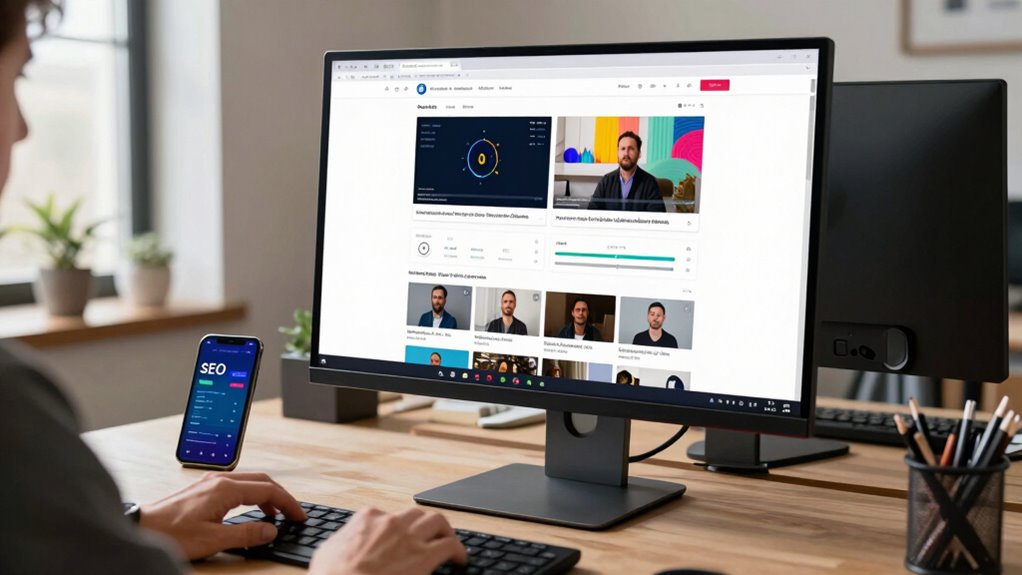
Media-rich pages can considerably enhance user engagement, but they also pose unique challenges for SEO. When your pages are filled with videos, interactive elements, and high-quality images, guaranteeing they’re optimized for search engines requires careful attention. You need to focus on image optimization, accessibility enhancements, and technical factors that keep your content discoverable and user-friendly.
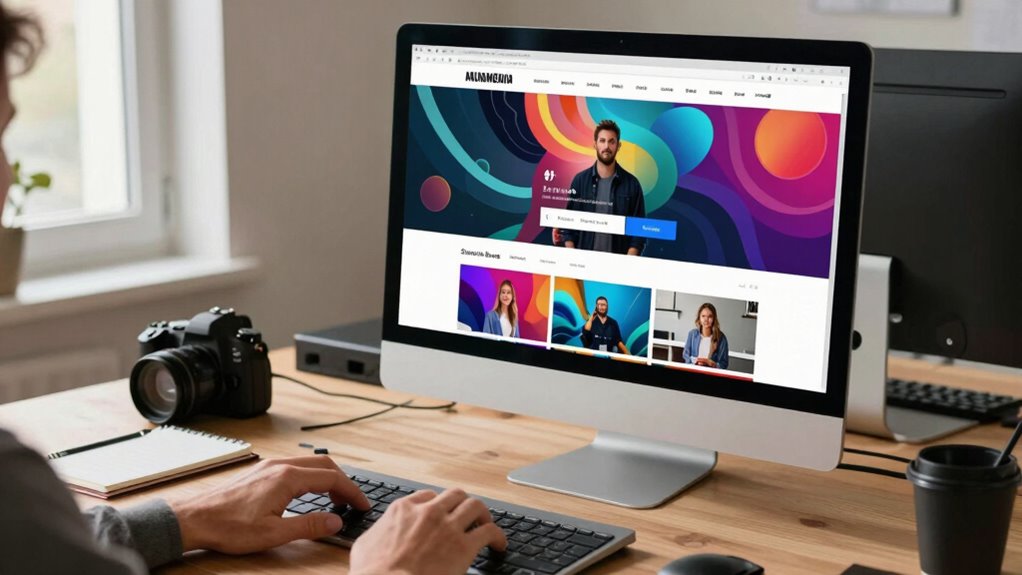
Start with image optimization. Large, uncompressed images can slow down your page load times, which negatively impacts your SEO rankings. Compress images without sacrificing quality, and choose the right formats like WebP for faster loading. Use descriptive, keyword-rich alt text for every image. This not only helps search engines understand your visuals but also improves accessibility for users relying on screen readers. Properly optimized images serve a dual purpose—they enhance the visual appeal of your site and contribute to your overall SEO strategy. Additionally, image optimization can significantly improve your page’s performance metrics, leading to better search engine placements. Ensuring that images are correctly sized for your layout further enhances load times and visual clarity, supporting a better user experience. Incorporating structured data markup for media content can also help search engines better interpret your media and display rich snippets in search results.
Optimize images with compression, WebP format, and keyword-rich alt text to boost SEO and accessibility.
Accessibility enhancements are equally essential. Media-rich pages should be designed to be usable by everyone, including those with disabilities. Incorporate ARIA labels, captions, and transcripts for videos and interactive elements. Ensure that your site navigation is keyboard-friendly, so users who can’t use a mouse can still explore your content seamlessly. These accessibility practices not only broaden your audience but also align with search engine guidelines, boosting your rankings. Well-implemented accessibility features can improve user experience, reduce bounce rates, and increase the time visitors spend on your pages. Additionally, consistent use of accessible design principles can prevent potential legal issues related to accessibility compliance.
From a technical perspective, embedding videos and interactive components requires you to optimize their load performance. Use lazy loading for videos and interactive scripts so that they load only when needed. Keep scripts minimal, and defer non-essential JavaScript to prevent blocking the rendering process. Structured data markup can help search engines better understand your media content, especially videos, enabling rich snippets in search results. Additionally, ensure your media content is mobile-friendly; responsive design is essential for maintaining performance and usability across all devices. Optimizing media content is vital for ensuring your pages are both engaging and discoverable. Regular testing of your site’s media elements with tools like Google Search Console and PageSpeed Insights can reveal issues and help you address them proactively, ensuring ongoing compatibility and performance.
Finally, monitor your site’s performance using tools like Google Search Console and PageSpeed Insights. Regular audits can reveal issues with media elements, such as slow load times or accessibility problems, allowing you to address them promptly. By combining image optimization, accessibility enhancements, and technical best practices, you create a media-rich website that’s both engaging and easy for search engines to crawl and index. This approach guarantees your content reaches a broader audience while providing a seamless experience that keeps visitors coming back. Maintaining a focus on content quality and user experience ensures your multimedia efforts translate into improved visibility and engagement.

OptiPic Pro: Image Compressor & JPG PNG WEBP Optimizer
- Fast local image compression: Supports JPG, PNG, WEBP
- Ad-free, clean interface: No annoying ads
- Free with privacy protection: 100% free, user privacy
As an affiliate, we earn on qualifying purchases.
As an affiliate, we earn on qualifying purchases.
Frequently Asked Questions
How Do I Optimize Video Load Times Without Sacrificing Quality?
To optimize video load times without sacrificing quality, start with video compression to reduce file size while maintaining clarity. Implement lazy loading so videos only load when users scroll to them, improving initial page speed. Use adaptive streaming technologies like HLS or DASH to serve different quality levels based on user bandwidth. These strategies guarantee fast load times, better user experience, and preserved video quality.
What Are the Best Tools for Tracking Interactive Element Engagement?
Like the ancient alchemist seeking hidden secrets, you need the right tools to uncover user engagement with your interactive elements. Google Analytics, Hotjar, and Crazy Egg provide detailed data analytics, revealing how visitors interact with videos and interactive features. These tools track clicks, scrolls, and heatmaps, helping you understand user engagement and optimize your media-rich pages effectively. Use these insights to enhance content and boost visitor interaction.
How Can I Ensure Accessibility in Media-Rich Pages?
To guarantee accessibility in media-rich pages, you should add alternative text to all images and videos, helping screen readers convey content to visually impaired users. Make sure interactive elements are keyboard navigable and include ARIA labels where needed. Test your page with a screen reader regularly to identify and fix accessibility issues. These steps help create an inclusive experience and improve overall SEO for your media-rich content.
Does Using Multiple Media Types Affect Mobile SEO Rankings?
Using multiple media types won’t just slightly impact your mobile SEO rankings; it can feel like a seismic shift if not optimized properly. You should focus on media compression to reduce load times and preserve user experience. Proper content hierarchy guarantees search engines understand your page structure, even with diverse media. When you balance these elements, your media-rich pages stay fast, accessible, and highly ranked on mobile devices.
How Do I Balance SEO With User Experience in Media-Heavy Pages?
You should prioritize content hierarchy to organize your media-rich pages clearly, making essential information easy to find. Use visual storytelling techniques to engage users without overwhelming them, guaranteeing videos and interactive elements enhance rather than hinder usability. Balance SEO by optimizing media files for fast loading and including descriptive alt text, while designing your layout to keep the user experience intuitive and enjoyable. This approach ensures both search engines and visitors find value in your content.

Practical XML for the Web (Tools of the Trade)
- Condition: Used Book in Good Condition
As an affiliate, we earn on qualifying purchases.
As an affiliate, we earn on qualifying purchases.
Conclusion
So, are you ready to optimize your media-rich pages and make them shine in search results? With proper technical SEO, you’ll guarantee your videos and interactive elements not only captivate visitors but also get noticed by search engines. Think about your content as a vibrant, bustling marketplace—will it stand out among the noise? Implement these strategies, and watch your pages attract more traffic, engagement, and success. Your media-rich masterpiece is waiting to be discovered!

ZLMONDEE Motorized Rotating Display Stand, Mirror Covered 360 Degree Turntable Display Stand for Photography Products and Shows, Max Load 18Lb/ 7.87 inch Video Show, Battery/USB Power Supply (Remote
- Sturdy and Quiet Construction: Made of durable ABS with mirror glass
- Supports Up to 17.8LB: Stable and long-lasting rotating stand
- Low Noise and Power: Operates quietly with low energy consumption
As an affiliate, we earn on qualifying purchases.
As an affiliate, we earn on qualifying purchases.

Name Labels for Kids – Aria Design (12 Pack) 3.25" x.75 Each | Personalized Stickers for Personal Items, School or Daycare Supplies, Water Bottles, and Lunch Boxes
- Versatile for various items: Suitable for school, daycare, and personal items
- Ideal size: Each label measures 3.25" x 0.75"
- Pre-printed with Aria: Features the name 'Aria' on labels
As an affiliate, we earn on qualifying purchases.
As an affiliate, we earn on qualifying purchases.