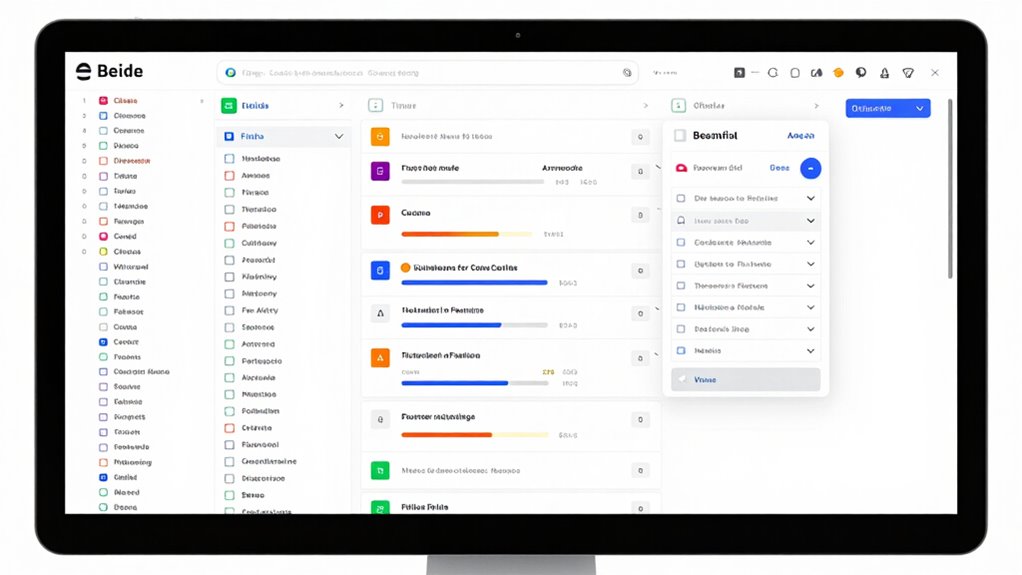

Faceted navigation often breaks on large ecommerce sites because it becomes cluttered with too many filters and poorly organized categories, making it overwhelming and confusing. Static filters fail to adapt to your browsing habits, leading to frustration. Mobile optimization is often lacking, causing clunky experiences. Technical issues and slow load times make it worse, while a lack of personalization reduces relevance. If you want to understand how these problems can be fixed, keep exploring the details.

Get business pricing on office and shipping supplies
- Business-only prices and quantity discounts
- Tax-exempt purchasing
- Multiple users, one account, clear invoices
Key Takeaways
- Overwhelming filters and poor categorization cause user confusion and frustration during product selection.
- Lack of personalization makes filters irrelevant, reducing navigation efficiency and user satisfaction.
- Mobile optimization issues lead to clunky, slow filters that hinder seamless browsing on smartphones.
- Technical challenges, such as slow load times and inaccurate filters, disrupt the shopping experience.
- Static filters limit effective product narrowing; dynamic, intelligent filtering is needed for better usability.

Have you ever struggled to find the right product on a large eCommerce site? If so, you’re not alone. Faceted navigation promises to help by organizing products into filters like size, color, price, and brand, but in practice, it often falls short on big sites. One reason is that these filters can become overwhelming, especially when there are too many options or poorly implemented categories. As a user, you might find yourself clicking through countless filters, only to still be overwhelmed or unable to locate what you want quickly. Large eCommerce platforms often neglect to tailor the shopping experience to your preferences, which could have been addressed through effective personalization strategies. Without personalization, faceted navigation can feel generic, forcing every user into the same filter options rather than adapting to individual needs and browsing behavior.
Faceted navigation often overwhelms users without personalization, making product searches frustrating and inefficient on large eCommerce sites.
Another challenge is mobile optimization. Many large sites have struggled to adapt their faceted navigation for mobile devices, where space is limited, and navigation needs to be intuitive. When filters are not optimized for mobile, they can become clunky, requiring multiple taps or causing slow load times. This hampers your ability to browse efficiently and frustrates your shopping experience. As mobile usage continues to rise, ignoring mobile optimization means losing potential customers and reducing overall satisfaction. Your experience becomes a guessing game, with slow, awkward filtering that discourages continued browsing or purchasing.
The core problem lies in the complexity of managing so many filters on large catalogs. When filters aren’t well-designed, you may encounter irrelevant options, duplicate filters, or filters that don’t update dynamically. This creates dead ends, making it difficult to narrow down choices effectively. Implementing smart filtering that adapts based on your previous selections or browsing history can improve this, but many sites fail to do so. Without such dynamic personalization, faceted navigation remains static and cumbersome, which defeats its purpose.
Furthermore, the technical challenges of maintaining such filters—like database performance issues and inconsistent updates—also contribute to the breakdowns. These issues slow down your shopping, cause errors, or force you to reload pages repeatedly. When these problems happen, it’s no longer a helpful tool but a hindrance. For faceted navigation to truly succeed on large eCommerce sites, it must incorporate intelligent personalization strategies and prioritize mobile optimization. Otherwise, it risks becoming just another frustrating barrier instead of a seamless pathway to finding the products you want.
mobile-friendly faceted navigation tools
As an affiliate, we earn on qualifying purchases.
As an affiliate, we earn on qualifying purchases.
Frequently Asked Questions
How Does Faceted Navigation Impact Website Speed?
Faceted navigation can slow down your website’s speed by increasing page load times, especially when users select multiple filters. Each filter change prompts the server to generate new pages, raising server load and delaying responses. As a result, your visitors experience longer wait times, which can lead to frustration and higher bounce rates. To improve speed, optimize your filtering system and reduce the number of server requests during navigation.
Can Faceted Navigation Improve SEO for Large Sites?
Faceted navigation can improve SEO for large sites by enhancing user experience and increasing engagement. Studies show that well-implemented filters can boost organic traffic by up to 20%. To maximize benefits, you should focus on metadata optimization to guarantee search engines understand filtered pages. Additionally, managing your crawl budget prevents search engines from wasting resources on duplicate or low-value content, helping your site rank higher and stay more visible.
What Are the Best Practices for Managing Filter Complexity?
To manage filter complexity effectively, you should prioritize a clear filter hierarchy that organizes options logically, making navigation intuitive. Implement tagging systems to add flexibility without overwhelming users, allowing for dynamic filtering. Regularly review and prune filters to avoid clutter, and use analytics to identify popular filters. Combining a well-structured hierarchy with smart tagging helps keep your site user-friendly, even as product catalogs grow large.
How Does Faceted Navigation Affect User Experience?
Faceted navigation is like a double-edged sword, shaping your experience but sometimes cutting deep. It can enhance personalization, making product searches more relevant, but also introduces accessibility concerns for users with disabilities. If not managed well, it may overwhelm users or create frustration, especially on large sites. You need to carefully balance filter options and guarantee accessibility features are in place to keep the experience smooth and inclusive.
Are There Alternative Solutions to Faceted Navigation?
Yes, there are alternatives to faceted navigation. You can implement alternative filtering options like search filters, dropdown menus, or checkboxes to streamline product discovery. Dynamic sorting features also help users quickly find what they want by sorting results based on price, popularity, or ratings. These methods reduce complexity and improve user experience, especially on large ecommerce sites, by offering more intuitive and manageable ways to narrow down options.
As an affiliate, we earn on qualifying purchases.
Conclusion
Faceted navigation might seem like the perfect solution, but it still struggles with the scale of large ecommerce sites, leading to broken filters, slow load times, and a frustrating user experience. Do you really want your customers to abandon their search because your site can’t handle their filters? To keep shoppers engaged and boost conversions, you’ll need to continually optimize and rethink your navigation strategies. After all, isn’t seamless browsing worth the effort?
personalized ecommerce filtering solutions
As an affiliate, we earn on qualifying purchases.
As an affiliate, we earn on qualifying purchases.
large catalog product filtering system
As an affiliate, we earn on qualifying purchases.
As an affiliate, we earn on qualifying purchases.
Halloween Picks
halloween
As an affiliate, we earn on qualifying purchases.