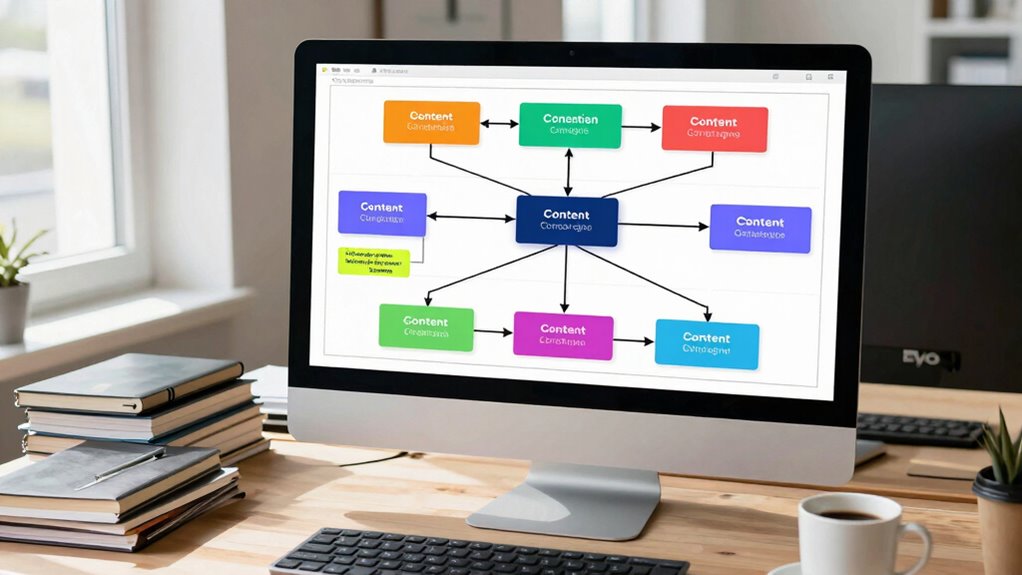

To effectively consolidate content on large sites with overlap, start with a thorough audit to identify redundancies and keyword cannibalization. Merge similar pages into all-encompassing guides, and use redirects to preserve link equity. Assign each page a clear focus to prevent keyword competition, and organize content around pillar topics. Improving site structure and navigation will enhance user experience and SEO. Keep exploring these strategies to refine your approach and maximize your site’s authority and clarity.

Get business pricing on office and shipping supplies
- Business-only prices and quantity discounts
- Tax-exempt purchasing
- Multiple users, one account, clear invoices
Key Takeaways
- Conduct a comprehensive content audit to identify overlaps, redundancies, and keyword cannibalization across the site.
- Consolidate similar pages into comprehensive guides, reducing overlap and improving content authority.
- Assign clear, distinct keywords to each page to prevent keyword cannibalization and enhance SEO focus.
- Use redirects from outdated or overlapping pages to preserve link equity and improve user navigation.
- Organize content with pillar pages and a strategic site hierarchy to streamline user flow and boost search engine understanding.

Are your digital assets scattered across multiple platforms, making it difficult to manage and utilize your content effectively? If so, you’re likely facing issues like content redundancy and keyword cannibalization that hinder your site’s performance. When you have multiple pages covering similar topics or targeting the same keywords, search engines get confused about which page to rank, leading to diluted authority and lower visibility. This overlap not only wastes your resources but also confuses users, who might find inconsistent or duplicated information. To fix this, consolidating your content becomes vital.
Start by auditing your existing content thoroughly. Identify pages with significant overlap in topics, keywords, or purpose. Look for content redundancy—where multiple pages say nearly the same thing—and note where keyword cannibalization occurs, meaning multiple pages target the same keywords without differentiation. Once you’ve mapped out these overlaps, focus on merging similar articles into extensive, authoritative pieces. This approach reduces content redundancy, streamlines your site structure, and helps search engines understand your content better. Incorporating content auditing and analysis can further enhance this process by providing insights into your content landscape.
Begin by thoroughly auditing your content to identify overlaps, redundancy, and keyword cannibalization for effective consolidation.
While consolidating, be strategic about keyword targeting. Instead of having several pages competing for the same term, assign each a clear, distinct focus. For example, if you have two blog posts about “digital marketing strategies,” combine them into one in-depth guide. Then, optimize this new piece for a broader, more relevant set of keywords, avoiding keyword cannibalization. Use redirects from the old pages to the new, consolidated content to preserve link equity and prevent confusion. Additionally, incorporating pillar content can help organize your site more effectively and reduce overlap. Recognizing the importance of content structure can make a significant difference in how well your content performs. Furthermore, understanding the overlap of topics within your content can help you better align your content strategy with your target audience’s needs.
As an affiliate, we earn on qualifying purchases.
Frequently Asked Questions
How Do I Identify Overlapping Content Across Multiple Sites?
To identify overlapping content across multiple sites, start with duplicate detection tools like Copyscape or Siteliner, which highlight duplicate pages and content redundancy. Review your site analytics to spot similar topics or keywords that indicate overlap. Conduct manual audits to compare content, and use SEO tools like SEMrush or Ahrefs for deeper insight. Addressing duplicate detection early helps you streamline your content, reduce redundancy, and improve overall site clarity.
What Tools Are Best for Content Auditing at Scale?
When auditing large sites, you need powerful tools like Screaming Frog, SEMrush, or Ahrefs to tackle content duplication and keyword cannibalization. These tools scan your entire site, identify duplicate content, and flag keyword overlaps. They offer thorough insights, automate checks, and help prioritize updates. By streamlining your audit process with these tools, you can efficiently uncover issues, optimize your content strategy, and improve your site’s overall performance.
How Should I Prioritize Content to Consolidate First?
You should prioritize consolidating content that aligns with your overall content strategy and has the highest impact on user engagement. Start by identifying outdated, redundant, or low-performing pages, then compare them to your core goals and audience needs. Focus on content that can be streamlined to improve clarity and relevance, boosting user experience. This approach guarantees your site remains focused, engaging, and easier to navigate, ultimately driving better engagement.
What Are Common Pitfalls to Avoid During Content Consolidation?
You should avoid common pitfalls like overlooking content redundancy and duplicate issues. These can lead to SEO problems and user confusion. Don’t rush the process; instead, carefully review your content to identify overlaps and duplicate issues. Failing to do so can cause search engines to penalize your site or dilute authority. Always test your consolidated content to guarantee it provides value, and keep a backup before making major changes.
How Can I Measure the Success of Consolidation Efforts?
You can measure the success of your consolidation efforts by tracking content freshness, user engagement, and traffic patterns. You’ll want to monitor how often visitors return, how long they stay, and whether they interact more with your updated content. An increase in content freshness and user engagement indicates your efforts are effective. Regularly analyze these metrics to refine your strategy, ensuring your site remains relevant, valuable, and engaging for your audience.
As an affiliate, we earn on qualifying purchases.
Conclusion
By boldly bridging bloated content gaps, you boost both user experience and search engine standing. With clever content consolidation tactics, you can cut clutter, create clarity, and cultivate a cohesive, compelling site. Stay strategic, streamline structures, and simplify sections to succeed. Remember, consistent, concise, and compelling content is key—so seize the opportunity to sharpen, slim down, and solidify your site’s success. Start today, and see your site soar!
As an affiliate, we earn on qualifying purchases.
As an affiliate, we earn on qualifying purchases.
Halloween Picks
halloween
As an affiliate, we earn on qualifying purchases.