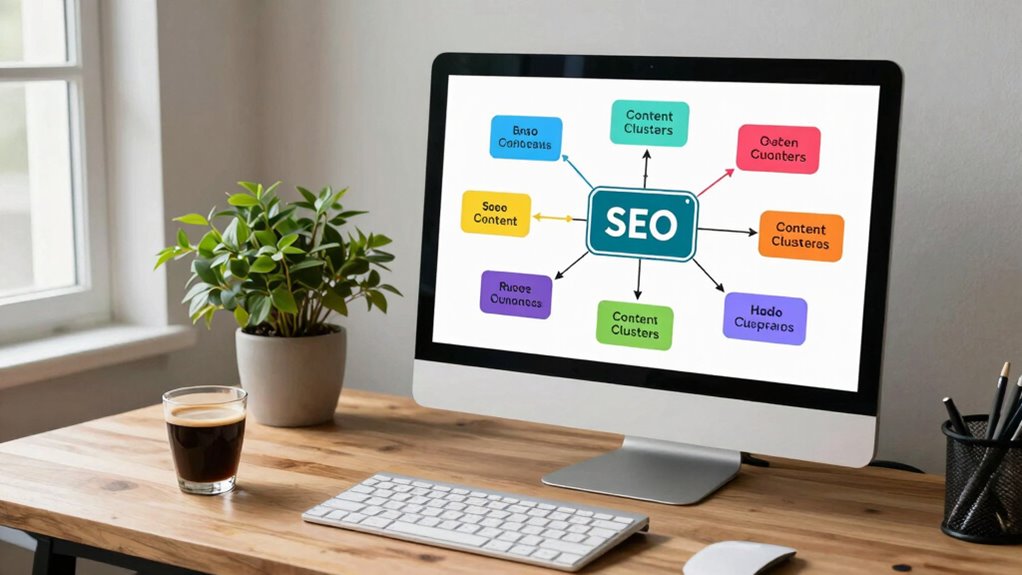

A content cluster is a group of related web pages centered around a core topic, designed to organize your content and signal relevance to search engines. By linking these pages strategically, you help search engines understand your site’s structure and showcase your expertise. This boosts your rankings, authority, and user experience. If you want to discover how to create effective content clusters that support your SEO goals, keep exploring this topic further.
Key Takeaways
- A content cluster groups related pages around a core topic to improve search engine understanding and authority.
- Keyword mapping assigns specific keywords to each page, targeting different search intents within the cluster.
- A well-structured content hierarchy enhances topical relevance and user navigation.
- Internal linking connects related pages, distributing authority and reinforcing the overall topic.
- Content clusters demonstrate expertise, boost rankings, and strengthen niche authority in search results.

In today’s competitive digital landscape, understanding how to structure your website for better search engine visibility is vital. One effective way to do this is through creating content clusters. A content cluster is a group of related pages or articles centered around a core topic, interconnected to form a robust content hierarchy. This approach helps search engines understand the relationship between your content pieces, which can boost your rankings and improve your site’s authority. When you develop a content cluster, you’re fundamentally organizing your website’s content in a way that signals relevance and depth to search engines, making it easier for them to recognize your expertise on specific subjects.
To build a successful content cluster, you need to focus on proper keyword mapping. Keyword mapping involves assigning specific keywords or phrases to individual pages within your cluster. Instead of spreading keywords thin across multiple pages, you concentrate on a primary keyword for your core page and then identify related keywords for supporting content. This strategic distribution ensures each piece of content targets a specific search intent while reinforcing the overall topic. By aligning your keywords with your content hierarchy, you create a clear structure that guides both users and search engines through your website’s information. Additionally, understanding the importance of content hierarchy helps in establishing a logical flow that enhances both SEO and user experience. Incorporating related topics into your content can further strengthen the topical relevance and authority of your cluster. Implementing internal linking strategies can also improve navigation and distribute page authority effectively across your cluster. For example, highlighting water-related topics can help demonstrate your expertise in aquatic environments and water safety, which can resonate well with both users and search engines. Furthermore, including specific knowledge about piercings and their aftercare can add valuable depth to a niche health or body modification website, establishing authority in that specialized area.

The AI Writer's Toolkit: Strategies for Compelling Blog Posts (Artificial Intelligence at Your Service!)
As an affiliate, we earn on qualifying purchases.
As an affiliate, we earn on qualifying purchases.
Frequently Asked Questions
How Do I Choose the Right Topics for My Content Cluster?
To choose the right topics for your content cluster, focus on content relevance and keyword selection. Start by identifying core themes your audience cares about, then find related subtopics that deepen the main subject. Use keyword research tools to spot high-volume, relevant keywords for each subtopic. This guarantees your content is aligned with what your audience searches for, boosting your SEO and establishing authority in your niche.
How Many Pages Should Each Content Cluster Include?
Most successful content clusters include 5 to 10 pages, creating a strong content hierarchy that boosts SEO. This range allows you to cover various aspects of your main topic while maintaining focused keyword targeting. Too few pages might miss opportunities, while too many could dilute your efforts. Aim for a balanced cluster that provides thorough info, strategically linking pages to strengthen your overall SEO strategy.
Can Small Websites Benefit From Content Clusters?
Yes, small websites can definitely benefit from content clusters. By focusing on content diversification, you create a more organized site structure that enhances user engagement. Content clusters help you target specific themes, making it easier for visitors to find relevant information and stay longer. This strategy improves SEO by boosting authority and search visibility, even for smaller sites. Overall, content clusters are a powerful tool to grow your online presence effectively.
What Tools Can Help in Creating and Managing Content Clusters?
Did you know that 72% of marketers say content mapping improves SEO? To create and manage content clusters, you can use tools like SEMrush or Ahrefs for keyword analysis, helping you identify relevant topics. These tools assist with content mapping by organizing your content around core themes. They streamline keyword research, guarantee your clusters are complete, and make it easier to track your SEO progress effectively.
How Long Does It Take to See SEO Benefits From Content Clusters?
You can usually see SEO benefits from content clusters within three to six months. To speed up results, focus on thorough keyword research to target the right topics and implement strong backlink strategies to boost authority. Consistently update your clusters, optimize internal linking, and monitor performance. Patience is key, but with strategic planning, you’ll notice improved rankings and increased organic traffic over time.
internal linking plugins for WordPress
As an affiliate, we earn on qualifying purchases.
As an affiliate, we earn on qualifying purchases.
Conclusion
By organizing your content into clusters, you improve both user experience and search engine rankings. In fact, websites using content clusters see a 25% increase in organic traffic within six months. This structure helps search engines understand your site’s authority on topics, boosting your chances of ranking higher. So, don’t overlook content clusters—they’re a proven strategy to elevate your SEO game and connect your audience more effectively.

Keyword Mapping for International SEO
As an affiliate, we earn on qualifying purchases.
As an affiliate, we earn on qualifying purchases.

Ultimate Guide to Search Engine Optimization: How to Get Your Website to Rank High On Search Engine Results Page
As an affiliate, we earn on qualifying purchases.
As an affiliate, we earn on qualifying purchases.