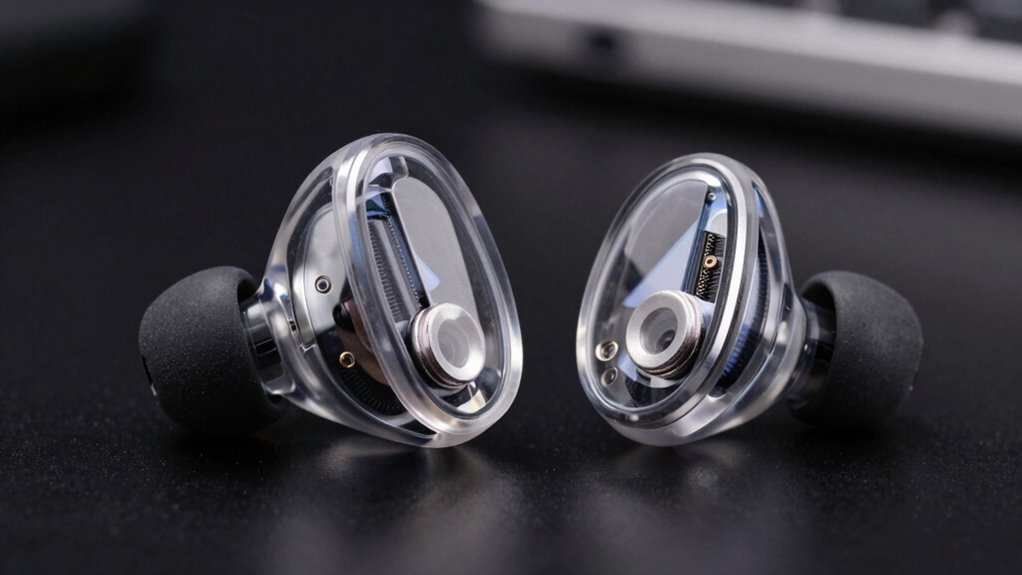

Choosing the right inear monitor system is vital for presenters seeking clear, reliable audio on stage. The best models balance sound quality, ease of setup, and affordability, but tradeoffs exist—such as range versus latency or simplicity versus advanced features. The Shure PSM300 stands out for professional-grade sound and durability, while the LEKATO MS-1 offers excellent value for smaller setups. For beginners, straightforward systems like the JOYO JW-07 provide ease of use with decent performance. Continue reading for a detailed comparison to help you find the best fit for your stage needs.

Get business pricing on office and shipping supplies
- Business-only prices and quantity discounts
- Tax-exempt purchasing
- Multiple users, one account, clear invoices
Key Takeaways
- Top picks balance sound quality, latency, and ease of pairing for reliable stage performance.
- Wireless systems with UHF bands tend to offer more stable connections than 2.4GHz models in crowded environments.
- Higher channel counts and adjustable frequencies are crucial for large, complex setups or multiple performers.
- Durability and battery life are often overlooked but essential for long gigs or frequent use.
- Entry-level models are suitable for small venues or occasional use, but professionals should prioritize models with better audio fidelity and low latency.


| inear monitor systems for presenter | Battery Life |
|---|---|
| VOXFULL M6S Stereo Wireless In | 8-10 hours |
| LEKATO MS-1 Wireless In-Ear Mo | 5+ hours |
| POGOLAB Wireless In-Ear Monito | — |
| Donner CV-3 Wireless In-Ear Mo | 10 hours |
| Phenyx Pro PTM-10 UHF Stereo W | — |
| Phenyx Pro 4-Channel UHF Mono | — |
| Xvive U45 Wireless In-Ear Moni | Up to 5 hours |
| Pyle PYIEM103 Wireless In-Ear | — |
| Xvive U45 Wireless In-Ear Moni | Up to 5 hours |
| Xvive U45D True Stereo Wireles | Up to 5 hours |
| LEKATO Wireless in Ear Monitor | 6-8 hours |
| Xvive U4 Wireless In-Ear Monit | Up to 5 hours |
| Depusheng MA5 Wireless In-Ear | Over 8 hours |
| Shure PSM300 P3TRA215CL Wirele | — |
| JOYO JW-07 2.4G Wireless In-Ea | Over 8 hours |
More Details on Our Top Picks
VOXFULL M6S Stereo Wireless In-Ear Monitor System
The VOXFULL M6S stands out for its straightforward setup with automatic pairing and solid audio clarity, making it ideal for smaller bands and church groups. Compared to the LEKATO MS-1, it offers a similar wireless range but excels in supporting up to 6 receivers from a single transmitter, simplifying multi-performer setups. The inclusion of basic in-ear headphones is a drawback, but the long 8-10 hour battery life ensures extended use during rehearsals or services. Its 2.4GHz band can face interference in crowded RF environments, which is a concern for larger venues or events with many wireless devices.
Pros:- Automatic pairing simplifies setup for multiple users
- Clear audio with robust bass and low latency
- Supports up to 6 receivers on one transmitter
- Long-lasting 8-10 hour battery life
Cons:- Included headphones are basic quality, not studio-grade
- Potential interference from crowded RF environments
Best for: Small to medium-sized groups seeking reliable, multi-user wireless monitoring with easy operation
Not ideal for: Large venues or events with high RF congestion, where interference might disrupt the signal
- Brand:VOXFULL
- Model:M6S
- Frequency Band:2.4GHz
- Audio Resolution:24-bit/48KHz
- Battery Life:8-10 hours
- Includes:Wireless receiver, wireless transmitter, in-ear headphones, cable, 6.35mm jack adapter, user manual
Our verdict“This system is best suited for smaller groups needing reliable, multi-user wireless monitoring without complex setup.”
LEKATO MS-1 Wireless In-Ear Monitor System, 2.4GHz Stereo IEM with Transmitter & Clip-On Receiver
The LEKATO MS-1 offers a compelling balance of performance and affordability, making it ideal for small bands and church groups. Its true stereo transmission with under 12ms latency surpasses many budget options like the VOXFULL M6S in providing near real-time feedback, crucial for musicians or presenters requiring tight coordination. Auto-pairing and support for up to 6 sets keep setup simple, though its 100-foot range might limit use in larger venues. The stereo mode relies on a compatible audio source and cable, adding complexity versus plug-and-play systems.
Pros:- Supports up to 6 receiver sets simultaneously
- Very low latency under 12ms for tight synchronization
- Auto-pairing simplifies multi-user setup
- Rechargeable batteries with over 5 hours of use
Cons:- Limited 100-foot wireless range for larger venues
- Stereo mode requires compatible source and cabling
Best for: Musicians or presenters in small to medium venues needing low-latency, true stereo sound at a budget
Not ideal for: Large venues or outdoor events where 100-foot range could be restrictive
- Frequency Band:2.4GHz
- Latency:<12ms
- Audio Resolution:24-bit/48kbps
- Range:100 ft
- Battery Life:5+ hours
- Supports:Up to 6 sets
Our verdict“This pick makes the most sense for small groups prioritizing low latency and stereo sound without breaking the bank.”
POGOLAB Wireless In-Ear Monitor System, UHF 7-Channel, 1ms Ultra-Low Latency, 164ft Range, Rechargeable Transmitter & Belt Receiver for Stage and Live Performances
The POGOLAB UHF system delivers a level of stability and low latency that caters to professional performers, with its 7-channel UHF setup providing reliable signal separation in complex RF environments. Its 1ms latency outperforms most 2.4GHz options like the VOXFULL M6S or LEKATO MS-1, making it a top choice for critical live performances. The XLR and AUX inputs add versatility, and the long 164-foot range supports large-stage mobility, though setup and understanding of audio gear are required. Its limited battery life of around 5 hours is manageable for most gigs but less ideal for extended performances.
Pros:- Ultra-low 1ms latency for near-instant monitoring
- Stable UHF connection with 7 channels for interference avoidance
- Versatile inputs including XLR and AUX
- Long 164-foot range supports large venues
Cons:- Requires more setup knowledge due to professional features
- Battery life of around 5 hours may require extra charging during long shows
Best for: Professional musicians and stage performers needing dependable, low-latency monitoring with extensive range
Not ideal for: Casual or small venue users who prefer plug-and-play simplicity over professional features
- Transmission Delay:1ms
- Frequency Response:35Hz–16.5kHz
- Range:164 ft
- Channels:7
- Battery Capacity:450mAh (TX), 400mAh (RX)
- Input:XLR & AUX
Our verdict“This system is tailored for stage professionals who need ultra-reliable, low-latency wireless monitoring with wide coverage.”
Donner CV-3 Wireless In-Ear Monitor System with Transmitter and Beltpack Color Screen Receiver
The Donner CV-3 combines a bright color screen with professional audio specs, making it an attractive choice for performers who want real-time visual feedback alongside reliable sound. Its 6ms latency is still acceptable for most live applications, but it trails behind the ultra-low latency of the POGOLAB. The 192kHz/24-bit audio quality ensures clear monitoring, and the 100-foot range suits mid-sized venues. Its compatibility with various inputs, including XLR, makes it versatile for different setups, although the slightly higher latency might be noticeable for highly sensitive performers.
Pros:- Interactive color screen for real-time audio visualization
- Low latency under 6ms for near-lag-free monitoring
- Wide compatibility with different audio inputs
- Long 10-hour battery life
Cons:- 100-foot range may be limiting for large outdoor events
- Relatively few user reviews for proven reliability
Best for: Performers who value visual feedback and flexible connectivity in mid-sized venues
Not ideal for: High-end professional settings where ultra-low latency is critical
- Frequency Band:2.4 GHz
- Latency:less than 6ms
- Sampling Rate:192kHz/24-bit
- Range:100 feet
- Battery Life:10 hours
- Interface Options:1/4″ TRS, 1/8″ TRS, XLR
Our verdict“This system suits performers who want a good balance of visual feedback and reliable audio in mid-sized settings.”
Phenyx Pro PTM-10 UHF Stereo Wireless In-Ear Monitor System (900MHz, Rack Mountable)
The Phenyx Pro PTM-10 leverages the 900MHz band to avoid congestion common in 2.4GHz systems, making it ideal for large festivals or venues with many wireless devices. Its rack-mountable design and extensive features like EQ, limiter, and lock functions support professional customization, akin to the POGOLAB but with the added benefit of rack integration. Its 5-system capacity allows multiple performers to operate simultaneously, though the need for batteries and regional restrictions on 900MHz use could be downsides for some users.
Pros:- Operates in the less congested 900MHz band
- Supports up to 5 systems simultaneously
- Advanced audio controls (EQ, limiter, lock)
- Rack-mountable metal housing for durability
Cons:- Requires 2 AA batteries, adding ongoing cost
- Regional restrictions on 900MHz frequency use
Best for: Professional stage setups in environments with high RF congestion requiring multiple simultaneous systems
Not ideal for: Casual gigs or small rehearsals where simplicity and minimal setup are preferred
- Frequency Band:900MHz UHF
- Max Simultaneous Systems:5
- Range:160 ft
- Monitoring Modes:Stereo / Mono
- Inputs:XLR and 6.3mm
- Power:2 x AA batteries
Our verdict“This system is best suited for professional environments demanding interference-free operation and extensive feature control.”
Phenyx Pro 4-Channel UHF Mono Wireless In-Ear Monitor System PTM-33-4B
This system stands out for its robust four-channel UHF operation that minimizes interference, making it ideal for groups needing multiple independent mixes. Compared with the Xvive U45, which offers a single mono channel, the PTM-33-4B provides flexibility for larger acts, though it only supports mono monitoring, limiting its stereo capabilities. Its long-range (up to 164 ft) and rack-mount design suit complex stage environments, but the setup complexity and multiple components could challenge beginners. This model is better suited for professional performers or church bands with multiple members requiring separate mixes.
Pros:- Interference-free UHF operation with multiple channels
- Flexible daisy chaining and rack-mount compatibility
- Long wireless range suitable for large stages
Cons:- Mono only, no stereo monitoring option
- Requires line of sight for optimal performance
- Complex setup with multiple components may intimidate beginners
Best for: Performers or teams needing reliable, interference-free mono monitoring for multiple users on stage
Not ideal for: Solo artists or small acts that prefer stereo monitoring or minimal setup complexity
- Model Number:PTM-33-4B
- Frequency Range:UHF 4×25 channels
- Range:140-164 ft line of sight
- Connectivity:1/4″ TS jack, IR sync
- Power Supply:AC adapter, 8 x AA batteries
- Included Components:Transmitter, 4 receivers, 4 earphones, antennas, rackmount kit, user manual
Our verdict“This is an excellent choice for large groups needing reliable mono monitoring in complex stage environments.”
Xvive U45 Wireless In-Ear Monitor System with 5.8GHz Transmitter and Receiver (Black)
The Xvive U45 excels with its 5.8GHz frequency, providing a more stable connection than some UHF systems like the Phenyx Pro PTM-33-4B. Its auto channel scan and less than 5ms latency make it ideal for seamless live performances, especially in venues with potential RF congestion. While its 100ft range is sufficient for most stages, it may fall short in larger venues, and the battery life of 5 hours could be limiting for extended gigs. This pick makes the most sense for musicians and performers prioritizing stability and quick setup over longer-range needs.
Pros:- Stable 5.8GHz frequency with reduced interference
- Auto channel scan for quick, reliable setup
- Under 5ms latency for real-time monitoring
- Rechargeable batteries for convenience
Cons:- Limited 5-hour battery life may require extra batteries or charging
- 100ft range may be insufficient for very large venues
Best for: Musicians and performers seeking a reliable, interference-resistant system with quick setup
Not ideal for: Large venues or extended events where longer battery life or range is critical
- ASIN:B0GC5HSC8Z
- Frequency:5.8GHz
- Latency:<5ms
- Wireless Range:100ft
- Battery Life:Up to 5 hours
- Includes:Transmitter, Receiver, USB Cable, 1/4″ to XLR Adapter, Carrying Bag
Our verdict“This system is ideal for performers who need stable, interference-free monitoring in moderate-sized venues.”
Pyle PYIEM103 Wireless In-Ear Monitor System with Bodypack Receiver
The Pyle PYIEM103 offers an impressive 220 selectable UHF frequencies, making it highly adaptable in crowded RF environments, outperforming systems like the Xvive U45 in frequency options. Its metal base station adds durability, and the comprehensive package includes all necessary accessories, making setup straightforward. However, it only outputs mono audio despite stereo input capabilities, and the plastic bodypack may be less resilient over time. This model is best for professionals needing versatile connectivity and reliable interference-free operation across various venues.
Pros:- 220 selectable UHF frequencies for interference resilience
- Durable metal transmitter base station
- Complete all-in-one package with accessories
- Versatile connectivity including XLR and 6.35mm
Cons:- Mono output limits stereo use
- Plastic bodypack may be less durable
- Small review base with moderate ratings
Best for: High-demand performers or sound engineers requiring flexible, durable wireless systems with multiple connection options
Not ideal for: Solo performers or those prioritizing stereo sound and lightweight equipment
- Wireless Range:164 ft
- Frequencies:220 selectable (10 groups)
- Frequency Response:20Hz–20kHz
- Transmitter Material:Metal
- Connectivity:UHF, RF, XLR, 6.35mm
- Output:Mono
Our verdict“This system suits professionals needing high flexibility and durability in interference-prone settings.”
Xvive U45 Wireless In-Ear Monitor System (5.8 GHz)
The Xvive U45 (5.8 GHz) offers high-resolution 24-bit/48kHz audio with true diversity tech, making it ideal for studio work and rehearsals, unlike the mono-focused Phenyx Pro 4-Channel. Its Channel Scan mode simplifies setup, and the USB-C charging is convenient for frequent use. However, the 5-hour battery life could be limiting during long sessions, and its 100 ft range is less suitable for large outdoor stages. This pick works best for musicians and engineers seeking reliable, high-quality audio in controlled environments.
Pros:- True diversity for reliable RF signal up to 100 ft
- High-resolution 24-bit/48kHz audio
- Channel Scan for quick setup
- Fast USB-C charging
Cons:- Limited 5-hour battery life
- Range may be insufficient for large outdoor stages
Best for: Studio musicians, rehearsals, and small live setups where high audio fidelity is key
Not ideal for: Large outdoor performances or all-day events requiring longer battery life and extended range
- Frequency Band:5.8 GHz
- Wireless Range:100 ft / 30.5 m
- Frequency Response:20Hz – 20kHz
- Audio Resolution:24-bit/48kHz
- Battery Life:Up to 5 hours
- Includes:U45 system, 1/4 TS adapter, dual USB-C charging cables, user manual
Our verdict“This system is best suited for environments where high-quality audio and quick setup are priorities over extended range.”
Xvive U45D True Stereo Wireless In-Ear Monitor System
The Xvive U45D shines with dual XLR inputs that enable true stereo monitoring, a feature not available in mono systems like the Pyle PYIEM103. Its four monitoring modes—Stereo, L, R, and Mix—offer flexible configurations for various performance needs, with less than 5ms latency ensuring real-time feedback. The 6-channel setup and shareable monitor mix make it a versatile choice for bands and worship teams. However, its 100 ft range and 5-hour battery life may limit use in larger venues or all-day events. This system makes the most sense for groups prioritizing true stereo sound and flexible monitoring options.
Pros:- Dual XLR inputs for true stereo monitoring
- Ultra-low latency under 5ms for live performance
- Multiple monitoring modes for flexible setups
- Shareable monitor mix for multiple receivers
Cons:- Range limited to 100 ft
- Battery life of 5 hours may be insufficient for long gigs
Best for: Bands, worship teams, and groups needing true stereo monitoring and multiple configuration options
Not ideal for: Solo performers or outdoor events requiring longer range and extended battery life
- Frequency:5.8GHz
- Monitoring Modes:Stereo, L, R, Mix
- Inputs:Dual XLR
- Latency:Less than 5ms
- Wireless Range:Up to 100 ft
- Battery Life:Up to 5 hours
Our verdict“This system is perfect for groups seeking versatile, true stereo monitoring with flexible control options.”
LEKATO Wireless in Ear Monitor System MS-02 – 2.4G Stereo IEM System with Transmitter & Beltpack Receiver
The LEKATO MS-02 stands out for its ultra-low latency (<4.5ms), making it ideal for real-time monitoring where timing matters most. Its support for one transmitter to up to four receivers offers flexibility for bands, churches, or small ensembles. Compared to the Xvive U4, which also boasts low latency, the MS-02’s multi-receiver capability provides an edge for group setups. However, its wireless range is limited to 100 feet in open areas, and earbuds are not included, meaning additional costs. Its compact design ensures ease of movement on stage, but the range constraint can be a drawback in larger venues. This pick makes the most sense for performers seeking reliable, multi-user wireless monitoring without a hefty price tag.
Pros:- Ultra-low latency (<4.5ms) ensures real-time monitoring
- Supports one transmitter to up to four receivers
- Long 6-8 hour battery life with LED indicators
- Compact, lightweight design
Cons:- Earbuds are not included, adding extra cost
- Wireless range of 100 feet only in open areas
Best for: Performers or small bands needing reliable multi-user in-ear monitoring within close to medium venues.
Not ideal for: Large venues or solo performers requiring extended wireless range or integrated earbuds, as earbuds are not included and range is limited.
- Model:MS-02
- Latency:<4.5ms (mono mode)
- Sampling Rate:24bit/48KHz
- Frequency:2.4GHz wireless
- Battery Life:6-8 hours
- Wireless Range:100 ft (open area)
- Pairing:One transmitter to up to 4 receivers
- Modes:Mono/Stereo
- Earbuds:Not included
Our verdict“This system suits performers who prioritize low latency and multi-user capability in smaller or open-stage settings.”
Xvive U4 Wireless In-Ear Monitor System Set
The Xvive U4 is a reliable choice with a 90-foot working range and six channels, enabling multiple performers or instruments to operate simultaneously. Its latency under 5ms ensures minimal distraction, comparable to the LEKATO MS-02, but with the added advantage of rechargeable batteries in both transmitter and receiver—reducing ongoing costs. While the 5-hour battery life may be limiting for longer performances, its simple setup and decent range make it a compelling budget-friendly option. Unlike the Shure PSM300, which offers more advanced features and professional-grade sound quality, the U4 is better suited for smaller venues or solo performers who prioritize affordability and ease of use. Its limited battery life, however, makes it less ideal for extended events.
Pros:- Low latency (<5ms) suitable for live performance
- Long 90-foot range for small to medium venues
- Rechargeable batteries in both transmitter and receiver
- Includes 6 channels for multiple users
Cons:- Battery life limited to around 5 hours
- Range may be insufficient for larger venues
Best for: Solo performers or small bands working within smaller spaces needing multi-channel capability without breaking the bank.
Not ideal for: Large venues or performers with long sets, due to limited 5-hour battery life and slightly shorter range compared to higher-end systems.
- Frequency:2.4GHz
- Working Range:90 ft
- Channels:6
- Latency:<5ms
- Battery Life:Up to 5 hours
- Battery Type:Rechargeable
- Includes:1 Receiver, 1 Transmitter, 1/4″ to XLR adapter, carrying bag
Our verdict“Ideal for budget-conscious performers seeking multi-channel wireless monitoring in small to medium settings.”
Depusheng MA5 Wireless In-Ear Monitor System with Clip-On Transmitter & Receiver
The Depusheng MA5 offers an impressive transmission distance of over 50 meters, making it suitable for large venues, unlike the JOYO JW-07 with its shorter 40-60ft range. Its automatic push-button pairing simplifies setup, and with over 8 hours of battery life, it’s tailored for extended performances. The ultra-low latency, while not quantified precisely, promises real-time feedback, comparable to the Shure PSM300, but at a more accessible price point. Its support for one-to-multiple connections enhances flexibility for studio, DJ, or live stage environments. However, the lack of detailed latency specs and limited warranty info could be concerns. Overall, this makes the most sense for users who need coverage over larger spaces without sacrificing sound clarity or ease of use.
Pros:- Over 50 meters transmission range for large venues
- Over 8 hours of battery life
- Automatic push-button pairing for quick setup
- Supports multiple device connections
Cons:- Latency not specified precisely, which might concern critical timing needs
- Limited warranty details
Best for: Performers and studio professionals needing reliable long-distance monitoring in large or open spaces.
Not ideal for: Small venues or solo performers who do not require extensive range, as the system’s advantages are overkill for tighter spaces.
- Transmission Distance:Over 50 meters
- Battery Life:Over 8 hours
- Control Method:Push Button
- Includes:Transmitter and clip-on receiver
- Wireless Range:50+ meters
- Best Sellers Rank:#6,806 in Musical Instruments
Our verdict“This system appeals to users requiring extensive wireless coverage and long battery life for large or open-stage performances.”
Shure PSM300 P3TRA215CL Wireless In-Ear Personal Monitoring System with SE215-CL Earphones
The Shure PSM300 is a staple for professional stage monitoring, offering ultra-low noise with patented Audio Reference Companding, which ensures clear, distortion-free sound even at high volumes. Its seamless setup via one-touch frequency scan and sync simplifies live use, outpacing many consumer-grade systems like the Xvive U4. The inclusion of the SE215 earphones and the ability to create personalized mixes makes it a flexible choice for demanding performers. Its higher price reflects its professional-grade components and sound quality, though it requires AA batteries or an optional recharge kit. Compared to the LEKATO MS-02, which is more affordable but less feature-rich, the PSM300 is designed for users who prioritize reliability and sound integrity over budget.
Pros:- Ultra-low noise with patented Audio Reference Companding
- Easy setup with one-touch frequency scan and sync
- Includes high-quality SE215 earphones
- Supports personalized mixes from two channels
Cons:- Higher price point typical of professional systems
- Requires AA batteries or optional recharge kit
Best for: Professional musicians and stage performers who need ultra-clear sound and personalized monitoring in demanding environments.
Not ideal for: Budget-conscious performers or casual users who don’t require professional-grade features or equipment durability.
- Model:P3TRA215CL
- System Family:PSM300
- Included Earphones:Shure SE215
- Frequency Response:38 Hz – 15 kHz
- Receiver Type:P3RA (rechargeable, all-metal)
- Transmitter:P3T
- Power:2 AA batteries
- Included Accessories:Rack mount, hardware kits
Our verdict“This system is best suited for professionals demanding top-tier sound clarity and reliable wireless performance on stage.”
JOYO JW-07 2.4G Wireless In-Ear Monitor System with Clip-on Receiver and Automatic Pairing
The JOYO JW-07 offers a straightforward, user-friendly experience with automatic pairing and a solid 8+ hours of battery life. Its 48kHz/16-bit audio quality provides decent clarity for most live scenarios, while its frequency-hopping technology minimizes interference, making it a strong choice for casual or semi-professional use. Its range of 40-60 feet is adequate for smaller stages or studio environments but less so for large venues, especially when compared to systems like the Depusheng MA5. The system’s limitation of one transmitter to one receiver makes it less suitable for groups or multiple instrument setups. Nonetheless, its simplicity and affordability make it ideal for newcomers or performers seeking quick, reliable wireless monitoring without complex features.
Pros:- Automatic pairing simplifies setup
- Over 8 hours of battery life
- Frequency-hopping technology reduces interference
- Affordable price point
Cons:- Limited to one transmitter and one receiver, not multi-user friendly
- Range limited to 40-60ft
Best for: Beginners or solo performers seeking a simple, reliable wireless in-ear system for smaller venues or studio use.
Not ideal for: Large stage performances or groups requiring multiple channels or extended range, as it only supports one-to-one connections.
- Frequency:2.4GHz
- Audio Quality:48kHz/16-bit
- Latency:<5ms
- Operating Range:40-60ft
- Battery Life:Over 8 hours
- Channels:1
Our verdict“This system is ideal for beginners or solo users seeking an easy, reliable wireless monitoring solution in smaller settings.”
How We Picked
To evaluate these inear monitor systems, I focused on key factors that matter most to presenters: sound clarity, latency, connection stability, ease of use, build quality, and value. I compared products across different price ranges to identify which systems deliver reliable performance without unnecessary complexity. Priority was given to models that balance affordability with professional features, especially for live stage use. The ranking reflects a combination of user feedback, feature set, and overall versatility for various presentation environments.Factors to Consider When Choosing Inear Monitor Systems For Presenters
When selecting an inear monitor system for presentations, it’s important to consider several key factors that influence both performance and usability. The right choice depends on your venue size, the number of performers, and your technical comfort level. Understanding these considerations will help you avoid common pitfalls, such as choosing a system with insufficient range or poor audio clarity, which can undermine your presentation. Let’s explore the main factors to keep in mind before making a purchase.Sound Quality and Latency
Clear, distortion-free audio is the primary reason for choosing an inear monitor system. Look for models with good frequency response and low latency—ideally under 5 milliseconds—to ensure real-time feedback without noticeable delay. High latency can cause lip-sync issues or disorient performers, especially when using in-ear monitors for live speaking or singing. Prioritize systems with proven low-latency performance, especially if you’re relying on wireless communication during your presentation.
Frequency Range and Channel Options
The frequency range determines how well the system can avoid interference from other wireless devices. UHF systems typically offer more stable connections in crowded environments, while 2.4GHz models are more affordable but potentially more prone to interference. Multiple channels—preferably 8 or more—allow for flexibility in larger setups with several performers or presenters. Choosing a system with adjustable frequencies helps prevent signal dropout during critical moments.
Ease of Use and Setup
For presenters, simplicity can be a game-changer. Systems with automatic pairing, straightforward controls, and color-coded components reduce setup time and minimize technical issues. Consider whether the system offers clear indicators for battery life and connection status, which can save time during quick transitions. Avoid overly complex setups unless you have dedicated technical support, as ease of use directly impacts your confidence on stage.
Build Quality and Battery Life
Durability matters, especially if you’ll be using your system frequently or transporting it often. Look for metal housings and reinforced connectors. Battery life is equally critical; systems with at least 4–6 hours of runtime support longer performances without interruptions. Some models offer quick charging or replaceable batteries, which can be advantageous during extended events. Neglecting these factors risks equipment failure at crucial moments.
Budget and Value
While high-end systems deliver top-tier performance, they come with a higher price tag. For occasional or small-scale use, mid-range models provide a good balance of features and affordability. Conversely, professional-grade systems with more channels, lower latency, and rugged build are worth the investment for frequent, high-stakes presentations. Be mindful of hidden costs, such as replacement batteries or accessories, which can influence the overall value of your purchase.
Frequently Asked Questions
Can I use a wireless inear monitor system with any microphone?
Most wireless inear monitor systems are designed to work with specific transmitters and receivers, but they generally connect to standard audio sources such as wireless microphones or mixing consoles. It’s important to verify the input/output compatibility and ensure that the transmitter’s frequency band matches your other wireless gear to avoid interference. Compatibility is typically straightforward if you select a system within the same frequency range as your microphone or audio source.
What’s the difference between UHF and 2.4GHz wireless monitor systems?
UHF systems tend to provide a more stable and interference-resistant connection, especially in crowded venues with many wireless devices. They usually offer more channels for frequency flexibility, making them ideal for larger setups. On the other hand, 2.4GHz systems are generally easier to set up, more affordable, and compatible with many consumer devices, but they may experience more interference and have fewer channels, which could disrupt your signal during critical moments.
How many channels should I look for in a system for a multi-performer setup?
The number of channels needed depends on your setup size. For small presentations with one or two performers, 4 to 8 channels are sufficient. Larger groups or multi-performer stages benefit from systems with 12 or more channels, allowing each person to have a clear, interference-free feed. Having more channels also provides flexibility to switch frequencies if interference occurs, maintaining consistent sound quality throughout your event.
Is it worth investing in a professional-grade inear monitor system for presentations?
Investing in a professional-grade system can significantly improve audio clarity, connection stability, and durability, especially if you perform frequently or in large venues. Higher-end models often feature lower latency, multiple channels, and rugged construction, which contribute to a more reliable experience. While they are more expensive upfront, their longevity and performance can justify the cost for serious presenters or those who require flawless sound quality under demanding conditions.
What should I consider regarding battery life for my inear monitor system?
Battery life is a critical factor, particularly for long events or multiple performances in a day. Aim for a system that offers at least 4–6 hours of runtime, with quick-charging or spare batteries available. Some models include battery level indicators, which help avoid unexpected power loss. Investing in high-capacity or rechargeable batteries can reduce operational costs and ensure your system remains powered throughout your presentation without interruptions.
Conclusion
For solo presenters or small venues, the LEKATO MS-1 offers excellent value with reliable performance. Professionals working in larger, dynamic environments should consider the Shure PSM300 for its superior audio fidelity and durability. Beginners or those new to wireless inear systems will benefit from the straightforward setup of the JOYO JW-07. Those needing maximum flexibility and low latency should look toward higher-channel, UHF models like the Phenyx Pro PTM-10. Ultimately, your choice depends on your budget, venue size, and technical comfort—match your needs to these strengths for the best experience.Halloween Picks

Max Fun 10-Foot Halloween Dragon and Pumpkin Inflatable Archway with LED Lights

Govee Outdoor Halloween Projector Light with 3D Dynamic Visuals and Nebula Effect

HOPOCO Halloween Pumpkin Fog Machine with 12 LED Colors & Remote Control
As an affiliate, we earn on qualifying purchases.