

Business automation tools in 2026 fall into two camps: no-code platforms like Zapier and Make.com that connect apps you already use, and AI agent systems that can plan, use tools, and handle entire workflows like support tickets or data entry with minimal supervision. My top overall pick is AI Automation & No-Code Blueprint, because it covers both worlds — connecting LLMs to Make.com and Zapier — and promises the kind of measurable time savings (20+ hours weekly) that most buyers actually want. For solo operators, Agentic AI for Solopreneurs stands out for building agents without any coding, while Claude for Finance Automation is the strongest specialized choice for accounting and reporting work. The main tradeoff you’ll face is breadth versus depth: general directories and beginner guides cover a lot of ground but rarely go deep enough to implement, while project-specific blueprints deliver results faster but lock you into one tool or workflow. Keep reading for the full breakdown of all 15 options, including who each one is for and who should skip it.

Get business pricing on office and shipping supplies
- Business-only prices and quantity discounts
- Tax-exempt purchasing
- Multiple users, one account, clear invoices
Key Takeaways
- Implementation-focused guides outranked reference-style directories across the board — the 1000 AI Tools Directory ranked lowest despite its breadth because a tool list without a workflow delivers no automation.
- The strongest picks bridge no-code platforms (Zapier, Make.com) with LLMs; guides that treated these as separate worlds produced weaker outcomes for readers.
- Audience fit mattered more than content quality: a brilliant Smartsheet guide is useless to a solopreneur, and a freelancer autopilot system is overkill for a finance department — match the pick to your team size first.
- Agentic AI guides (systems that plan, verify, and recover from failure) represent the 2026 frontier, but they demand more setup maturity than traditional workflow automation — beginners should start with no-code picks.
- Specialized picks like Claude for Finance Automation and Excel VBA Macros outperform general guides within their niche, proving that depth beats breadth once you know which department you’re automating.
| From AI Agent to Department: How to Build, Train, and Scale AI Agents Into High-Performing Departments |  | Best for Scaling Teams | Format: Kindle eBook | Series: A-genetic Business Series | Topic: AI agent strategy and scaling | VIEW LATEST PRICE | See Our Full Breakdown |
| AI in Business: An Executive Guide for Beginners |  | Best for Executives | Format: Kindle eBook | Topic: AI fundamentals for business | Audience: Executives and AI beginners | VIEW LATEST PRICE | See Our Full Breakdown |
| AI Agents for Business Automation: Building Agents That Handle Support, Data Entry, and Ops Work |  | Best for Hands-On Builders | Format: Kindle eBook | Topic: AI agent engineering for business | Audience: AI engineers, technical business professionals | VIEW LATEST PRICE | See Our Full Breakdown |
| Agentic AI for Solopreneurs: Build Smart No Code Systems with AI Agents to Save Time and Scale Your Business |  | Best for Solopreneurs | Format: Kindle eBook | Topic: No-code AI agents for solo businesses | Audience: Solopreneurs and beginners | VIEW LATEST PRICE | See Our Full Breakdown |
| AI Automation & No-Code Blueprint: Build Autonomous Business Systems, Connect LLMs with Make.com & Zapier, Save 20+ Hours Weekly |  | Best Tool-Specific Value | Format: Kindle eBook | Topic: AI automation with no-code tools | Platforms Covered: Make.com, Zapier, LLM integrations | VIEW LATEST PRICE | See Our Full Breakdown |
| Agentic Workflows: A Practical Blueprint for Designing Reliable AI Systems That Plan, Use Tools, Verify Results, and Recover from Failure |  | Best for Technical Architects | Format: Kindle ebook | Topic Focus: AI agent system design and reliability | Core Areas Covered: Planning, tool usage, output verification, failure recovery | VIEW LATEST PRICE | See Our Full Breakdown |
| Claude for Finance Automation: Automate Spreadsheets, Reports, Forecasts, Expense Reviews, Invoice Workflows, and Financial Analysis with AI |  | Best for Finance Teams | Format: Kindle ebook | Topic Focus: AI-driven finance process automation | AI Platform: Claude | VIEW LATEST PRICE | See Our Full Breakdown |
| Python Desktop App Development: Turn Python Scripts into Modern GUI Applications for Automation, Business Tools, Data Workflows, and Portfolio Projects |  | Best for Building Custom Tools | Format: Kindle ebook | Topic Focus: Python GUI application development | Core Skills: Script-to-app conversion, GUI design, business tool building | VIEW LATEST PRICE | See Our Full Breakdown |
| A Beginner’s Guide to Smartsheet: Step-by-Step Project Planning, Task Tracking, Forms, Reports, Dashboards, Formulas, Automation, AI Tools, Team Collaboration, and Smarter Business Workflows | 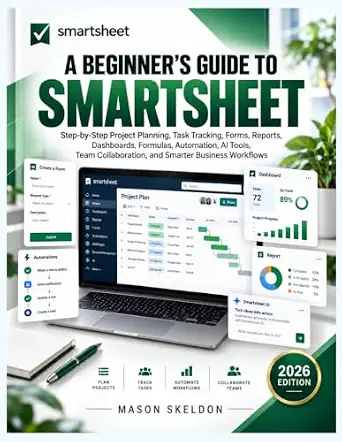 | Best Beginner Platform Guide | Format: Kindle ebook | Topic Focus: Smartsheet project management and automation | Features Covered: Project planning, task tracking, forms, reports, dashboards, formulas, automation, AI tools | VIEW LATEST PRICE | See Our Full Breakdown |
| AI Mastery & Monetization Workbook: How Freelancers and Entrepreneurs Make Money by Solving Real Business Problems with Prompts, Tools, and Automation |  | Best for Monetizing AI Skills | Format: Kindle ebook (workbook) | Topic Focus: AI skill monetization for freelancers | Core Areas Covered: Prompts, AI tools, automation, business problem solving | VIEW LATEST PRICE | See Our Full Breakdown |
| 1000 AI Tools Directory 2026 |  | Best Reference Companion | Format: Guide / directory | Edition: 2026 | Number of tools listed: 1,000 | VIEW LATEST PRICE | See Our Full Breakdown |
| AI for the One-Person Business |  | Best for Solo Founders | Format: Strategy guide | Target reader: Solo entrepreneurs | Focus areas: All business departments: marketing, sales, operations, admin | VIEW LATEST PRICE | See Our Full Breakdown |
| No-Code Freelance Automation 2026 |  | Best Ready-to-Use Workflows | Format: Practical workflow guide | Edition: 2026 | Platforms covered: Zapier, Make.com, ChatGPT | VIEW LATEST PRICE | See Our Full Breakdown |
| Excel VBA Macro Projects Made Easy |  | Best for Office-Based Automation | Format: Project-based tutorial book | Technology: Excel VBA (Microsoft Office) | Project types: Reports, invoices, dashboards, data cleaning, email, PDF export, workflows | VIEW LATEST PRICE | See Our Full Breakdown |
| AI & Automation for Freelancers |  | Best Time-Recovery Focus | Format: Systems and strategy guide | Target reader: Freelancers | Stated outcome: Reclaim 10+ hours per week | VIEW LATEST PRICE | See Our Full Breakdown |
| business automation tool | Format | Skill Level |
|---|---|---|
| From AI Agent to Department: H | Kindle eBook | Intermediate to advanced |
| AI in Business: An Executive G | Kindle eBook | Beginner |
| AI Agents for Business Automat | Kindle eBook | Intermediate to advanced |
| Agentic AI for Solopreneurs: B | Kindle eBook | Beginner |
| AI Automation & No-Code Bluepr | Kindle eBook | Beginner to intermediate |
| Agentic Workflows: A Practical | Kindle ebook | Intermediate to advanced |
| Claude for Finance Automation: | Kindle ebook | Beginner to intermediate |
| Python Desktop App Development | Kindle ebook | Intermediate |
| A Beginner’s Guide to Smartshe | Kindle ebook | Beginner |
| AI Mastery & Monetization Work | Kindle ebook (workbook) | Beginner to intermediate |
| 1000 AI Tools Directory 2026 | Guide / directory | All levels (reference use) |
| AI for the One-Person Business | Strategy guide | — |
| No-Code Freelance Automation 2 | Practical workflow guide | — |
| Excel VBA Macro Projects Made | Project-based tutorial book | — |
| AI & Automation for Freelancer | Systems and strategy guide | — |
More Details on Our Top Picks
From AI Agent to Department: How to Build, Train, and Scale AI Agents Into High-Performing Departments
Most books in this roundup stop at building a single automation; this one stands out for treating AI agents as an organizational asset that can be trained, managed, and scaled like a real department. Compared with AI Agents for Business Automation, which focuses on technical construction of individual agents, this pick targets the management and scaling layer — governance, team design, and integration into operations. That makes it a better fit for leaders who already have pilots running. The tradeoff is real: readers without prior AI exposure will struggle, and those wanting code-level or tool-specific instructions should look elsewhere. Still, for anyone moving from experimentation to enterprise-wide deployment, this fills a gap the other titles simply don’t address. Skip it only if you’re pre-pilot and need fundamentals first.
Pros:- Addresses the rarely covered scaling and management layer of AI adoption
- Practical frameworks for structuring and training AI ‘teams’
- Written for both business strategists and technical professionals
- Bridges pilot-stage experimentation and enterprise-wide rollout
Cons:- No hands-on technical detail, tool walkthroughs, or code examples
- Too advanced for readers new to AI agents
Best for: Operations and transformation leaders scaling AI agents from pilot projects into full departments
Not ideal for: Beginners or solo builders — it assumes familiarity with AI concepts and skips foundational explanations
- Format:Kindle eBook
- Series:A-genetic Business Series
- Topic:AI agent strategy and scaling
- Audience:Business leaders, AI professionals
- Focus Areas:Agent building, training, departmental scaling
- Technical Depth:Strategic, non-code-level
- Skill Level:Intermediate to advanced
Our verdict“Buy this if you’re scaling working AI agents into organizational systems; skip it if you haven’t built your first one yet.”
AI in Business: An Executive Guide for Beginners
Where most titles here assume you want to build automations, this book is built for people who need to decide about them. It covers automation, data-driven decision-making, ROI, and customer experience at a conceptual level — exactly the vocabulary an executive needs in a boardroom. Compared with Agentic AI for Solopreneurs, which dives into no-code tactics, this pick stays deliberately high-level, translating AI capabilities into business outcomes rather than workflows. That’s its strength and its weakness: the plain-English framing makes it approachable, but the absence of case studies and implementation detail means readers will need a follow-up resource before acting. If your goal is literacy and confident decision-making rather than hands-on deployment, this is the right entry point. Builders and operators should pass.
Pros:- Accessible, jargon-light introduction tailored to executives
- Covers ROI framing and customer-experience use cases alongside automation
- Short conceptual jump from reading to informed decision-making
- Broad coverage of AI’s role across business functions
Cons:- No real-world case studies or concrete examples
- Little guidance on actual implementation
- Too shallow for technical readers
Best for: Executives and managers who need working AI literacy for strategic decisions, not hands-on building
Not ideal for: Practitioners wanting implementation steps, tool tutorials, or real-world case studies
- Format:Kindle eBook
- Topic:AI fundamentals for business
- Audience:Executives and AI beginners
- Focus Areas:Automation, ROI, data-driven decisions, customer experience
- Technical Depth:Conceptual, non-technical
- Skill Level:Beginner
Our verdict“The right first read for decision-makers who need to understand AI’s business value — not for anyone who has to build it.”
AI Agents for Business Automation: Building Agents That Handle Support, Data Entry, and Ops Work
This is the most technically substantive entry in the lineup. Rather than strategy or executive framing, it walks through the engineering of agents that automate support tickets, data entry, and operations work using large language models. Compared with From AI Agent to Department, which covers scaling and governance, this book lives at the design-and-build layer — making the two natural complements rather than competitors. It also goes deeper than AI in Business, trading accessibility for actionable construction detail. The cost of that depth is a steeper learning curve: non-technical readers will find the engineering-heavy material tough going, and it assumes some comfort with AI concepts. For developers and technical ops staff who need agents that actually work in production, this pick makes the most sense.
Pros:- Practical, engineering-oriented approach to agent construction
- Targets high-value use cases: support, data entry, and ops
- Grounded in LLM capabilities rather than vague strategy
- Serves both AI engineers and technically minded business professionals
Cons:- Too technical for beginners and no-code audiences
- No specific tools, frameworks, or specifications included
Best for: Developers and technical operations staff engineering production AI agents for support and back-office work
Not ideal for: Non-technical readers or no-code users — the engineering focus assumes prior AI knowledge
- Format:Kindle eBook
- Topic:AI agent engineering for business
- Audience:AI engineers, technical business professionals
- Focus Areas:Support automation, data entry, operations
- Underlying Technology:Large language models
- Technical Depth:Engineering-focused
- Skill Level:Intermediate to advanced
Our verdict“The best choice here for readers who build rather than strategize — provided they can handle the technical depth.”
Agentic AI for Solopreneurs: Build Smart No Code Systems with AI Agents to Save Time and Scale Your Business
This option carves out a clear niche: the one-person business that wants automation without hiring or coding. Compared with AI Automation & No-Code Blueprint, which centers on specific platforms like Make.com and Zapier, this book stays broader — covering no-code agent systems across the whole solo operation, from admin to client work. That breadth suits solopreneurs juggling everything, but it sacrifices the step-by-step platform detail that blueprint-style readers expect. The beginner-friendly tone is genuine; unlike AI Agents for Business Automation, no engineering background is assumed. The honest tradeoff: readers who want exact tool walkthroughs or technical depth will finish hungry, and some strategies read as conceptual rather than immediately deployable. For overloaded solo founders, though, it’s an encouraging, low-friction starting point.
Pros:- Genuinely accessible to complete beginners
- No-code approach removes the technical barrier entirely
- Focused on time-saving outcomes for one-person operations
- Covers scaling a solo business, not just task automation
Cons:- Lacks detailed technical instructions
- No specific tools or step-by-step build guides included
Best for: Solo business owners who want to automate admin and client work without coding or hiring
Not ideal for: Readers needing detailed technical instructions or specific tool tutorials — the guidance stays conceptual
- Format:Kindle eBook
- Topic:No-code AI agents for solo businesses
- Audience:Solopreneurs and beginners
- Approach:No-code automation
- Focus Areas:Task automation, time savings, business scaling
- Skill Level:Beginner
Our verdict“A solid first automation book for overwhelmed solopreneurs — just pair it with a tool-specific guide for execution details.”
AI Automation & No-Code Blueprint: Build Autonomous Business Systems, Connect LLMs with Make.com & Zapier, Save 20+ Hours Weekly
Of the no-code titles in this roundup, this is the one that names its tools. By walking through Make.com and Zapier connected to LLMs, it turns abstract automation talk into workflows a reader can replicate this week — a sharp contrast with Agentic AI for Solopreneurs, which stays platform-agnostic. That specificity is the entire value proposition: you’re buying a repeatable recipe, not a philosophy. The 20+ hours saved weekly framing will appeal to freelancers and small operators, aligning it with titles like No-Code Freelance Automation 2026, though it leans more toward system design than freelancer workflows. The limitations are predictable — experienced developers will find it shallow, and platform interfaces change faster than books do. For beginners and intermediate no-code builders, the concrete approach justifies its place here.
Pros:- Names and uses specific platforms: Make.com and Zapier
- No coding required, lowering the barrier to entry
- Outcome-driven structure aimed at measurable time savings
- Teaches autonomous systems, not just one-off automations
Cons:- Too shallow for advanced or technical users
- Tool-specific instructions can become outdated as platforms change
Best for: Beginners and intermediate builders who want repeatable Make.com and Zapier automation recipes they can deploy immediately
Not ideal for: Advanced users or developers — the no-code scope and tool-specific material will feel limiting
- Format:Kindle eBook
- Topic:AI automation with no-code tools
- Platforms Covered:Make.com, Zapier, LLM integrations
- Approach:No-code, blueprint-style
- Focus Areas:Autonomous business systems, workflow automation
- Claimed Outcome:Save 20+ hours weekly
- Skill Level:Beginner to intermediate
Our verdict“The best pick for readers who want exact no-code recipes on named platforms rather than general automation theory.”
Agentic Workflows: A Practical Blueprint for Designing Reliable AI Systems That Plan, Use Tools, Verify Results, and Recover from Failure
This is the most engineering-minded entry in the lineup, and that focus is exactly why it earns a spot. Where AI Agents for Business Automation keeps things at the ops level, this book goes after the harder question: what makes an autonomous system trustworthy enough to run without supervision. Its coverage of planning, verification, and failure recovery is rare — most titles in this roundup stop at building the workflow and never address what happens when it breaks. Readers get practical design frameworks rather than vague hype, which matters if you’re shipping systems that touch real business data. The tradeoff is steepness: compared with A Beginner’s Guide to Smartsheet, this assumes you already understand AI fundamentals, and there’s little hand-holding. This pick makes the most sense for readers who want depth over breadth.
Pros:- Covers the full agent lifecycle: planning, tool use, verification, and failure recovery
- Frames reliability as a design discipline rather than an afterthought
- Practical blueprints you can apply directly to production systems
- Goes deeper than ops-level agent books in this space
Cons:- Too advanced for readers without an AI or software background
- No accompanying datasets, code repositories, or technical appendices referenced
Best for: Developers and system architects building production AI agents who need reliability patterns, not just prompt tips
Not ideal for: Non-technical managers or beginners — the failure-recovery and verification content assumes prior AI engineering knowledge
- Format:Kindle ebook
- Topic Focus:AI agent system design and reliability
- Core Areas Covered:Planning, tool usage, output verification, failure recovery
- Skill Level:Intermediate to advanced
- Primary Audience:AI developers, system architects
- Approach:Practical frameworks and design blueprints
Our verdict“Buy this if you’re the person actually architecting agent systems and need them to survive contact with real-world failure.”
Claude for Finance Automation: Automate Spreadsheets, Reports, Forecasts, Expense Reviews, Invoice Workflows, and Financial Analysis with AI
Most titles in this roundup treat automation generically; this one narrows the lens to a single function — finance — and that specificity is its strength. Instead of the broad playbook you’d get from AI Automation & No-Code Blueprint, it walks through invoice workflows, expense reviews, forecasting, and report generation with Claude as the engine. For a finance professional, that translated specificity means less mental work adapting generic advice to ledger reality. The AI-assisted accuracy angle is a real outcome: fewer manual re-keying errors across recurring reports. Compared with Excel VBA Macro Projects Made Easy, which automates finance tasks through traditional macros, this option handles unstructured analysis and written interpretation rather than just repetitive clicks. The tradeoff: it’s tightly bound to one AI vendor, and the learning curve for prompt-based workflows will slow teams coming from spreadsheet-only habits.
Pros:- Task-specific guidance for high-volume finance work like invoices and expense reviews
- AI handles interpretation and analysis, not just repetitive steps
- Covers forecasting and financial analysis, not only clerical tasks
- Directly reduces hours spent on recurring monthly deliverables
Cons:- Locked into a single AI vendor’s tooling and pricing
- Learning curve for finance staff new to prompt-driven workflows
- No sample files or benchmark data included to validate the workflows
Best for: Accountants, analysts, and small finance teams drowning in recurring reports, invoices, and expense reviews
Not ideal for: Readers who want vendor-neutral automation advice, since every workflow assumes the Claude ecosystem
- Format:Kindle ebook
- Topic Focus:AI-driven finance process automation
- AI Platform:Claude
- Workflows Covered:Spreadsheets, reports, forecasts, expense reviews, invoices, financial analysis
- Primary Audience:Finance professionals and analysts
- Skill Level:Beginner to intermediate
Our verdict“If your backlog lives in spreadsheets and invoices rather than marketing or ops, this focused guide beats the broader automation titles here.”
Python Desktop App Development: Turn Python Scripts into Modern GUI Applications for Automation, Business Tools, Data Workflows, and Portfolio Projects
When no-code platforms in this roundup — like those in AI Automation & No-Code Blueprint — hit their ceiling, someone has to write actual software, and this book trains that person. Its core promise is turning throwaway Python scripts into polished desktop applications colleagues can actually use, which solves a real gap: the automation script that only its author can run. Compared with Excel VBA Macro Projects Made Easy, Python GUIs travel beyond Office entirely, making this the better route for cross-department business tools and data workflows. The portfolio-project framing adds career value the other titles don’t attempt. The tradeoff is obvious but real: this demands genuine programming commitment, and it won’t deliver anything quickly. Readers wanting same-week automation wins should pick a Smartsheet or Zapier title instead.
Pros:- Converts fragile personal scripts into distributable desktop tools
- Applies to automation, business tools, and data workflows alike
- Portfolio-project structure doubles as career development
- Escapes the platform lock-in of Office macros and no-code tools
Cons:- Requires working Python knowledge before you start
- Far slower path to automation than no-code alternatives in this roundup
- No mention of packaging/distribution specifics for enterprise environments
Best for: Python-comfortable analysts and developers who need to package scripts as shareable tools for non-technical coworkers
Not ideal for: Non-coders or anyone needing quick wins — building GUIs takes weeks, not an afternoon
- Format:Kindle ebook
- Topic Focus:Python GUI application development
- Core Skills:Script-to-app conversion, GUI design, business tool building
- Primary Audience:Analysts and developers with Python experience
- Application Areas:Automation, business tools, data workflows, portfolio projects
- Skill Level:Intermediate
Our verdict“Choose this when off-the-shelf automation can’t do the job and you’re willing to build the tool yourself.”
A Beginner’s Guide to Smartsheet: Step-by-Step Project Planning, Task Tracking, Forms, Reports, Dashboards, Formulas, Automation, AI Tools, Team Collaboration, and Smarter Business Workflows
This is the gentlest on-ramp in the batch, and it earns that position through structure. Where Agentic Workflows assumes engineering fluency, this guide assumes nothing, walking through Smartsheet project planning, forms, dashboards, and automation one step at a time. For teams already paying for Smartsheet but only using it as a grid, the payoff is immediate: the formula and automation chapters alone can eliminate status-update emails and manual reminders. Compared with No-Code Freelance Automation 2026, which spreads its attention across Zapier, Make, and ChatGPT, this book’s single-platform depth means every lesson compounds instead of scattering. The honest drawback is ceiling — Smartsheet automation is workflow automation, not intelligent automation, so readers chasing AI agents should look elsewhere. And with no confirmation the content tracks the latest Smartsheet releases, interface screenshots may drift from what you see on screen.
Pros:- Genuinely step-by-step structure suited to complete beginners
- Covers the full feature set: forms, dashboards, formulas, automation, and AI tools
- Single-platform focus means lessons build on each other
- Team collaboration coverage fits workplace deployment
Cons:- Automation capability is limited to what Smartsheet offers
- No confirmation of alignment with the newest Smartsheet interface
- Depth may overwhelm casual users who just need a task list
Best for: Project coordinators and operations staff whose companies already use Smartsheet but barely scratch its automation features
Not ideal for: Solo builders wanting AI-driven or multi-platform automation — Smartsheet alone can’t deliver that
- Format:Kindle ebook
- Topic Focus:Smartsheet project management and automation
- Features Covered:Project planning, task tracking, forms, reports, dashboards, formulas, automation, AI tools
- Primary Audience:Smartsheet beginners and team leads
- Skill Level:Beginner
- Instruction Style:Step-by-step tutorial
Our verdict“If your team runs on Smartsheet and you’ve never opened its automation menu, this is the most efficient way to close that gap.”
AI Mastery & Monetization Workbook: How Freelancers and Entrepreneurs Make Money by Solving Real Business Problems with Prompts, Tools, and Automation
Every other book in this roundup teaches you to automate; this one teaches you to get paid for it. That differentiator places it in a distinct slot next to titles like AI & Automation for Freelancers, which optimizes your own hours, while this workbook targets client-facing income — packaging prompts, tools, and automation into services that solve defined business problems. The workbook format matters here: compared with the reference-style 1000 AI Tools Directory 2026, this pushes active exercises over passive browsing, which is what actually converts skills into offers. Its grounding in real business problems also keeps it practical where similar guides drift into hype. The tradeoffs are credibility-related: with no customer reviews yet and no documented case-study data, buyers are taking the monetization claims on faith, and experienced consultants may find the problem-solving frameworks familiar.
Pros:- Focused on converting AI skills into income, not just using tools
- Workbook exercises push readers toward action instead of passive reading
- Framed around solving real client business problems
- Combines prompts, tools, and automation into sellable packages
Cons:- No customer reviews or ratings yet to validate the monetization claims
- Experienced consultants may find the frameworks repetitive
- Light on platform-specific technical instruction compared with tool-focused titles
Best for: Freelancers and solo entrepreneurs who know AI tools basics and want to turn that knowledge into billable services
Not ideal for: Readers seeking employment-oriented AI skills or established consultants with an existing service playbook
- Format:Kindle ebook (workbook)
- Topic Focus:AI skill monetization for freelancers
- Core Areas Covered:Prompts, AI tools, automation, business problem solving
- Primary Audience:Freelancers and entrepreneurs
- Instruction Style:Practical workbook with exercises
- Skill Level:Beginner to intermediate
Our verdict“Pick this up when you’re past learning AI tools and need a structured path to selling what you can build.”
1000 AI Tools Directory 2026
This directory works less like a how-to and more like a map of the automation landscape, and that distinction is exactly why it earns a spot. Where most titles in this roundup teach one system or one platform, this one lets you survey a thousand options before committing to any of them. Compared with AI & Automation for Freelancers, which prescribes a single workflow philosophy, this guide stays neutral — the tradeoff is depth. Entries are brief by design, so expect to research your shortlist separately. This pick makes the most sense for buyers at the evaluation stage who want breadth over hand-holding, and it pairs well as a companion to any tutorial-style book on this list.
Pros:- Covers tools across business, marketing, coding, design, and automation in one place
- Neutral, platform-agnostic survey that avoids vendor bias
- Updated for 2026, so listings feel current rather than recycled
- Useful as a companion reference alongside any tutorial book in this roundup
Cons:- Short entries mean no detailed descriptions, pricing, or user reviews for individual tools
- The sheer volume can overwhelm readers who need a curated shortlist instead
Best for: Business owners and consultants in the discovery phase who need to compare automation options across departments before committing to a platform
Not ideal for: Readers who want step-by-step implementation guidance — this is a catalog of options, not a tutorial
- Format:Guide / directory
- Edition:2026
- Number of tools listed:1,000
- Categories covered:Business, productivity, content creation, marketing, coding, design, research, automation
- Skill level:All levels (reference use)
- Hands-on tutorials:No
Our verdict“Buy this if you’re choosing which automation tools to adopt, not learning how to use them.”
AI for the One-Person Business
Most automation books assume you have a team to delegate to; this one is built for the founder who is every department. Its strength is framing — it walks through sales, marketing, finance, and operations one at a time and shows how AI covers each gap. Compared with Agentic AI for Solopreneurs, which leans on agent-building, this option stays strategic rather than technical, which is a relief for non-technical readers but a limitation for tinkerers. The book tells you what to automate and why; the how is left to you. Readers wanting copy-paste workflows should pair it with No-Code Freelance Automation 2026 rather than treat this as a standalone manual.
Pros:- Organized around business functions, matching how solo founders actually think
- Practical strategies that don’t require coding or technical background
- Covers the full business stack rather than a single workflow type
- Right length and tone for time-poor founders
Cons:- Lacks detailed technical instructions for implementing the strategies
- Assumes some baseline familiarity with AI tools and terminology
Best for: Solo entrepreneurs wearing every hat who need a strategic blueprint for distributing their workload across AI tools
Not ideal for: Readers seeking detailed technical setup instructions or those with no prior exposure to AI tools
- Format:Strategy guide
- Target reader:Solo entrepreneurs
- Focus areas:All business departments: marketing, sales, operations, admin
- Technical depth:Low — strategic, not hands-on
- Prior AI knowledge needed:Some familiarity helpful
- Includes ready-made workflows:No
Our verdict“A strategy-first pick for one-person businesses that want direction more than step-by-step setup guides.”
No-Code Freelance Automation 2026
This is the most implementation-heavy book in this batch, and that’s its whole value proposition: 25 workflows you can plug into Zapier, Make.com, and ChatGPT today. Where AI for the One-Person Business stops at strategy, this one hands you the wiring diagrams — client onboarding, invoicing, follow-ups — built on the two most popular no-code platforms. The tradeoff is platform lock-in: if you use different tools, much of the book loses relevance. It also assumes you already know your way around an automation builder, so true beginners may stall early. For working freelancers who want hours back this week rather than a philosophy of automation, this pick makes the most sense.
Pros:- 25 ready-to-use workflows covering real freelance operations
- Built on Zapier and Make.com — the two most widely adopted no-code platforms
- Saves significant build time compared with designing automations from scratch
- Focused specifically on freelance business pain points like onboarding and invoicing
Cons:- Content is tied to specific platforms, limiting usefulness for users of alternatives
- Skips foundational explanations, so beginners may struggle to follow along
- Workflows may need adaptation as platforms update their interfaces
Best for: Active freelancers already using or willing to adopt Zapier, Make.com, and ChatGPT who want plug-and-play workflows immediately
Not ideal for: Freelancers on other automation platforms or complete beginners who need tool fundamentals explained first
- Format:Practical workflow guide
- Edition:2026
- Platforms covered:Zapier, Make.com, ChatGPT
- Included workflows:25 ready-to-use automations
- Coding required:No
- Target reader:Freelancers with basic automation familiarity
Our verdict“The fastest route from ‘reading about automation’ to ‘running it’ — provided you use the platforms it covers.”
Excel VBA Macro Projects Made Easy
While the rest of this roundup chases AI trends, this book quietly serves the workhorse of business automation: the Excel macro. Its project-based structure — invoices, dashboards, PDF exports, email integration — maps directly onto the repetitive office tasks that drain hours in accounting and operations roles. Compared with Claude for Finance Automation, which delegates spreadsheet work to AI, this option teaches you to build permanent, self-contained tools that don’t depend on an AI subscription or API access. The catch is the ceiling: VBA lives inside Microsoft Office, and solutions built here won’t extend to web apps or cross-platform workflows. Some prior VBA familiarity is expected, so absolute beginners should expect a ramp-up period.
Pros:- Project-based format teaches through real deliverables like invoices and dashboards
- Automations run entirely inside Excel with no subscriptions or external tools
- Covers high-value tasks: data cleaning, email integration, and PDF export
- Skills remain relevant for the enormous base of Excel-dependent workplaces
Cons:- Requires baseline VBA familiarity for the projects to feel ‘easy’
- Solutions are locked to the Microsoft Office ecosystem and won’t scale to web or cross-platform workflows
Best for: Office workers, accountants, and operations staff who live in Excel and want to automate reports, invoices, and data tasks without new software
Not ideal for: Teams building cloud-based or cross-platform automations — VBA is confined to the Microsoft Office ecosystem
- Format:Project-based tutorial book
- Technology:Excel VBA (Microsoft Office)
- Project types:Reports, invoices, dashboards, data cleaning, email, PDF export, workflows
- Prerequisite knowledge:Basic VBA familiarity
- External tools required:None — runs inside Excel
- Target reader:Office and administrative professionals
Our verdict“The right pick for automating the office work you already do in Excel — and the wrong one for anything beyond it.”
AI & Automation for Freelancers
Of the freelancer-focused titles here, this one is the most outcome-driven: its organizing question is not ‘what can AI do?’ but ‘how do I get 10+ hours back per week?’. That framing changes how it reads compared with No-Code Freelance Automation 2026 — less wiring diagrams, more systems and prioritization about which tasks to automate first for maximum time savings. The tradeoff is the same one that separates strategy books from manuals here: it won’t walk you through building anything. Readers who finish it wanting execution details will need a follow-up resource. This pick makes the most sense for overloaded freelancers who suspect they’re automating the wrong things and want a proven framework for deciding where effort goes.
Pros:- Structured around a measurable goal — reclaiming 10+ hours weekly
- Teaches prioritization: which tasks to automate first for the biggest payoff
- Systems-based approach that survives tool changes and platform churn
- Actionable for freelancers across industries, not tied to specific software
Cons:- No detailed technical instructions for implementing the recommended systems
- Assumes prior familiarity with AI tools, so newcomers may need a beginner primer first
Best for: Time-starved freelancers who want a proven system for identifying and automating their biggest time drains
Not ideal for: Readers who want tool-specific tutorials or technical build instructions — this is a systems book, not a manual
- Format:Systems and strategy guide
- Target reader:Freelancers
- Stated outcome:Reclaim 10+ hours per week
- Approach:Proven workflow systems
- Platform-specific content:No — tool-agnostic
- Prior AI knowledge needed:Some familiarity expected
Our verdict“Choose this when your problem is deciding what to automate, not how — it’s the planning layer above tool-specific guides.”

How We Picked
I ranked these 15 options on four buyer-relevant criteria. Actionability came first: could a reader finish the material and have a working automation running the same week, or only a conceptual understanding? Guides with step-by-step blueprints for specific platforms (Zapier, Make.com, Smartsheet, Excel VBA, Claude) scored higher than directories and executive overviews. Audience specificity was the second filter — solopreneur-focused, freelancer-focused, department-focused, and developer-focused guides were judged against how precisely they served that reader, not against each other’s audiences. Practical payoff was third: picks that quantify outcomes (hours saved per week, tasks eliminated) ranked above those that describe capabilities in the abstract. Finally, I weighed scalability — whether the approach grows from a single workflow into a reliable system, which is where agentic AI guides separated themselves from simpler automation recipes.
The ranking order reflects a simple logic: broad implementation value first, specialized depth second, reference material last. The top picks combine wide applicability with concrete steps; the middle tier is excellent but only for a defined niche or skill level; the bottom tier either surveys the landscape without implementing anything or assumes a technical background most buyers don’t have. If your situation matches a mid-tier pick’s niche exactly, don’t hesitate to jump down the list — that’s why each entry names who it’s for.
| business automation tool | Skill Level |
|---|---|
| From AI Agent to Department: H | Intermediate to advanced |
| AI in Business: An Executive G | Beginner |
| AI Agents for Business Automat | Intermediate to advanced |
| Agentic AI for Solopreneurs: B | Beginner |
| AI Automation & No-Code Bluepr | Beginner to intermediate |
| Agentic Workflows: A Practical | Intermediate to advanced |
| Claude for Finance Automation: | Beginner to intermediate |
| Python Desktop App Development | Intermediate |
| A Beginner’s Guide to Smartshe | Beginner |
| AI Mastery & Monetization Work | Beginner to intermediate |
| 1000 AI Tools Directory 2026 | All levels (reference use) |
| AI for the One-Person Business | — |
| No-Code Freelance Automation 2 | — |
| Excel VBA Macro Projects Made | — |
| AI & Automation for Freelancer | — |
Factors to Consider When Choosing Business Automation Tools
Before committing to any automation tool or training resource, step back and think about how automation actually succeeds (and fails) inside a business. The reviews above compare specific options; this section covers the decisions that come before that choice — and the mistakes that make buyers waste money on the wrong approach.No-Code Versus AI Agents: Match the Technology to Your Maturity
The biggest structural choice in 2026 is between rule-based no-code automation (Zapier, Make.com, Smartsheet workflows, Excel VBA) and agentic AI systems that plan and make decisions autonomously. No-code wins when your processes are predictable: invoice routing, form-to-sheet transfers, report generation. Agentic systems win when work requires judgment — triaging support tickets, cleaning messy data, deciding which workflow to trigger. The common mistake is jumping straight to agents because they’re newer; agents without well-mapped processes underneath them amplify chaos rather than removing it. A pragmatic path many teams take: automate the deterministic parts first with no-code, then layer agents on top once the workflows are stable. If a guide or tool doesn’t explain where its approach fits on this spectrum, treat that as a warning sign.
Calculate the Real Cost of Automation — Including Your Time
Buyers routinely compare subscription prices while ignoring the largest cost line: setup and maintenance time. An automation that saves three hours a week but took forty hours to build needs over three months just to break even — acceptable if it runs for years, a loss if the underlying tool changes. Factor in ongoing upkeep: APIs get updated, prompts drift, data formats change. Resources that teach you to build maintainable systems with error handling and recovery deliver far better long-term value than quick recipes that break silently. My advice is to estimate total first-year cost (purchase price plus your hourly rate times build and maintenance hours) and compare that against hours reclaimed. This single calculation eliminates most impulse purchases in this category.
Start With One Department, Not the Whole Business
The most common failure pattern I see is ambitious buyers trying to automate everything at once — support, data entry, reporting, marketing — and abandoning the effort within a month. Automation compounds: one well-built finance workflow teaches you the patterns, failure modes, and maintenance habits you need before attempting the next. Department-specific starting points (a finance automation guide, a support-agent blueprint) tend to produce faster wins than whole-business systems, even though the latter sound more impressive. The exception is the true one-person business, where a single operator genuinely does touch every department — in that case, a unified solo-operator guide makes sense because the coordination cost of stitching together five specialized resources would exceed the benefit.
Beware the Directory Trap
Large tool directories feel valuable — hundreds or thousands of options, neatly categorized — but they solve the wrong problem. The bottleneck in business automation is almost never which tool to pick; it’s designing the workflow and actually implementing it. A directory can’t tell you whether Zapier or Make.com fits your data volumes, or how to handle a step that fails mid-run. Directories do have one legitimate use: scanning for a category of tool you didn’t know existed before you commit to a build approach. If you buy one, treat it as a map for a single afternoon of research, not as an implementation resource. The picks higher in my ranking beat it precisely because they walk through building something specific rather than listing everything available.
Skills Investment Versus Tool Subscription
There’s a fork in this category that many buyers miss: some purchases are subscriptions to running software, others are training in skills that outlast any tool. Learning to build Excel VBA macros or Python desktop apps takes longer and pays off more slowly, but those skills survive platform shutdowns, pricing changes, and API overhauls. Platform-specific expertise (Make.com scenarios, Smartsheet formulas) delivers faster results but ties your capability to that vendor’s continued existence and pricing. The balanced approach for most small businesses: buy speed on your core revenue workflows with managed platforms, and build durable skills for the repetitive internal processes you’ll re-implement anyway. Freelancers should lean toward skills, since reselling automation expertise is itself a revenue stream.
Verify Claims About Time Savings
Nearly every product in this category advertises reclaimed hours — 10+ hours a week, 20+ hours weekly — and those numbers deserve skepticism before they deserve your credit card. Time savings claims typically assume full implementation across all your workflows, which rarely happens in the first month. A realistic expectation is 30–50% of the advertised savings within the first quarter, growing as you automate more processes. Ask any resource you buy to show you the first workflow it automates and how long that single workflow takes; you can extrapolate honestly from there. Resources that quantify per-workflow savings are more trustworthy than those quoting only a single headline number, because they show the author has actually measured something.
Frequently Asked Questions
Should I start with Zapier/Make.com no-code automation or go straight to AI agents?
Start with no-code unless your work genuinely requires judgment calls. Platforms like Zapier and Make.com are deterministic — the same trigger always produces the same result — which makes them easy to debug and safe to hand off to clients or colleagues. AI agents add flexibility but also unpredictability, because an LLM can decide to take a slightly different path each run. The strongest 2026 approach, reflected in my top picks, is a hybrid: no-code platforms as the skeleton handling data movement, with LLM steps inserted only where reasoning is required. If you’re automating invoice routing or report generation, pure no-code is faster to build and cheaper to maintain. Reserve agent architectures for support triage, messy data handling, or any task where you can’t enumerate the rules in advance.
I’m a solopreneur with no technical background — which type of resource should I buy first?
Choose a resource written specifically for non-technical solo operators rather than a general business automation guide, because the implementation details differ enormously when you’re both the builder and the user. The Agentic AI for Solopreneurs pick and the AI for the One-Person Business guide are structured around that constraint: no code, minimal maintenance, and workflows sized for one person rather than a department. Before buying, check whether the resource assumes you already have specific software subscriptions — some blueprints only work if you’re already paying for certain platforms, which adds hidden cost. A beginner-friendly executive guide can help you understand the vocabulary, but it won’t get a workflow running, so treat it as an optional first step rather than your main purchase. Your first automation should be something you do daily, like lead follow-up or invoice tracking, so you feel the time savings immediately.
Are big AI tool directories worth buying just to know what’s out there?
Only for a narrow purpose, and usually not as your primary purchase. Directories solve discovery, but discovery is rarely the bottleneck — most buyers already know they need workflow automation or report generation; they struggle with implementation. A directory becomes genuinely useful in two situations: you’re researching an unfamiliar function (say, hiring automation) before committing to a build approach, or you want to spot free tools that replace paid subscriptions you’re already carrying. Even then, directory content ages fast — AI tools launch, pivot, and shut down within months, so a 2026 edition will be partially stale by mid-year. If you do buy one, spend a single focused afternoon with it, shortlist three tools for your actual problem, then get an implementation-focused resource to actually deploy them.
Is learning Excel VBA or Python still worth it when no-code tools exist?
Yes, in specific circumstances that no-code tools still handle poorly. Excel VBA remains unbeatable for office-internal workflows — report generation, invoice formatting, PDF export, data cleaning — because it runs where your data already lives, with no subscription, no API limits, and no vendor lock-in. Python desktop apps make sense when you need custom logic, local file processing, or a tool you can distribute to a small team. The tradeoff is honest: both take weeks to learn versus hours for no-code, and both require you to maintain the code yourself. The reasonable rule is that no-code handles anything crossing between cloud apps, while code handles anything heavy, private, or recurring inside Office or local files. If you automate the same spreadsheet task more than a few times a week, the VBA learning curve pays for itself within a quarter.
How many hours per week can I realistically expect to save with business automation?
Realistic first-quarter savings usually land at 30–50% of advertised figures, so a resource promising 20 hours weekly might realistically return 6–10 hours in the early months. The gap comes from implementation time, workflows that don’t fit your exact setup, and maintenance you didn’t budget for. Savings also concentrate unevenly: two or three heavily repeated tasks (data entry, report assembly, follow-up emails) typically produce most of the reclaimed time, while long-tail tasks aren’t worth automating at all. To set your own estimate, track one week of your time, identify tasks you repeat more than five times, and assume each automated task saves 70–80% of its duration, not 100%, because you’ll still monitor the automation. That bottom-up estimate will beat any headline number on a sales page.
Conclusion
After comparing all 15 options, the right choice depends less on quality — most of these are competent — and more on who you are and what you’re automating first. For best overall, the AI Automation & No-Code Blueprint earns the top spot because it connects LLMs to the two most popular no-code platforms and applies to nearly any business, with a quantified payoff. For best value, No-Code Freelance Automation 2026 delivers a complete autopilot system at a beginner-friendly entry point, and Excel VBA Macro Projects Made Easy is the value king for pure office-workflow automation with zero ongoing subscription cost. For best premium, Agentic Workflows is the most advanced resource here — reliable, self-correcting AI systems — and worth the added complexity only if you’ve already outgrown simple recipes. For beginners, AI in Business: An Executive Guide builds the vocabulary, then A Beginner’s Guide to Smartsheet provides the first hands-on win. For specific needs: choose Claude for Finance Automation for accounting and reporting, Agentic AI for Solopreneurs or AI for the One-Person Business if you run everything alone, and Python Desktop App Development if you want durable technical skills rather than platform dependence. Start with one workflow, measure the hours you reclaim, and expand from there — that’s how every successful automation effort in this lineup actually begins.
Halloween Picks
halloween
As an affiliate, we earn on qualifying purchases.