
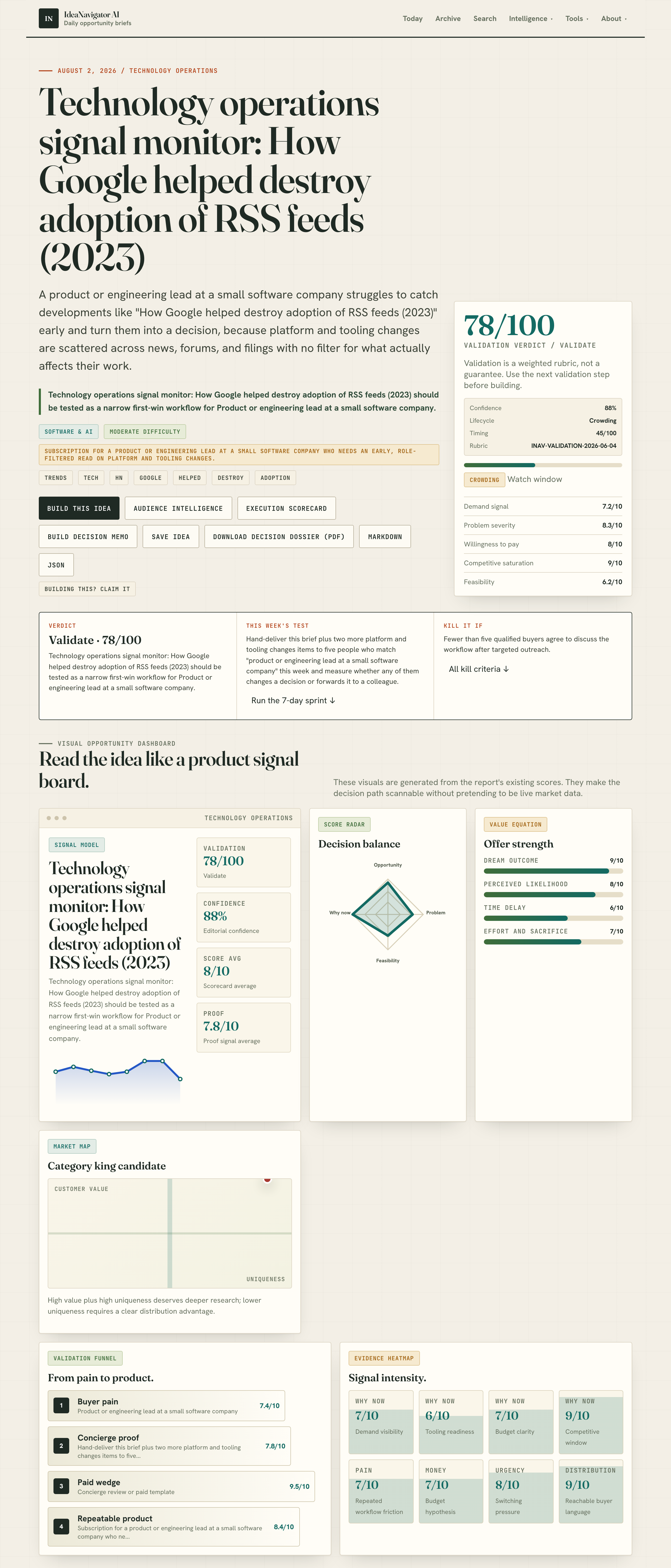
📊 Full opportunity report: Technology operations signal monitor: How Google helped destroy adoption of RSS feeds (2023) on IdeaNavigator AI — validation score, market gap, and execution plan.

Get business pricing on office and shipping supplies
- Business-only prices and quantity discounts
- Tax-exempt purchasing
- Multiple users, one account, clear invoices
TL;DR
Recent findings indicate that Google’s platform adjustments significantly hindered RSS adoption. This development affects small software firms relying on RSS for content aggregation. The story highlights how platform shifts influence tech ecosystems.
Recent analysis indicates that Google’s platform and tooling changes contributed to a sharp decline in RSS feed adoption over the past few years, impacting small software companies and content aggregators. This reveals how technology operations monitoring can help understand platform shifts. This revelation sheds light on how platform decisions can shape the broader ecosystem, making it a significant development for industry watchers and developers.
Multiple sources and industry observations suggest that Google’s adjustments to its services, including changes to APIs, search algorithms, and content indexing, have played a role in diminishing the visibility and utility of RSS feeds. For more on related tools, see explanation of Linux system monitoring tools. Analysis from tech researchers points to the fact that Google’s modifications made it less favorable or less accessible for RSS-based content distribution. This has contributed to a decline in RSS usage, which was once a staple for content aggregation and syndication.
While Google has not explicitly stated its intent to suppress RSS, experts argue that the platform’s strategic shifts—such as prioritizing proprietary content formats and integrating with Google News and other services—have indirectly discouraged RSS adoption. You can explore innovative tools like offline website viewing solutions for content syndication. Small software firms that relied on RSS for content feeds now face challenges in maintaining their workflows, which previously depended heavily on RSS feeds for real-time updates.
Impact of Google’s Platform Changes on RSS Ecosystem
This development matters because RSS feeds have historically been a neutral, open standard for content syndication. The decline in RSS usage, driven by platform shifts, could lead to less open content sharing and increased reliance on proprietary solutions. For small software companies, this means reduced flexibility and higher dependency on major platforms, potentially stifling innovation and competition in content aggregation tools.
Popular right now

Vitamix Touch & Go Advance 32-Ounce Bar Blender, White

Dyson Ball Animal 3 Upright Vacuum

KitchenAid Artisan 5-Quart Tilt-Head Stand Mixer, Blue Velvet
As an affiliate, we earn on qualifying purchases.
How Google’s Platform Evolution Affected RSS Usage
Over the past decade, Google has undergone significant platform and API updates, often aimed at optimizing its services for search and content delivery. Industry analysts note that around 2020-2022, Google’s changes to search algorithms, API restrictions, and content indexing policies coincided with a noticeable drop in RSS feed visibility. This trend aligns with broader shifts towards curated, proprietary content formats and the integration of RSS-like features into Google’s own products.
Prior to this, RSS was a widely adopted, open standard used by small software firms and content creators for real-time updates and syndication. The decline has been gradual but accelerated in recent years, raising concerns about the future of open content standards.
“Google’s platform adjustments have indirectly suppressed RSS feeds, reducing their visibility and usability for content creators and aggregators.”
— an anonymous researcher
What Specific Google Changes Contributed to RSS Decline
It is not yet clear which specific platform or policy changes by Google had the most direct impact on RSS feed usage. Details about internal decisions or algorithm updates that specifically targeted RSS remain undisclosed, and ongoing analysis continues to investigate this link.
Monitoring Future Platform Policies and RSS Trends
Further research is needed to clarify the exact mechanisms by which Google’s platform changes have affected RSS. Industry watchers and small software firms will likely monitor upcoming policy updates and API modifications, assessing whether RSS can regain prominence or continue its decline. Additionally, advocacy for open standards may increase as stakeholders push back against proprietary content suppression.
Key Questions
How did Google’s platform changes affect RSS feed visibility?
Analysis suggests that modifications to APIs, search algorithms, and content indexing have reduced RSS feed visibility, making it less effective for content distribution.
Why does the decline of RSS matter for small software companies?
Many small firms rely on RSS for real-time content aggregation. Its decline limits their options, increasing dependence on proprietary solutions and potentially stifling innovation.
Did Google explicitly aim to suppress RSS?
Google has not publicly stated an intent to suppress RSS. Experts believe that strategic platform shifts have indirectly contributed to its decline.
Could RSS make a comeback?
It remains uncertain. Future policy changes and increased advocacy for open standards could influence whether RSS regains traction.
What can small companies do to adapt?
Companies might explore alternative content syndication methods or advocate for open standards to mitigate reliance on proprietary platforms.
Source: IdeaNavigator AI