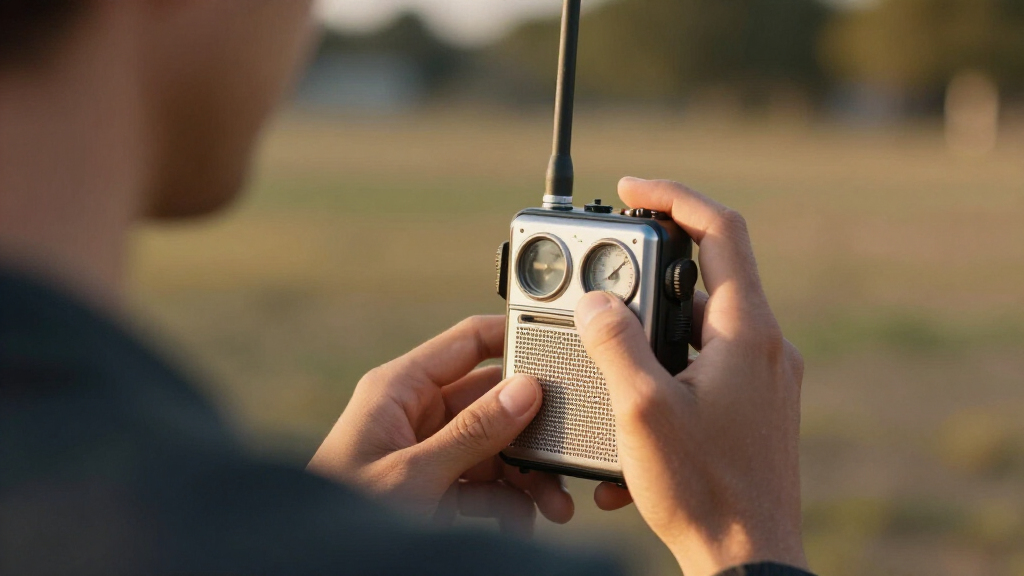

📊 Full opportunity report: Station 36’S Success Unveiled: AI’s Role In Its Shortwave Listening Design on ThorstenMeyerAI.com — validation score, market gap, and execution plan.

Get office and shipping supplies delivered free — and shop member deals
- Fast, free delivery on millions of items
- Access to Prime Big Deal Days deals on October 6–7
- Prime Video, Amazon Music and more included
TL;DR
Station 36 is an AI-designed web experience simulating a vintage shortwave radio listening post. It uses AI to craft authentic visuals and audio, emphasizing manual signal hunting. This development highlights AI’s potential in recreating complex, tactile interfaces, as detailed in the original analysis.
Station 36, an AI-designed web experience mimicking a vintage shortwave radio listening post, has been unveiled, showcasing how artificial intelligence can craft highly detailed, interactive interfaces that evoke historical radio hardware. This project emphasizes AI’s capacity to recreate tactile, immersive environments for users interested in radio signals and signal hunting.
The platform employs a restrained vintage color palette—dominated by bakelite brown-black (#191210), amber accents (#ffb54a), phosphor cyan for spectral signals (#67fff0), and soft cream for logbook textures—creating an authentic aesthetic reminiscent of Cold War-era radio rooms. For more on the design approach, see the original analysis. Its core visual elements are built entirely with inline SVG, allowing crisp, scalable controls that mimic vintage hardware, including a tuning dial, knobs, meters, and a spectral waterfall visualizing radio activity in real time.
Interaction is driven by JavaScript functions that generate dynamic dial ticks, synchronize spectral waterfall scrolling, and update signal readings as users drag the tuning dial. Learn more about the design trick behind this project in the original analysis. The spectral waterfall, rendered on a canvas, displays real-time signal activity, station peaks, Morse code bursts, and noise, all synthesized via the Web Audio API, which produces static hiss, heterodyne whistles, carrier hum, and Morse signals. Audio only activates when users switch on the receiver, maintaining a sense of suspense and realism. This layered approach ensures a static visual environment until interaction, enhancing the tactile experience.
AI’s Role in Authentic Vintage Radio Simulation
This development demonstrates AI’s potential to recreate complex, tactile interfaces that blend historical aesthetics with modern web technology. By leveraging AI-generated visuals and audio synthesis, Station 36 offers an immersive experience that appeals to radio enthusiasts and digital explorers alike. It exemplifies how AI can enhance educational tools, preserve historical interfaces, and create engaging, interactive digital environments for niche communities.
As an affiliate, we earn on qualifying purchases.
Historical and Technological Foundations of Shortwave Listening
Shortwave radio listening has long been associated with clandestine communications and hobbyist signal hunting, especially during the Cold War era. Traditional listening posts relied on physical hardware with manual tuning and analog displays, creating a tactile, immersive environment. Recent years have seen a resurgence of interest in vintage radio hardware, driven by nostalgia and technological preservation. AI’s integration into this domain allows for digital recreations that maintain the tactile and auditory authenticity of classic radio experiences, as exemplified by Station 36’s design.
“AI enables the precise simulation of vintage radio hardware and audio environments, making digital recreations more authentic and engaging.”
— an anonymous researcher
digital shortwave radio with spectral waterfall
As an affiliate, we earn on qualifying purchases.
As an affiliate, we earn on qualifying purchases.
Extent of AI’s Creative and Technical Capabilities
While the technical implementation of Station 36 demonstrates AI’s ability to generate detailed visuals and audio, it is still unclear how much AI contributed to the creative design choices versus human input. The long-term potential of AI in creating fully autonomous, historically accurate interfaces remains under exploration, and it is uncertain how scalable or adaptable these methods are for broader applications.
As an affiliate, we earn on qualifying purchases.
Future Developments in AI-Generated Interactive Radio Experiences
Next steps include expanding AI’s role in designing more complex, multi-layered radio environments, integrating user feedback, and exploring applications beyond static recreations—such as real-time signal analysis or educational modules. Developers may also work toward making these AI-crafted interfaces accessible for educational institutions, museums, and hobbyist communities, further blending history with cutting-edge technology.
As an affiliate, we earn on qualifying purchases.
Key Questions
How does AI contribute to Station 36’s design?
AI is used to generate detailed SVG visuals, synchronize spectral waterfall animations, and synthesize authentic radio sounds, creating a highly realistic vintage radio environment.
Can users interact with the signals in real time?
Yes, users can drag the tuning dial to explore different frequencies, activating visual and audio signals that mimic real shortwave broadcasts.
Is this a permanent or experimental project?
Station 36 is an experimental showcase demonstrating AI’s capabilities in interface design; it is publicly accessible and intended as a proof of concept for future applications.
What makes Station 36 different from traditional radio simulators?
Unlike traditional software, Station 36 employs AI to craft authentic vintage hardware aesthetics, synchronized spectral visuals, and realistic sound synthesis, offering a tactile, immersive experience rooted in historical accuracy.
Will AI-generated radio experiences replace physical hardware?
Currently, AI recreations serve as educational and nostalgic tools; they complement rather than replace physical hardware, especially for enthusiasts valuing tactile authenticity.
Source: ThorstenMeyerAI.com
Fall Picks
fall essentials
As an affiliate, we earn on qualifying purchases.