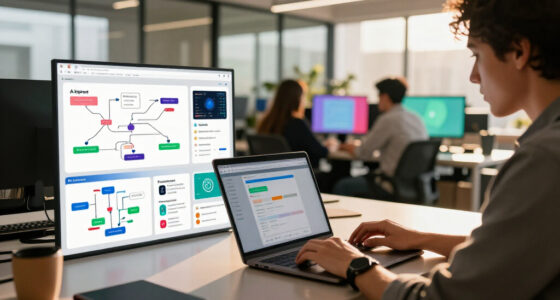
🔍 Read the full analysis: Scroll-Driven SVG In Focus: “TURBINE — WERK 9” on ThorstenMeyerAI.com

Get business pricing on office and shipping supplies
- Business-only prices and quantity discounts
- Tax-exempt purchasing
- Multiple users, one account, clear invoices
TL;DR
TURBINE — WERK 9 is presented as an interactive field guide that uses a scroll-driven SVG rotor to connect movement through a web page with the mechanics of an industrial setting. The available project description does not identify its creators, provide implementation details, or report performance and accessibility testing.
TURBINE — WERK 9 is an interactive web field guide that uses a scroll-driven SVG rotor to link a visitor’s movement through a page with the mechanics of an industrial setting, according to the original project feature on ThorstenMeyerAI.com. The feature points readers to a live experience and a design teardown, but does not give a publication date, identify the people who made the project, or describe how the interaction was built.
The project is framed as an answer to a design question: can a web page feel less like a static brochure and more like a place visitors can explore? Its stated approach is to use scrolling as an input for movement in a vector rotor graphic. In the description, the animation makes navigation through the page feel connected to the imagined machinery of the setting. The site characterizes the result as an interactive field guide, rather than simply an industrial-themed landing page.
The feature highlights a combination of a browser, vector paths, and the visitor’s scroll input. It says the design brings those elements together in a responsive experience while retaining the clarity of a deliberately designed object. These are descriptions of the intended experience; no technical specifications, browser support information, or independent evaluation are supplied. Readers are directed to a live room and a fuller case study, which the feature says covers the rotor’s motion, the visual system, and the translation of a physical-feeling space into a browser experience.
The description’s central design point is that scrolling can do more than move a reader down a page: it can also drive a visual element and shape how the content is encountered. However, it does not say how the rotor’s motion maps to scroll distance, whether visitors can pause or control it, or whether the interaction works in the same way on touch devices. The live project and linked teardown are presented as places to explore those details, but the available feature text does not supply them.
Interactive field guide / web design in focus
Scroll-Driven SVG TURBINE — WERK 9
A page becomes a place to explore: scroll input moves an SVG rotor, linking the visitor’s journey through the browser with an industrial setting.
A project feature from ThorstenMeyerAI.com
01 / The interaction
How scrolling drives the idea
The project connects a familiar page action to a visual response. Its field-guide framing gives the motion a role in exploring the setting, beyond animation for its own sake.
Visitor scrolls
Movement down the page acts as the described input.
SVG responds
A vector rotor is tied to the scroll interaction.
Page feels mechanical
Graphic movement evokes the industrial character of the setting.
Content is explored
Navigation is framed as movement through a designed environment.
02 / Design reading
From field guide to browser
The feature presents TURBINE — WERK 9 as a browser interpretation of a physical-feeling industrial place, organized as an interactive web experience.
Scroll as control
A page gesture becomes an interaction input, shaping how visitors move through the content.
Vector rotor
The SVG rotor supplies the central mechanical image and responds to scrolling in the described experience.
Spatial exploration
The field-guide concept invites visitors to explore a designed environment rather than scan a static brochure.
03 / What is documented
Concept is clear; specifics remain open
The available feature describes the intended experience and points readers to a live room and design teardown. It does not provide technical specifications or independent evaluation.
Described in the feature
- Interactive web field guide with an industrial setting
- SVG rotor motion connected to visitor scrolling
- Responsive experience, as characterized by the feature
- Live experience and a design teardown are promoted
Not reported in the available description
- Creators, team, launch date, or development timeline
- Code, framework, motion mapping, or browser support
- Measured performance, user studies, or engagement results
- Keyboard, assistive technology, touch, or reduced-motion behavior
04 / Reader guide
Key questions
The feature’s central takeaway is a design concept: page movement and graphic movement are deliberately linked. Effects on comprehension or usability have not been established.
What is TURBINE — WERK 9?
An interactive web field guide with an industrial setting and a rotor graphic described as responding to scroll.
How exactly does the rotor move?
The feature says scrolling drives its motion, but gives no mapping between scroll distance and rotor movement.
Who made it, and when?
The available description does not identify creators or provide a creation, launch, or feature date.
Where can readers learn more?
ThorstenMeyerAI.com points readers to the live room and a teardown covering rotor motion, the visual system, and browser-based spatial design.
How Scrolling Drives the Rotor
The project offers a focused example of scroll as an interaction input. A familiar action—moving down a page—also changes a graphic intended to evoke machinery. That connection may help make navigation feel tied to the subject of the page, rather than separate from it. For web designers and people interested in browser-based creative work, the idea is relevant because it shows how a small set of visual elements can give a page a more active structure without requiring a visitor to learn a new control.
The field-guide framing also gives the interaction a purpose beyond motion for its own sake: the visitor is invited to explore a designed environment. That is the project’s stated appeal, not a measured finding about how audiences respond. There are no reported user studies, engagement figures, accessibility assessments, or comparisons with other site designs. The confirmed significance is therefore the design concept itself: page movement and graphic movement are deliberately linked. Whether that approach improves comprehension or usability for particular visitors is not established by the information provided.
Popular right now

Bose QuietComfort Wireless Noise-Cancelling Headphones, Sandstone

De'Longhi Stilosa Compact Manual Espresso Machine with Milk Frother

Shark AI Ultra Robot Vacuum with Matrix Clean and Self-Empty Base
As an affiliate, we earn on qualifying purchases.
From Field Guide to Browser
The project is described as a browser interpretation of a place with an industrial character. Rather than presenting that setting only through fixed images or conventional page sections, TURBINE — WERK 9 uses a rotor rendered as an SVG and ties its motion to scrolling. The feature presents that pairing as a way to make the experience feel spatial and mechanical while keeping it organized as a web page.
ThorstenMeyerAI.com promotes both a live room and a design teardown. The brief description says the teardown examines how the rotor’s motion was shaped, how the visual system was organized, and how the sense of a physical space was translated for a browser. It does not include a timeline, previous versions, or an account of the project’s development, so no broader history can be confirmed from the published description.
“What if a web page behaved less like a brochure and more like a machine you could walk around?”
— ThorstenMeyerAI.com, describing TURBINE — WERK 9
Build Details Still Unreported
The available description does not name the project team or say when TURBINE — WERK 9 was created, launched, or featured. It also provides no code, framework, animation method, performance measurements, or device and browser compatibility details. Although the project is described as responsive, the specific behavior across screen sizes is not documented.
It remains unclear how the experience handles visitors who use keyboards or assistive technology, prefer reduced motion, or cannot use a scroll wheel or touch gesture. The feature does not report accessibility testing, user research, or evidence that the interaction changes visitor comprehension or engagement. Those limits matter: the project’s design intentions are described, but technical performance and user impact are not independently established.
The Live Experience and Teardown
ThorstenMeyerAI.com directs readers to visit the live room and read the full design teardown. The feature says that case study will cover the rotor’s motion, the visual system, and the translation of a physical-feeling space into a browser experience. No release schedule or further update is stated, so it is not clear when additional technical or accessibility information may appear.
For now, the next step for readers interested in the project is to inspect the live experience and the linked case study. Until those details are available, claims about its implementation, compatibility, or effect on users should be treated as unreported rather than inferred from the project’s description.
Source: ThorstenMeyerAI.com
Key Questions
What is TURBINE — WERK 9?
It is presented as an interactive web field guide with an industrial setting and a rotor graphic that responds to scrolling.
How does the rotor respond to visitors?
The project description says scrolling drives the motion of an SVG rotor. It does not specify the animation’s exact mechanics or how much movement corresponds to a given scroll distance.
Who created the project?
The feature does not identify the project’s creators. No individual names or team details are provided in the available description.
Does the project work on mobile devices or support reduced motion?
The published description does not give device compatibility or reduced-motion details. Those features should not be assumed without further information.
Where can readers learn more?
ThorstenMeyerAI.com points readers to a live room and a design teardown covering the rotor, visual system, and browser-based spatial design.
Source: ThorstenMeyerAI.com