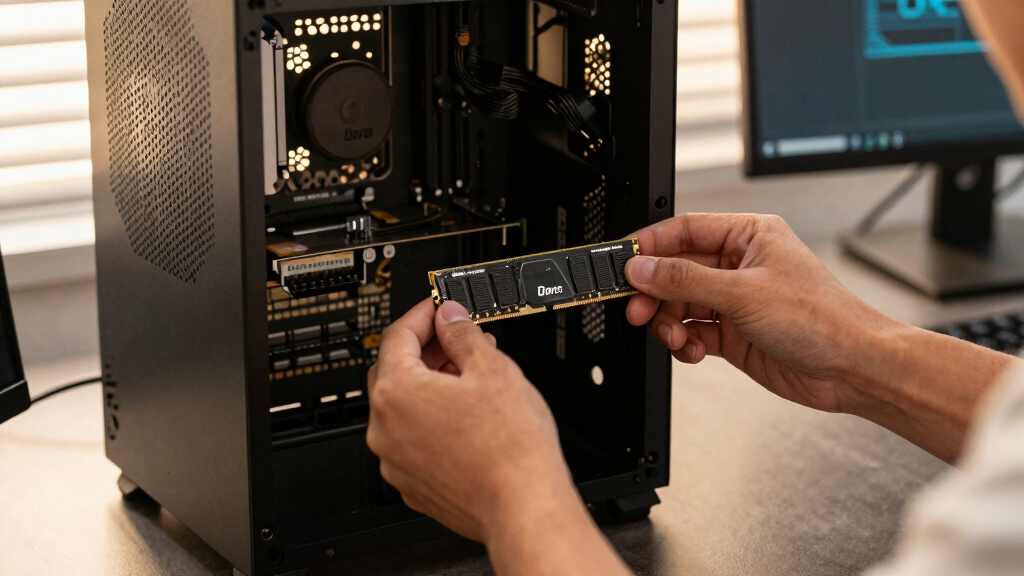

📊 Full opportunity report: DDR5 Now, DDR6 Soon: A Buyer’s Field Guide on ThorstenMeyerAI.com — validation score, market gap, and execution plan.

Get business pricing on office and shipping supplies
- Business-only prices and quantity discounts
- Tax-exempt purchasing
- Multiple users, one account, clear invoices
TL;DR
With DDR5 prices stabilizing and DDR6 still years away, consumers should buy DDR5 now for current needs. DDR6 offers significant improvements but won’t be ready for mainstream use until 2027, making waiting generally unwise.
DDR5 memory is the recommended choice for most users in 2026, as DDR6 remains in development and will not be widely available until 2027. Consumers should prioritize buying DDR5 now for current builds, rather than waiting for DDR6, which will come at a premium and only on new platforms.
Market forecasts indicate that DDR5 prices are unlikely to fall significantly before 2028. The current sweet spot remains DDR5-6000 with CL30 timings, offering optimal performance and value for both AMD and Intel systems. Higher-speed DDR5 kits, such as DDR5-8000, are generally a waste of money for most users, as they provide minimal real-world gains.
When considering capacity, 32GB is sufficient for most gaming and desktop tasks, while 64GB is better suited for content creators and heavy multitasking. Buying 128GB modules now is discouraged, as it risks locking in high prices for unused capacity. DDR4 is no longer advisable for new builds, due to its end-of-life status and comparable or higher costs per gigabyte compared to DDR5.
DDR6, the next-generation memory standard, is not yet available for mainstream consumers. It offers significant improvements, including a wider bus, higher speeds (up to 17,600 MT/s), and a new physical form factor (CAMM2). However, DDR6 is incompatible with current hardware and will only be introduced gradually, starting with enterprise servers in 2026–27, then high-end desktops and laptops in 2027, with broad adoption not expected until around 2030.
Most buyers in 2026 should not wait for DDR6, unless they are building a long-term workstation or involved in bandwidth-intensive tasks like scientific computing or AI/ML. Early adoption involves risks such as unstable profiles and limited capacity options. The key indicator of DDR6 readiness will be the transition of JEDEC standards from draft to finalized, and the appearance of validated motherboard and CPU support.
DDR5 now, DDR6 soon
A buyer’s field guide. The 20-year instinct — wait for prices to drop, or wait for the next generation — is broken this cycle. Buy the DDR5 you actually need now; don’t wait for DDR6. Here’s the reasoning.
Driven to end-of-life, production slashed. Same money, dead-end socket. Leave a working DDR4 box alone — but never start a new build on DDR4 to “save.”
A framework, not a gamble. Buy the DDR5 you need now, at the sweet spot, in the capacity you’ll actually use — don’t buy DDR4, don’t wait for DDR6. The two costliest mistakes in this market are the ones that feel prudent: waiting for a price drop that isn’t coming, and waiting for a next-gen part that launches dearer than what’s on the shelf. Next: The SSD Squeeze.
Why Immediate DDR5 Purchase Is the Best Choice
Choosing DDR5 now ensures users get a stable, compatible, and cost-effective memory solution that will serve their systems for years. Waiting for DDR6 would delay upgrades and likely increase costs, as early DDR6 modules will carry a premium and face compatibility issues. For most consumers, investing in DDR5 aligns with current hardware cycles and avoids premature obsolescence.
As an affiliate, we earn on qualifying purchases.
Market Trends and Future Memory Developments
The 2026 memory market is characterized by high prices and limited supply, driven by the ongoing chip shortage and manufacturing constraints. Historically, new memory standards like DDR4 took several years to become mainstream, but DDR6’s adoption timeline is expected to be slower, with initial focus on enterprise applications. Meanwhile, DDR5 has matured, with prices stabilizing and performance proven across multiple platforms. The upcoming DDR6 standard introduces substantial technical improvements but requires new platforms, making it unsuitable for immediate purchase by most users.
“DDR6 will significantly increase bandwidth but requires new hardware, with widespread adoption expected around 2030.”
— JEDEC standards committee
As an affiliate, we earn on qualifying purchases.
Uncertainties Around DDR6 Adoption and Timing
While DDR6 standards are progressing, actual availability, pricing, and platform support are still uncertain. Early DDR6 modules may face stability issues, limited capacities, and high costs. The precise timeline for mainstream adoption remains a projection, and market conditions could shift, affecting when consumers can realistically upgrade.
As an affiliate, we earn on qualifying purchases.
Next Steps for Buyers and Industry Watchers
Consumers should focus on purchasing DDR5 components aligned with current platforms, particularly DDR5-6000 kits. Monitoring JEDEC’s standard finalization and motherboard support announcements will signal DDR6 readiness. Manufacturers are expected to start releasing DDR6-compatible hardware in late 2026, with broader availability in 2027. Buyers aiming for long-term builds should consider planning for DDR6 in their next upgrade cycle, but not before 2027.
As an affiliate, we earn on qualifying purchases.
Key Questions
Should I buy DDR4 memory in 2026?
No. DDR4 is nearing end-of-life, and current market conditions make DDR4 more expensive than DDR5. For new builds, DDR5 is the recommended choice.
When will DDR6 be available for mainstream desktops?
DDR6 is expected to be introduced around 2027 on high-end platforms, with broader adoption not until approximately 2030.
Is it worth waiting for DDR6 to save money?
Generally no. Waiting for DDR6 will delay your upgrade by at least a year and likely cost more initially. For most users, investing in DDR5 now is more practical.
Will DDR6 provide significant gaming performance improvements?
Probably not. DDR6’s bandwidth advantages are more relevant for bandwidth-heavy tasks like scientific computing or AI, not typical gaming workloads.
What should I look for to know when DDR6 is ready?
Watch for finalized JEDEC standards, motherboard compatibility lists, and the appearance of validated DDR6 modules and CPUs on the market.
Source: ThorstenMeyerAI.com
Halloween Picks
halloween
As an affiliate, we earn on qualifying purchases.