
📊 Full opportunity report: Acoustic Dampening, Placement, and the “Rig in the Closet” Setup on ThorstenMeyerAI.com — validation score, market gap, and execution plan.

Get business pricing on office and shipping supplies
- Business-only prices and quantity discounts
- Tax-exempt purchasing
- Multiple users, one account, clear invoices
TL;DR
This article explores proven methods to reduce noise from AI workstations through strategic placement, acoustic treatment, and the ‘rig in the closet’ approach. Moving the rig away from the workspace is the most effective fix, with enclosure ventilation being critical for heat management.
Moving AI workstations into separate rooms or closets significantly reduces noise in the workspace, according to experts. You can learn more about Acoustic Dampening, Placement, and the ‘Rig in the Closet’ Setup. This approach, combined with proper ventilation, offers the most effective noise mitigation, especially when the machine is headless and accessed remotely.
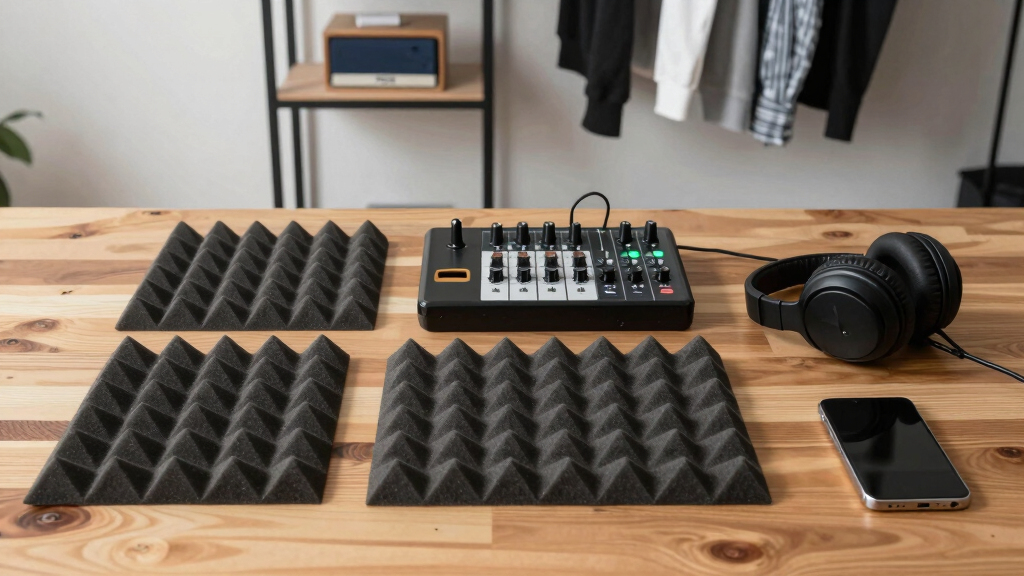
Many users focus on acoustic foam and soundproofing materials as their first response to noisy workstations. However, these solutions address airborne noise only and are less effective than physically relocating the rig. Moving the machine into another room, such as a closet or basement, can eliminate the noise problem entirely, provided network connectivity and ventilation are properly managed.
The ‘rig in the closet’ setup is popular because it isolates the noise source, but it requires careful attention to heat dissipation and acoustic treatment. Sealed spaces trap heat, risking overheating and throttling. To prevent this, active or passive ventilation must be installed, including exhaust fans or ducted airflow systems. Purpose-built soundproof cabinets combine acoustic dampening with temperature control, but they are costly.
Experts emphasize that the most effective noise reduction strategies involve distance and isolation, with acoustic treatment as a secondary step. Proper placement and ventilation are crucial for maintaining hardware longevity and performance. For detailed strategies, see Acoustic Dampening, Placement, and the ‘Rig in the Closet’ Setup.
Acoustic dampening
& the rig in the closet.
The most powerful noise fix isn’t a material — it’s a floor plan. A rig you can’t hear because it’s in another room beats any amount of foam. Tap the approaches in Part 1 to see what actually works.
(another room)
(levers 1–4)
(door / barrier)
(acoustic foam)
Contain the noise, not the heat
Why Proper Placement and Ventilation Matter for AI Workstations
Effective noise mitigation enhances workspace comfort and productivity, especially in shared or quiet environments. Proper placement reduces the need for extensive acoustic treatment, saving costs and complexity. Additionally, managing heat through ventilation ensures hardware reliability, preventing overheating and performance throttling. These strategies are particularly relevant as AI workloads grow more demanding and hardware becomes louder during sustained operation.soundproof computer closet enclosure
As an affiliate, we earn on qualifying purchases.
As an affiliate, we earn on qualifying purchases.
Effective Strategies for Noise and Heat Management in AI Rigs
Traditionally, users attempt to dampen noise with acoustic foam and barriers, but these are less effective than moving the rig away or into a dedicated enclosure. The hierarchy of noise control prioritizes distance, source reduction, and transmission blocking before absorption. The concept of a 'rig in the closet' has gained popularity, especially for remote or headless setups, but it requires careful ventilation planning. Experts have long noted that airflow and heat dissipation are critical for sustained performance, especially with high-power GPUs that generate over 600W of heat. Properly ventilated, purpose-built soundproof cabinets offer a balanced solution, combining noise reduction with effective cooling."The most effective way to reduce noise is to move the rig into another room or closet, especially when used headless over a network. Acoustic foam alone won't cut it if heat isn't managed."
— Thorsten Meyer, AI workstation expert
AI workstation noise reduction kit
As an affiliate, we earn on qualifying purchases.
As an affiliate, we earn on qualifying purchases.
Remaining Challenges in Quiet AI Workstation Setup
Details about the optimal design of cost-effective, fully integrated soundproof cabinets with efficient cooling are still evolving. The balance between noise reduction, heat dissipation, and cost remains a challenge for many users. Additionally, the long-term reliability of various ventilation solutions in different environments is still being studied, and specific best practices may vary depending on hardware configuration and room layout.
As an affiliate, we earn on qualifying purchases.
Next Steps for Implementing Quiet and Cool AI Workstations
Users should evaluate their workspace to determine the feasibility of relocating their rigs to separate rooms or closets. Investing in proper ventilation, whether passive vents or active exhaust systems, is crucial for enclosed setups. Future developments may include more affordable, integrated soundproof enclosures with advanced temperature management, making quiet operation more accessible. Ongoing research and vendor innovations will likely refine best practices for balancing noise reduction and heat dissipation in high-performance AI hardware.
As an affiliate, we earn on qualifying purchases.
Key Questions
Is moving my AI rig to another room always the best solution?
Not always, but it is typically the most effective method for eliminating noise. It works best when combined with proper network and ventilation setup.
Can I use acoustic foam alone to quiet my workspace?
No, acoustic foam only absorbs airborne noise within a space. It does not block sound transmission or address structure-borne noise or heat buildup.
What are the risks of placing a high-power GPU in a sealed closet?
The main risk is overheating, which can cause thermal throttling and hardware damage. Proper ventilation is essential for safety and performance.
Are purpose-built soundproof cabinets worth the cost?
Yes, if noise reduction and heat management are priorities. These cabinets combine acoustic dampening with active cooling, offering a balanced solution.
Source: ThorstenMeyerAI.com
Halloween Picks
halloween
As an affiliate, we earn on qualifying purchases.