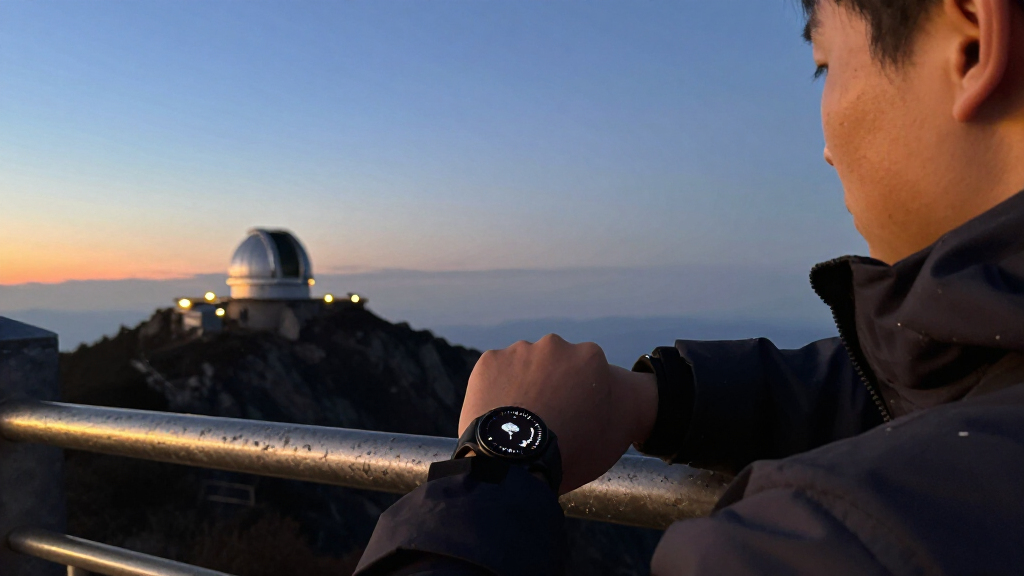

🔍 Read the full analysis: A Twilight Dial For NLCs: An AI Watch At 83 Km on ThorstenMeyerAI.com

Get business pricing on office and shipping supplies
- Business-only prices and quantity discounts
- Tax-exempt purchasing
- Multiple users, one account, clear invoices
TL;DR
“Noctilucent — NLC Watch at 83 km” is an AI-built exhibition website about real high-altitude ice clouds, not a real company or scientific monitoring service. Its interactive solar-depression dial changes the page’s lighting and visuals to illustrate how clouds can remain sunlit after the ground is dark.
ThorstenMeyerAI.com has presented “Noctilucent — NLC Watch at 83 km,” an AI-built exhibition that uses an interactive twilight dial to explain how noctilucent clouds can remain illuminated after the ground below is dark, as explored in the original analysis. The project is a fictional field journal and observing program, not a real company, scientific instrument, or live cloud-monitoring service.
The exhibit’s central control represents the Sun’s position six to 16 degrees below the horizon. Moving the dial changes several visual elements together, including the sky brightness, shadows, cloud glow, ambient color, grain, and horizon flare. The source describes the most expressive point as being near 11 degrees below the horizon; this is a design choice in the experience, not a claim that 11 degrees is a universal threshold for observing the clouds.
Procedural graphics make up the scene. The site uses Canvas to render the twilight gradient, stars, and layered wave paths, while inline SVG supplies diagrams and an altitude illustration. Different cloud forms are represented with distinct animated patterns. The source says the exhibit contains no image assets and that its visuals are generated in the browser.
A later interaction asks visitors to hold a control while simulated ground haze fades and a cloud band at 83 kilometres altitude becomes clearer. The sighting can fade if the visitor releases the control early. According to the project description, the interaction supports pointer, keyboard, and touch-like key input. It is designed to make waiting part of the experience rather than to collect or report real observations.
Atmosphere / Interactive Exhibition
A Twilight Dial
for NLCs
An AI-built exhibition turns twilight into an interactive lesson about noctilucent clouds: ice high above can still catch sunlight after the ground is dark.
One dial, a changing sky
The control represents how far the Sun sits below the horizon. Move it, and the whole scene responds to make the twilight relationship visible.
From late twilight to deeper night
Sky brightness, shadows, cloud glow, ambient color, grain, and horizon flare shift together as the dial moves.
Graphics made for the browser
Procedural visuals create the scene, while a hold-to-reveal interaction makes waiting part of the experience.
Layered twilight
Canvas renders the gradient, stars, and wave paths. Generated cloud patterns distinguish different forms without image assets.
Altitude in view
Diagrams and an altitude illustration connect the luminous cloud band to its high place above the observer.
Hold to reveal
As simulated ground haze fades, a band at 83 km becomes clearer. Release too soon and the sighting can fade; the interaction supports pointer, keyboard, and touch-like key input.
Real subject, imagined field journal
The exhibit uses real mesospheric science as its subject, but its observing framework is fictional.
Noctilucent clouds
High-altitude ice clouds can remain sunlit when darkness has reached the ground below. The exhibit illustrates that idea; its supplied material does not validate a specific sighting or measurement campaign.
Stations and logs
The observer network, field stations, and observation logs belong to an imagined field journal. No live sightings, forecasts, or verified station records are reported.
A visual chain of explanation
The exhibit links one changing condition to a broader view of the clouds and the observer.
Set the twilight
Choose a Sun position between 6° and 16° below the horizon.
Watch light shift
Color, brightness, shadows, and cloud glow change as one system.
Wait for the band
Hold the control while simulated haze recedes and the high cloud form appears.
Read the context
Separate a scientific subject from the exhibit’s fictional observing story.
An exhibit, not an observation service
The project description explains its intended design and implementation, but supplies no independent validation or operational data.
Design intentions
Visibility-aware rendering, animation pauses when the browser tab is hidden, and a still version for reduced-motion settings are described.
No test results
No independent checks of accessibility, mobile performance, or behavior across devices are included in the supplied material.
Exhibit and build notes
The source points to a browser-based exhibit and a construction guide describing a three-pass process: build, clarity and interaction review, then art-direction review.
What the watch does—and doesn’t
No monitoring feed
It is not a real cloud-monitoring service and does not report current conditions or forecasts.
No live observations
The cloud scenes are generated graphics. The supplied description does not identify verified sightings on the site.
No universal threshold
The highlighted dial point is a design choice. The source does not present it as an observing recommendation.
A Dial Turns Twilight Into a Lesson
The exhibit’s main contribution is its method of explanation: instead of presenting twilight as a fixed background, it makes the changing illumination the central interactive variable. Visitors can see the page respond as the Sun moves farther below the horizon, linking a visual effect to the basic idea behind noctilucent clouds: ice clouds high in the atmosphere may still catch sunlight when the observer’s surroundings are in shadow.
That approach may help visitors connect the clouds’ appearance with their high altitude and viewing conditions. The contrast between deep violet and near-black for the ground-level night and electric blue for illuminated ice also gives the exhibit a clear visual distinction between observer and phenomenon. These are design and educational choices, not evidence that the page measures cloud conditions or improves scientific forecasting.
The distinction between the subject and the service matters. The clouds are real, but the field stations, observation logs, and network described in the fictional presentation are part of the exhibit’s imaginative framing. Readers should not treat its interface as a source of current sightings, operational forecasts, or verified station records.
Popular right now

Ninja Foodi 7-Qt MegaZone FlexBasket Air Fryer, 6-in-1, Black, DZ071

VIZIO 65-Inch V-Series 4K HDR Smart TV

Dyson V15 Detect Origin Cordless Vacuum
As an affiliate, we earn on qualifying purchases.
Real Clouds, Fictional Field Journal
Noctilucent clouds are the real scientific subject of the project. The source describes them as high-altitude ice clouds that can remain sunlit after darkness reaches the ground. The exhibit uses the altitude figure of 83 kilometres in its title and visuals, but its supplied material does not present a measurement campaign or a specific observation to validate.
The project is identified as room 162 of 175 in a series of AI-built exhibition pieces. Its brief describes an imagined observer network, invented station logs, and a fictional field journal, while drawing on real mesospheric science for its subject matter. The supplied description also points readers to a construction guide covering the lighting model, procedural graphics, and animation behavior, but it does not provide independent scientific review or operational data.
The stated technical approach includes visibility-aware rendering: offscreen scenes are not continuously painted, animation stops when the browser tab is hidden, and reduced-motion settings receive a still version. The design brief also calls for accessibility and performance features, including keyboard support and mobile layouts. The source describes these intentions and behaviors, but gives no independent test results or measured performance figures.
“a fictional field journal for a fictional observing project, not a real company or live scientific service”
— Project description on ThorstenMeyerAI.com
No Live Observations or Test Results
The supplied description does not identify a publication date, named author, or independent scientific reviewer. It also gives no evidence that the exhibit is connected to an observing network, gathers real-time cloud sightings, or has been validated as a scientific or educational tool.
Although the source describes specific accessibility and rendering behaviors, it does not include independent checks of keyboard access, reduced-motion handling, mobile performance, or the stated visual behavior across devices. The dial’s range and highlighted point are presented as features of the design; the source does not establish them as recommended observing thresholds. No current cloud conditions or forecasts are reported.
Explore the Exhibit and Its Build Notes
The source invites readers to open the exhibit in a browser and consult its design guide for details of the implementation. The guide is described as documenting a three-pass process: building the working page, reviewing it for clarity and interaction, and completing an art-direction review. The supplied material does not state a launch date, future release schedule, or plan to turn the fictional project into a live service.
For readers seeking actual observing information, the exhibit itself should not be used as a current report: it is a designed explanation, not a live feed. Any future claims about real observations, scientific partnerships, or operational monitoring would need separate confirmation.
Key Questions
What is “Noctilucent — NLC Watch at 83 km”?
It is an AI-built exhibition website presented as a fictional field journal about noctilucent clouds. Its interactive twilight dial changes the page’s lighting and graphics to illustrate the subject.
Is NLC Watch a real cloud-monitoring service?
No. The project description explicitly says it is not a real company or live scientific service. The imagined observing network and station logs are part of the fictional presentation.
What does the solar-depression dial do?
It represents the Sun between six and 16 degrees below the horizon and updates multiple visual features, including sky brightness and cloud glow. The highlighted point near 11 degrees is a design feature, not a verified universal observing threshold.
Are the clouds shown in the exhibit real observations?
The exhibit is about real noctilucent clouds, but the supplied material does not describe live observations or verified sightings on the site. Its cloud scenes are generated graphics, and its field-journal framing is fictional.
What happens after the project is presented?
The source directs visitors to the browser-based exhibit and its construction guide. It does not announce a future launch, scientific partnership, or conversion into an operational monitoring service.
Source: ThorstenMeyerAI.com