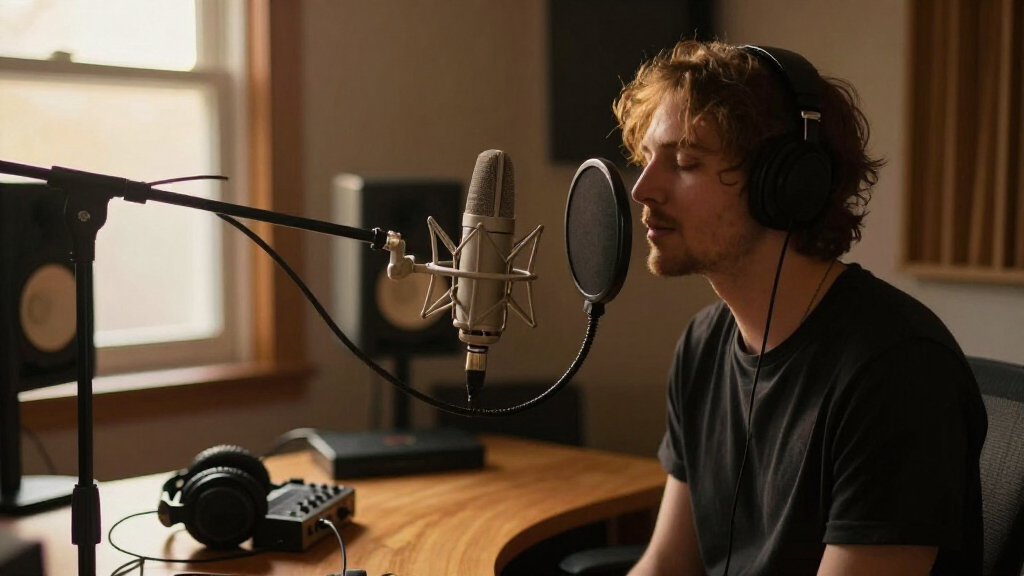

🔍 Read the full analysis: A Practical Guide To 10 Condenser Mics For Home Studio Recording In 2027 on ThorstenMeyerAI.com

Get business pricing on office and shipping supplies
- Business-only prices and quantity discounts
- Tax-exempt purchasing
- Multiple users, one account, clear invoices
TL;DR
A guide published by ThorstenMeyerAI.com compares 10 condenser microphones for home recording, from USB bundles to XLR studio models. It names the Audio-Technica AT2020 as its overall XLR pick, while emphasizing that the right choice depends on connection needs, room conditions and useful features—not accessory count alone.
ThorstenMeyerAI.com’s guide to 10 condenser microphones for home studios recommends the Audio-Technica AT2020 as its leading XLR option, with the AKG P120 and MAONO A04 Gen2 as alternatives for buyers prioritizing onboard controls or connection flexibility. The comparison focuses on how each microphone fits a recording setup, rather than treating the largest accessory bundle as the best value.
The guide covers microphones suited to vocals, spoken-word recording and home-studio use, including plug-and-play USB models, conventional XLR microphones and a model offering both connection types. It says XLR microphones require an audio interface or mixer, while USB models connect more directly to a computer. Dual-connection models may offer a way to begin with USB and later use XLR, although buyers should check which features work with each connection.
The article’s named recommendations include the AT2020 as a focused XLR choice, the AKG P120 for hands-on recording controls and the MAONO A04 Gen2 for USB/XLR flexibility. It describes the premium Stellar X3 as a more specialized large-diaphragm XLR option, rather than a fit for someone seeking USB simplicity. The supplied source material does not identify the other models in the 10-product lineup, so their names and individual assessments cannot be reported here.
ThorstenMeyerAI.com says its comparison considered connection type, setup demands, onboard controls, included accessories, mounting practicality and flexibility as a setup develops. The source states that product distinctions are based on listed configurations and features, not claims of hands-on testing. It provides no measured sound-quality results, prices or performance test data.
The 10 picks
- 1
 TechZoneAudioProducts Stellar X3 Large-Diaphragm Condenser MicrophoneView on Amazon →
- 2
 Audio-Technica AT2020 Cardioid Condenser XLR Studio MicrophoneView on Amazon →
- 3
 MA-67 Studio Condenser Microphone with AccessoriesView on Amazon →
- 4
 AKG Pro Audio P120 Cardioid Condenser MicrophoneView on Amazon →
- 5
 MAONO A04 Gen2 XLR/USB Condenser Microphone KitView on Amazon →
- 6
 MAONO PM320S XLR Condenser Microphone KitView on Amazon →
- 7
 FIFINE T669 USB Condenser Microphone Kit with Boom ArmView on Amazon →
- 8
 Mackie EM-91C Large-Diaphragm Condenser MicrophoneView on Amazon →
- 9
 512 Audio Skylight Large-Diaphragm Studio Condenser XLR Microphone with Shock…View on Amazon →
- 10
 SUUNTOK BM6000 XLR Condenser Microphone KitView on Amazon →
Choosing a Mic Around Your Setup
The guide’s central point is that a microphone purchase affects more than the sound-capture device: it can determine whether a buyer also needs an audio interface, mixer, stand or other accessories. Someone looking for a direct computer connection may favor USB, while a buyer with existing studio equipment may find an XLR model more suitable. A dual-connection microphone offers another route, but its features should be checked against the intended setup.
Room conditions also shape the likely result. The guide cautions that condenser microphones can capture room reflections and background noise, including computer fans and street sounds. It says careful placement and a quieter recording position matter; a microphone’s pickup pattern does not remove noise or make an untreated room sound treated. That qualification helps keep feature comparisons in perspective: a higher-priced model or fuller bundle is not, by itself, a solution to a difficult recording space.
How the Guide Ranks Microphones
The ranking described by ThorstenMeyerAI.com prioritizes versatility and a clear use case over the number of accessories in a package. The AT2020 leads as a conventional XLR studio choice; the P120 and A04 Gen2 follow for buyers with different priorities. The source says USB-focused bundles and accessory kits may suit simple desk workflows, even if they rank lower for readers seeking a microphone to anchor an XLR recording chain.
The guide also advises buyers to judge bundles by the items they will actually use. A boom arm, shock mount, cable or pop filter can reduce extra purchases, but fit and stability matter, and a bundle does not replace an interface when one is needed. It presents controls such as a pad or low-frequency roll-off as useful for particular recording situations, not as features every buyer needs.
“The key tradeoff is convenience versus control: USB kits simplify setup, while XLR microphones offer more room to build a recording chain.”
— ThorstenMeyerAI.com guide
Limits of the Published Comparison
The supplied material does not list all 10 microphones, give a publication date, or provide prices, test recordings or measured performance comparisons. It also does not specify whether every product configuration remains available in 2027. The stated recommendations should be read as the guide’s assessments of listed features and intended use, not as independently verified test outcomes.
For the MAONO A04 Gen2, the source does not detail which controls or functions are available over USB versus XLR. Nor does the material provide enough information to compare every model’s accessories, mounting compatibility or suitability for particular voices and rooms. Those details remain unresolved in the source provided.
Check Configurations Before Buying
Readers considering a microphone should compare the exact product configuration and connection requirements with the equipment they already own. XLR buyers should account for an interface or mixer; USB buyers should confirm the computer connection and features they need. For dual-connection models, check which controls work over each route.
Before choosing a bundle, verify that its mount and accessories suit the desk or stand in use, and consider whether room noise or reflections are likely to affect recording. The supplied guide describes no upcoming test, update or product-release milestone, so any further comparison of the 10 picks would depend on additional product details or new source material.
Key Questions
Which microphone does the guide recommend overall?
ThorstenMeyerAI.com names the Audio-Technica AT2020 as its leading choice for a straightforward XLR studio setup. The supplied material does not include prices or comparative test measurements.
What is the difference between USB and XLR microphones?
According to the guide, a USB microphone connects directly to a computer, while an XLR model needs an audio interface or mixer. XLR can provide more room to build a recording chain, but it adds equipment and setup requirements.
Which picks are highlighted for flexibility or controls?
The source describes the MAONO A04 Gen2 as offering USB and XLR connections, and the AKG P120 as a choice for buyers who want useful recording controls. The source does not specify which A04 Gen2 features work over each connection.
Can a microphone bundle fix recording problems in a bedroom?
No. The guide says accessories such as arms and mounts can help with setup, but they do not resolve room reflections or background noise. Placement and the recording environment remain important.
Source: ThorstenMeyerAI.com
Halloween Picks
halloween
As an affiliate, we earn on qualifying purchases.