
To improve your website’s video SEO, start by optimizing your transcripts with relevant keywords and make sure they’re accurate and updated. Use schema markup to help search engines understand your videos’ details and create a dedicated video sitemap with metadata like duration and thumbnails. Choose hosting options wisely—self-hosting offers control, while platforms like YouTube can boost visibility. Combining these tactics can considerably enhance your video’s search presence; discover more strategies to maximize your results.
Key Takeaways
- Implement schema markup to clearly define video details like duration, thumbnail, and description for rich snippets.
- Create and submit dedicated video sitemaps with detailed metadata to improve video indexation and visibility.
- Host videos on reputable platforms like YouTube or Vimeo to enhance load times and leverage platform authority.
- Use accurate, keyword-rich titles and descriptions across videos, transcripts, and hosting platforms for better search discoverability.
- Regularly update transcripts, metadata, and sitemaps to maintain SEO performance and ensure content relevance.
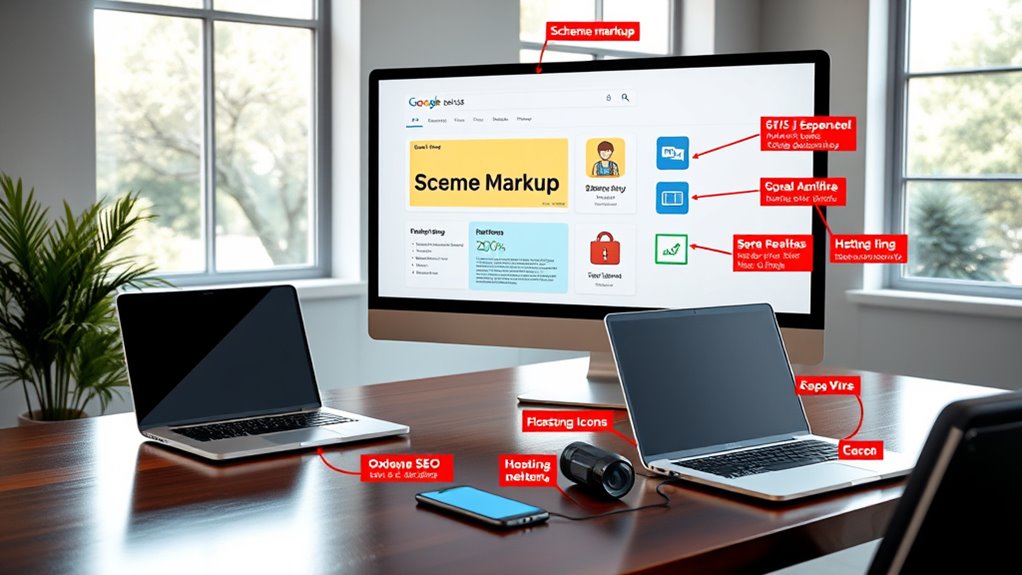
Are you leveraging the full potential of video content to boost your website’s visibility? If not, you’re missing out on a powerful way to engage visitors and improve your search engine rankings. One essential step in maximizing your videos’ SEO benefits is ensuring proper video optimization. This process includes creating accurate video transcripts, which serve as valuable textual content for search engines to crawl and understand your videos better. By adding detailed transcripts, you provide context and keywords that help search engines index your videos more effectively, increasing the chances of appearing in relevant search results. Transcripts also enhance accessibility for users who prefer reading or have hearing impairments, broadening your video’s reach. When you optimize your videos, consider metadata like titles, descriptions, and tags—these should be concise, relevant, and include target keywords for better visibility. Embedding your videos with schema markup further amplifies their SEO impact. Schema helps search engines understand what your video is about, displaying rich snippets that attract clicks and boost your site’s traffic. Using schema markup for videos clarifies details such as duration, thumbnail, and content context, making your listings more appealing in search results. Equally important is how you host your videos. Hosting videos on your own server gives you control over load times and branding, but it can be resource-intensive and impact your website speed if not managed properly. Alternatively, hosting videos on reputable platforms like YouTube or Vimeo can improve load times and leverage their existing authority, but you’ll need to optimize your video embeds to ensure they don’t detract from your site’s SEO. Incorporate relevant keywords into your video titles and descriptions on these platforms to enhance discoverability. Additionally, creating a dedicated video sitemap can markedly improve your videos’ indexation. A video sitemap provides search engines with a detailed list of your videos, including metadata such as video duration, thumbnail, and description. Submitting this sitemap to search engines ensures your videos are discovered and ranked appropriately. Regularly updating your content and video hosting strategies is crucial for maintaining SEO effectiveness. Combining these strategies—transcripts, schema markup, optimized hosting, and sitemaps—creates an all-encompassing approach to video SEO. It helps your videos rank higher in search results, attract more visitors, and ultimately drive more conversions. Remember, the key is consistency and quality; regularly update your videos, keep transcripts accurate, and ensure your schema data is correct. With these tactics, you’ll maximize your video content’s potential and secure a competitive edge in search engine rankings.
Frequently Asked Questions
How Does Video Length Impact SEO Rankings?
Longer videos can boost your SEO rankings if they keep viewers engaged, as video engagement signals are crucial. However, overly lengthy content may lead to drop-offs if it doesn’t maintain interest. Focus on optimizing content length to match your audience’s preferences, ensuring your videos remain engaging. When you strike the right balance, your content length positively impacts SEO, encouraging longer watch times and higher ranking potential.
What Are the Best Keyword Strategies for Video Titles?
Did you know videos with optimized titles get 12% more clicks? To craft effective video titles, focus on keyword placement by placing your main keywords early. Use compelling, descriptive language and incorporate keywords naturally. Don’t forget thumbnail optimization—an eye-catching thumbnail paired with a keyword-rich title boosts engagement. Keep titles clear and relevant, ensuring they match your content, so viewers know what to expect and are more likely to watch.
How Often Should Video Content Be Updated for SEO?
You should update your video content regularly to boost SEO, ideally every few months or when your content becomes outdated. Keep your videos fresh by adding new Video transcriptions, which improve search visibility, and optimizing Thumbnails to attract clicks. Regular updates signal activity to search engines, helping your videos rank higher. Consistent refreshes also encourage viewers to re-engage, making your content more relevant and increasing overall SEO performance.
Can Embedding Videos Slow Down Website Loading Times?
Embedding videos can slow down your website if you don’t use video compression and hosting optimization. Large, uncompressed videos take longer to load, impacting user experience and SEO. To prevent this, compress your videos before embedding, and choose a reliable hosting platform optimized for fast delivery. Properly optimized videos load quickly, keeping your site responsive and enhancing your SEO performance.
What Metrics Best Measure Video SEO Success?
You should focus on metrics like video engagement, which shows how viewers interact with your videos, and bounce rate, indicating if visitors leave quickly. High engagement means your content resonates, boosting SEO. A low bounce rate suggests visitors stay longer, improving rankings. Track these metrics regularly to understand your video’s impact, optimize your content, and increase visibility in search results effectively.
Conclusion
By optimizing your videos with schema markup, sitemaps, and reliable hosting, you can boost your website’s visibility and engagement. Did you know that videos are 50 times more likely to rank organically in search results? Imagine your videos appearing on the first page, attracting more visitors and increasing conversions. Take these tips to heart, and watch your site’s traffic grow as your videos captivate and convert your audience effortlessly.