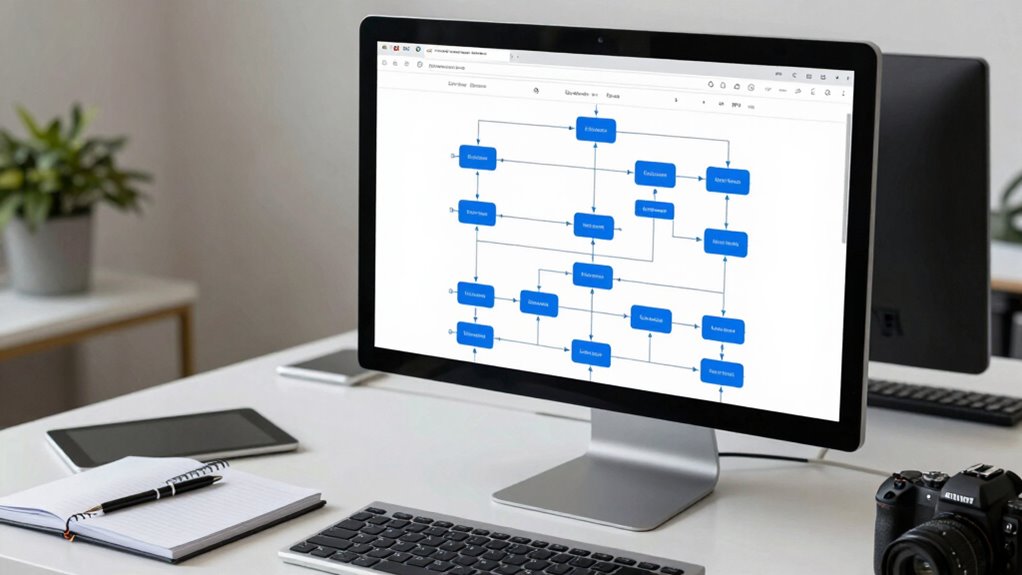

To improve internal link depth on large content sites, focus on organizing content into clear hierarchies with key pages close to your homepage. Regularly audit your links to fix broken ones and guarantee important pages are within three clicks. Link related content to create a web that distributes link equity effectively. As you refine your structure, you’ll make your site more accessible for users and search engines—keep going, and you’ll discover more ways to optimize your site’s navigation.

Get office and shipping supplies delivered free — and shop member deals
- Fast, free delivery on millions of items
- Access to Prime Big Deal Days deals on October 6–7
- Prime Video, Amazon Music and more included
Key Takeaways
- Map your site’s current structure to identify pages with excessive link depth or isolation.
- Prioritize linking from higher-level pages to deeper content to reduce click distance.
- Create strategic internal links between related content to enhance site navigation and flow.
- Regularly audit internal links to fix broken or outdated links, maintaining a cohesive structure.
- Simplify navigation by organizing content hierarchically, ensuring important pages are within three clicks from the homepage.
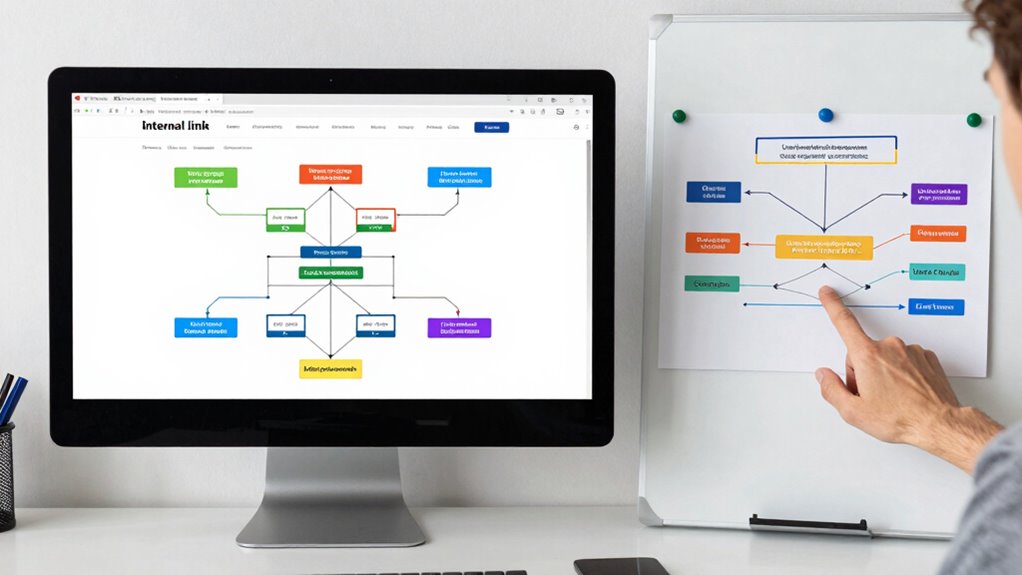
Have you ever wondered how the structure of your website’s internal links impacts its overall SEO performance? The way you organize your internal links, especially on large content sites, directly influences how search engines crawl your pages and how users navigate through your content. At the heart of this is the navigation hierarchy—the way your pages are structured and linked from the homepage down to every subcategory and article. A clear, logical navigation hierarchy makes it easier for visitors to find what they’re looking for and encourages them to stay longer, boosting user engagement.
Effective internal link structure boosts SEO and keeps visitors engaged longer.
To improve internal link depth, start by analyzing your current site architecture. You want to guarantee that your most important pages, like main categories or flagship content, are just a few clicks away from the homepage. If users or search engines have to dig through multiple layers to reach key content, they might get frustrated or give up. Simplifying this hierarchy means reducing the number of clicks needed to access valuable pages, which enhances user experience and makes your site more crawlable. Additionally, understanding your site’s content structure can help you identify gaps in your internal linking strategy and prioritize pages that need better connectivity. Proper internal linking also supports the distribution of link equity, which is vital for improving the authority of key pages. Regularly reviewing your internal links can also reveal opportunities to improve the site’s overall SEO health.
Next, focus on strategically placing internal links within your content. Don’t just link randomly; identify related articles, cornerstone content, or high-priority pages, and connect them logically. This creates a web of related pages, spreading link equity throughout your site and making it easier for search engines to understand the structure. Properly leveraging anchor text also guides users and search engines alike, clarifying the relevance of linked pages and encouraging deeper exploration. Incorporating internal links that reflect your site’s content hierarchy further supports your SEO efforts by establishing clear pathways for crawlers and users alike.
On large content sites, it’s vital to avoid excessive depth that isolates important pages. When certain pages are buried too deep—say, more than three clicks from the homepage—they risk being overlooked by both users and crawlers. To combat this, consider adding links from higher-level pages to deeper content. This not only improves navigation hierarchy but also increases user engagement by making your content more accessible. The goal is to create a natural flow where users can effortlessly move from general topics to detailed content, keeping them engaged longer. An organized internal link structure is essential for ensuring that all your content remains accessible as your site expands.
Finally, regularly audit your internal links to identify and fix broken or outdated connections. As your site grows, some links may become irrelevant or lead nowhere, which hampers navigation and user engagement. By maintaining a well-structured internal link network with essential link depth, you enhance your site’s SEO performance—making it easier for search engines to index your pages and for users to find the information they need. Remember, a thoughtfully designed internal link structure isn’t just about SEO; it’s about creating a seamless experience that keeps visitors engaged and encourages them to explore your entire site. Internal link depth plays a crucial role in ensuring your site remains accessible and well-organized as it grows.
As an affiliate, we earn on qualifying purchases.
Frequently Asked Questions
How Often Should Internal Links Be Updated on Large Sites?
You should update internal links regularly, ideally every few months, to maintain content hierarchy and link consistency. As your site grows, new pages are added, and existing content changes, so revisiting your internal linking strategy guarantees your link structure stays optimized. Frequent updates help search engines understand your site’s hierarchy better and improve user navigation, leading to better SEO and a more cohesive user experience.
What Tools Are Best for Analyzing Internal Link Depth?
Think of your site structure as a sprawling city map, and you need tools to navigate its alleys and highways. Use tools like Screaming Frog, Ahrefs, or SEMrush for link analysis—they reveal internal link depth and site structure like a detailed blueprint. These tools help identify shallow links or dead ends, guiding you to strengthen your internal linking strategy and guarantee your content is easily accessible, boosting SEO and user experience.
How Does Internal Link Depth Affect User Engagement?
Internal link depth directly impacts user engagement by shaping your navigation hierarchy, making it easier for visitors to find related content. When your site has a well-structured navigation hierarchy, users navigate smoothly, spend more time, and explore more pages. Poor internal link depth can cause frustration, leading to higher bounce rates. Improving it enhances user experience, encouraging visitors to stay longer, engage more, and ultimately boost your site’s overall performance.
Can Too Many Internal Links Harm Site SEO?
Yes, too many internal links can harm your SEO by causing link spamming and link dilution. When you overload pages with links, search engines may see it as an attempt to manipulate rankings, which can result in penalties. Additionally, excessive links dilute the value of each link, reducing their effectiveness and potentially confusing users. Focus on quality over quantity, ensuring your internal links are relevant and helpful for both users and search engines.
What Is a Good Benchmark for Optimal Link Depth?
Think of your site as a well-structured book; a good benchmark for reliable link depth is around three clicks from the homepage. You want a strong link hierarchy that guides users smoothly, with anchor text clearly describing each page’s content. Keeping most important pages within three clicks ensures search engines can easily crawl your site, boosting SEO without overwhelming your visitors.
website navigation hierarchy plugin
As an affiliate, we earn on qualifying purchases.
As an affiliate, we earn on qualifying purchases.
Conclusion
Remember, refining your internal link depth is like weaving a web of connections—each link a thread guiding visitors smoothly through your site’s vast landscape. Just as a master navigator charts a clear course through uncharted waters, you can steer your visitors effortlessly from one piece of valuable content to the next. Embrace the journey, tighten your links, and watch your site’s structure become a well-orchestrated symphony that invites exploration and keeps users engaged.
As an affiliate, we earn on qualifying purchases.
As an affiliate, we earn on qualifying purchases.
Fall Picks
fall essentials
As an affiliate, we earn on qualifying purchases.