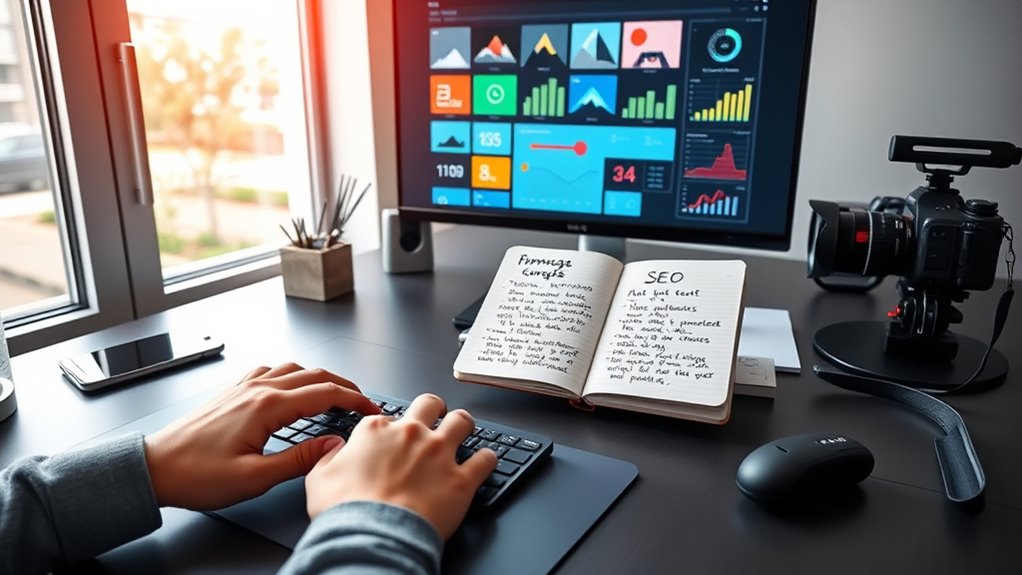

To optimize your images for SEO, focus on using modern formats like WebP or AVIF to reduce load times without sacrificing quality. Write descriptive, keyword-relevant alt text that improves accessibility and search visibility. Implement proper indexing strategies, such as schema markup and hosting images on your own domain, to enhance discoverability. Mastering these techniques can considerably boost your rankings and user experience—exploring further will help you open even more SEO benefits.
Key Takeaways
- Use modern formats like WebP and AVIF to reduce image sizes and boost page load speeds.
- Optimize alt text by making it descriptive, keyword-relevant, and concise for better SEO and accessibility.
- Implement schema markup with images to clarify their context, type, and licensing for improved indexing.
- Host images on your own domain to maintain control and enhance their discoverability in search engines.
- Combine image sitemaps with proper indexing strategies to ensure search engines efficiently crawl and rank your images.

Ever wondered how to make your images work harder for your website? It all starts with understanding the importance of image SEO. When you optimize your images properly, you not only improve your site’s load times but also enhance your chances of appearing in search results. One of the first steps is focusing on image compression. By reducing the size of your images without sacrificing quality, you guarantee faster page loads, which search engines love. Faster websites provide better user experiences, leading to lower bounce rates and higher engagement. Use tools or plugins that automate image compression, so your images are always optimized for web use. This is especially vital for mobile users, who often face slower network speeds.
Optimize images with compression for faster load times and better search rankings.
Beyond compression, choosing the right image formats plays a key role. Modern formats like WebP or AVIF deliver high quality at smaller sizes compared to traditional JPEG or PNG. Incorporating these formats into your website can considerably boost your page speed and improve your overall SEO performance. But it’s not just about the images themselves. You also need to think about how search engines interpret and index those images. Here’s where schema markup comes into play. Implementing schema markup for images helps search engines understand the context, content, and relevance of each image. With schema, you can specify details like image type, caption, and licensing, giving search engines more information to index your images accurately.
Adding alt text is another critical aspect of image SEO. Your alt text should be descriptive, concise, and include relevant keywords naturally. This not only improves accessibility for users relying on screen readers but also helps search engines understand what the image depicts. When you combine descriptive alt text with schema markup, you provide clear signals about your images’ content and purpose, increasing your chances of ranking higher in image search results.
Optimizing for image indexing** is essential for ensuring your visuals appear prominently in search. Indexing your images effectively involves more than just optimizing individual images. You should guarantee that your images are included in your sitemap or have proper image-specific schema markup. This helps search engines discover and crawl your images efficiently. Additionally, hosting images on your own domain rather than third-party sites can give you more control over their indexing and presentation. By diligently applying these practices—using optimized formats, schema markup, descriptive alt text, and proper indexing techniques—you set your website up for improved visibility in both image and general search results. Ultimately, making your images work smarter for your website enhances your overall SEO strategy and drives more organic traffic**.

VIVO 48 inch Height Adjustable Large Stand Up Desk Converter, V Series, Quick Sit to Stand Tabletop Dual Monitor Riser Workstation, Black, DESK-V048V
Create Instant Active Standing: VIVO’s desk riser provides on-demand standing throughout the day for the freedom to get...
As an affiliate, we earn on qualifying purchases.
Frequently Asked Questions
How Do Image SEO Strategies Vary Across Different Industries?
You should tailor your image SEO strategies based on your industry’s needs. For example, in e-commerce, focus on industry-specific optimization like product images with detailed alt text and fast-loading formats. Meanwhile, in branding industries, prioritize visual branding with consistent styles and modern formats. Adapting your approach guarantees your images enhance user experience and search rankings, leveraging industry-specific trends for maximum visibility.
What Are Common Mistakes to Avoid in Image SEO?
Think of poor image SEO like a muddy pond—hard to see clearly. Avoid common mistakes like neglecting alt text optimization, which is like leaving a trail unmarked, or using inconsistent image naming conventions that confuse search engines. You should also steer clear of oversized images that slow your site and ignore modern formats. Focus on clear, descriptive alt text and logical naming to boost your SEO and make your images easily discoverable.
How Frequently Should Image SEO Be Updated?
You should update your image SEO regularly, ideally every few months, to maintain visual freshness and guarantee your images stay optimized. Search engines favor fresh content, so revitalizing your images with new formats, alt text, and relevant keywords helps improve indexing. Consistently updating also supports branding consistency, making your site look current and professional, which can boost user engagement and search rankings over time.
Can Image SEO Impact Website Load Times Significantly?
Yes, image SEO can profoundly impact your website load times. Think of your site as a racecar—heavy, unoptimized images act as drag, slowing you down. By using image compression and lazy loading, you cut down load times and boost performance. These techniques lighten the load, ensuring your site runs smoothly, keeps visitors engaged, and improves your SEO rankings. Efficient images are the fuel that keeps your website sprinting ahead.
What Tools Are Best for Analyzing Image SEO Performance?
You should use tools like Google Search Console and SEMrush to analyze your image SEO performance. These tools help you identify issues with image compression that affect load times and suggest improvements for alt text optimization. Additionally, tools like Screaming Frog or Ahrefs can scan your site for missing or poorly optimized alt attributes, ensuring your images are properly indexed and contribute positively to your overall SEO strategy.

Vari VariDesk Pro Plus 36 - Adjustable Desk Converter with 11 Height Settings - Laptop Sit Stand Desk Riser for Home Office, Table Tops, Workspace - Fully Assembled with Spring Loaded Lift - Black
Dual Monitor Converter: Easily turn your desk into a sit to stand desk. Our two-tier converter has a...
As an affiliate, we earn on qualifying purchases.
Conclusion
Now, picture your website as a vibrant gallery, each image a shining masterpiece. By choosing modern formats, crafting descriptive alt text, and ensuring proper indexing, you’re inviting search engines to walk through your gallery with curiosity and admiration. Your images will stand out like colorful murals in a bustling street, drawing visitors in and boosting your visibility. Keep these strategies in mind, and watch your visual storytelling transform into a powerful SEO tool that captures both eyes and algorithms.

FLEXISPOT Standing Desk Converter 42-inch Spacious Sit to Stand up Dual Monitor and Laptop Riser, Big Size Tabletop Workstation with Large Keyboard Tray, Black
Ergonomic Comfort: This converter is designed with your well-being in mind. Featuring a quick-adjust mechanism, it allows seamless...
As an affiliate, we earn on qualifying purchases.

AVLT Electric Standing Desk Converter for Triple 32" Monitors, Motorized Sit to Stand Riser with 28"x16" Tabletop, Large Keyboard Tray, Height Adjustable, Sturdy Base, Small Footprint
Ergonomic Workstation Setup: Converts your existing desk into an electric standing desk; adjustable design creates optimal viewing and...
As an affiliate, we earn on qualifying purchases.