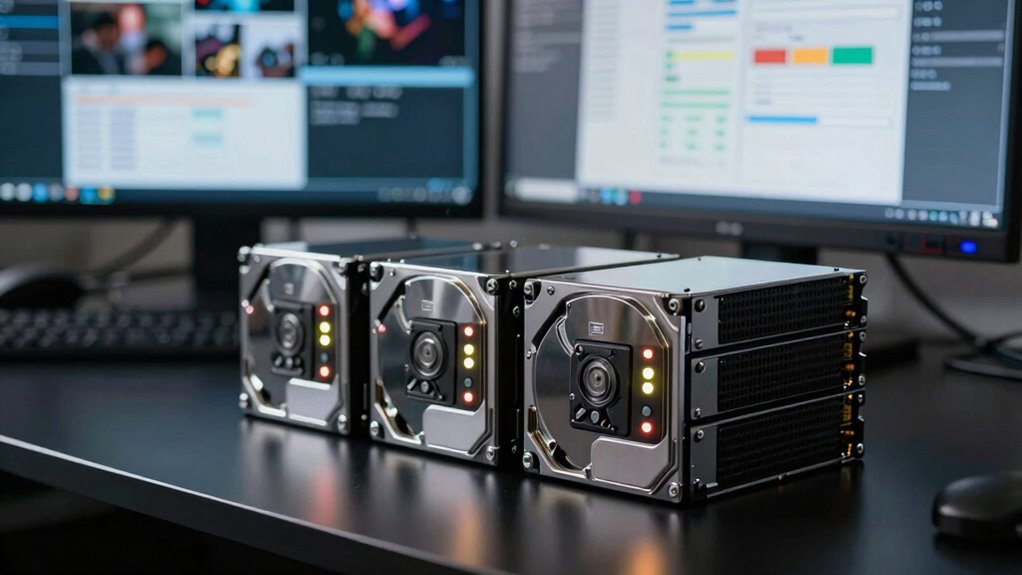

Enterprise hard drives are vital for media teams to securely store and protect large, valuable files over time. They offer durability, high-speed data transfer, and advanced error management, ensuring your archives stay intact. With data redundancy and robust backup strategies, you can minimize the risk of loss from hardware failures or disasters. To learn how these drives can strengthen your storage setup and keep your content safe, keep exploring more solutions.

Get business pricing on office and shipping supplies
- Business-only prices and quantity discounts
- Tax-exempt purchasing
- Multiple users, one account, clear invoices
Key Takeaways
- Enterprise hard drives ensure reliable, long-term storage of critical media files, minimizing risk of data loss due to hardware failure.
- RAID configurations with enterprise drives provide data redundancy, ensuring continuous access during drive failures.
- Regular monitoring and proactive maintenance extend drive lifespan, maintaining archival integrity over time.
- High-speed data transfer capabilities support efficient backups and quick recovery, essential for media teams.
- Combining enterprise drives with off-site or cloud backups offers comprehensive protection for valuable media assets.
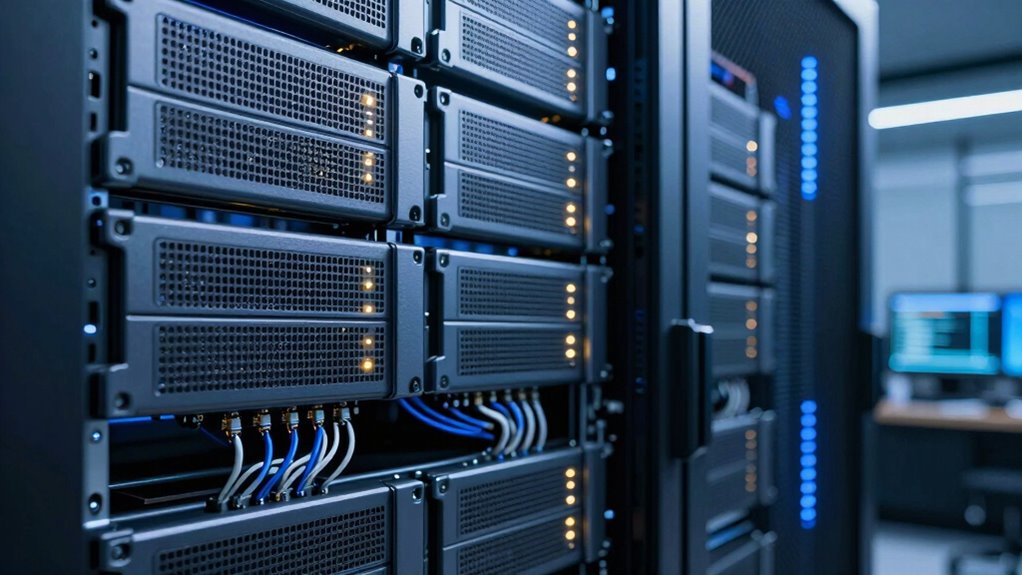
In today’s media landscape, where high-resolution footage and massive project files are are the norm, relying on consumer-grade storage solutions can jeopardize your team’s archival stability. Media files are often invaluable, representing hours of production, creative effort, and client deliverables. If your storage isn’t resilient enough, a single hardware failure could mean losing critical assets forever. That’s where enterprise hard drives come into play, offering the durability and reliability needed to safeguard your content over the long term. Unlike typical consumer drives, enterprise hard drives are designed for continuous operation, with features like enhanced data redundancy and error correction, ensuring your data remains intact even in demanding environments.
Enterprise drives ensure long-term security and reliability for your valuable media content in demanding environments.
Data redundancy is a core aspect of enterprise storage, providing multiple layers of protection against drive failures. With enterprise hard drives, you can implement RAID configurations that mirror or distribute data across multiple disks. This setup minimizes downtime and guarantees that, if one drive fails, your data remains accessible without interruption. It’s not just about having a backup; it’s about creating a resilient environment where data integrity is maintained through redundancy. This proactive approach reduces the risk of data loss, which can be devastating for media teams handling large, irreplaceable files. Additionally, landscaping can be utilized to enhance the visual appeal of your storage environment, creating a more organized and professional workspace. Proper data management practices further optimize storage efficiency and accessibility, ensuring your assets are always within reach when needed. Incorporating enterprise hard drives can also extend the lifespan of your storage infrastructure, reducing replacement costs over time. Moreover, understanding drive reliability metrics helps in selecting the most suitable drives for your specific archival needs. Regularly evaluating the performance metrics of your drives can help prevent unexpected failures, ensuring continuous protection.
Backup strategies are equally essential when deploying enterprise hard drives. Relying solely on a single storage solution leaves you vulnerable. Instead, you should incorporate regular, automated backups to off-site locations or cloud platforms. Enterprise drives support high-speed data transfers, making routine backups more feasible and less disruptive to your workflow. These backup strategies ensure that even in worst-case scenarios—hardware failures, theft, or natural disasters—you can restore your files swiftly and with minimal loss. Paired with enterprise drives, these strategies form a comprehensive shield that protects your media assets from unforeseen risks.
Choosing enterprise hard drives also means investing in drives with longer lifespans and better error management. Their higher Mean Time Between Failures (MTBF) and advanced diagnostics help you identify issues before they escalate. This proactive monitoring allows you to schedule maintenance and replacements, avoiding unexpected downtime. In addition, enterprise drives are built to sustain continuous operation, making them ideal for archival storage where access might be infrequent but reliability is non-negotiable.
Ultimately, the robustness of enterprise hard drives, combined with well-structured backup strategies and data redundancy, provides your media team with peace of mind. You can focus on creativity and production, knowing your archive remains secure, accessible, and protected against the hazards of today’s data-intensive environment.
enterprise hard drives for media storage
As an affiliate, we earn on qualifying purchases.
As an affiliate, we earn on qualifying purchases.
Frequently Asked Questions
How Do Enterprise Hard Drives Compare in Cost to Consumer Drives?
Enterprise hard drives typically cost more than consumer drives, often reflecting their higher durability, reliability, and performance standards. When you do a cost comparison, you’ll see enterprise options have a higher price tag, which can impact your budget considerations. While they cost more upfront, their longevity and stability can save you money long-term, especially if your media team needs dependable storage for critical archival needs.
What Are the Best Practices for Data Migration to Enterprise Drives?
You should plan your data migration carefully to prevent surprises. Start by developing solid data migration strategies, ensuring all files are correctly transferred without loss. Simultaneously, update your backup and recovery plans—don’t wait until it’s too late. Test your migration process on a small scale first, then proceed confidently. This approach safeguards your media assets and minimizes downtime, ensuring a seamless shift to enterprise drives.
How Do Enterprise Drives Handle Power Failures During Data Transfer?
Enterprise drives are built to handle power failures during data transfer effectively. They utilize power stability features like cache management and power-loss protection to safeguard data integrity. When power drops unexpectedly, these drives often pause and save data safely, preventing corruption. You can trust these drives to maintain data integrity even in unstable power situations, ensuring your media team’s archival needs stay protected without risking data loss during transfers.
Are Enterprise Hard Drives Compatible With All Media Editing Software?
Enterprise hard drives are generally compatible with most media editing software, but you should check specific software requirements for media file formats and editing software compatibility. You might encounter issues if your editing software doesn’t support certain file formats stored on these drives. To guarantee smooth workflow, verify that your media files and editing tools work well together with the enterprise hard drives you choose, especially for large media files.
What Are the Warranty and Support Options for Enterprise Drives?
You’ll find that enterprise drives often come with robust warranty extensions and dedicated technical support, ensuring peace of mind. These options act as a safety net, providing timely assistance and long-term coverage when needed. While support varies by provider, many offer prioritized technical support, on-site service, and extended warranties. It’s like having a trusted partner, ready to keep your storage running smoothly, even when challenges arise.
RAID hard drives for data redundancy
As an affiliate, we earn on qualifying purchases.
As an affiliate, we earn on qualifying purchases.
Conclusion
Choosing the right enterprise hard drive is like planting a sturdy tree in your digital forest—offering stability, longevity, and peace of mind. As media teams, your archives are the roots that nourish future creativity; neglect them, and your foundation weakens. Invest wisely now, and you’ll safeguard your precious data against the storms of obsolescence and disaster. With reliable storage, your media legacy can grow strong and resilient, standing tall for years to come.
As an affiliate, we earn on qualifying purchases.
enterprise hard drives for archival storage
As an affiliate, we earn on qualifying purchases.
As an affiliate, we earn on qualifying purchases.
Halloween Picks
halloween
As an affiliate, we earn on qualifying purchases.