Building in public is often treated as a communications strategy: share progress, publish screenshots and turn development into an ongoing story. But its more useful role is operational. When decisions are visible, founders have to explain what belongs in the product, what remains in planning and what has been rejected altogether.

Get office and shipping supplies delivered free — and shop member deals
- Fast, free delivery on millions of items
- Access to Prime Big Deal Days deals on October 6–7
- Prime Video, Amazon Music and more included
Business & Gründer · Product discipline
The founder skill that matters most: deciding what not to build
Gewerkton’s public structure turns restraint into strategy: one brand, three product lines, one destination—and two major directions deliberately rejected.
01 · One branded house
Each line has a distinct job, but every addition must strengthen the same construction documentation and defect-management system.
02 · Attention consolidated
Domains became one destination
Past names and competing routes were removed. The EUIPO trademark reinforces concentration around one identity.
03 · Planning made visible
Public labels separate reality from intention
A roadmap records decisions, not just dates. Planned work stays visibly planned until it becomes working software.
04 · The revealing list
Working with models does not require recreating CAD. Integrating GAEB, REB, XRechnung and DATEV does not require becoming a payment business.
05 · Capacity raises the stakes
Fast production increases the need for restraint
A solo founder directed coding agents using Codex and Claude; the output was checked with negative controls and mutation tests. Feasibility still did not equal strategic fit.
The public operating system
One identity, broad reach, constrained scope
The marketing site also runs on a fully egress-free architecture.
Shipping proves execution. Rejection proves judgement. The strategic test is not “Can we build it?” but “Does it belong in this company?”
Gewerkton offers a particularly clear example. The voice-first construction documentation and defect management platform has been organised around one brand, three product lines and a deliberately constrained scope. Ten domains were consolidated into one. The brand was backed by an EUIPO trademark. A roadmap distinguishes plans from working software. Most importantly, major ideas were left out: no CAD clone and no payment product.
Those choices tell founders and operators more than a long feature catalogue could. They show that product discipline is not simply the ability to ship quickly. It is the ability to maintain a coherent answer to a harder question: what should this company refuse to become?
product management decision-making tools
As an affiliate, we earn on qualifying purchases.
As an affiliate, we earn on qualifying purchases.
Build in public, decide in public
Public development creates a useful form of pressure. Every visible label becomes a claim that users can compare with reality. A beta badge says the product is unfinished. An “in planning” chip says an idea is being considered or prepared, not delivered. Neither allows the company to blur present capability and future intention.
Gewerkton is in beta now, with a public beta planned for fall 2026. That status needs to be stated plainly because it changes how every product statement should be read. Beta software can demonstrate direction and working capability without pretending that the journey is complete.
This is where a roadmap becomes an honesty tool rather than a sales prop. The familiar temptation is to describe planned work in the language of finished work. Roadmap chips and beta badges impose a cleaner separation. What exists can be presented as existing. What is in planning remains visibly in planning. The audience does not have to decode whether a future-facing sentence is a promise, an ambition or a current feature.
For founders, that distinction is more than good publishing practice. It affects prioritisation. Once the roadmap is public, vague enthusiasm has to become a named status. A concept must either fit the product direction, enter planning or stay outside the boundary. The roadmap therefore records decisions as much as dates.
As an affiliate, we earn on qualifying purchases.
One brand is a constraint, not just a design choice
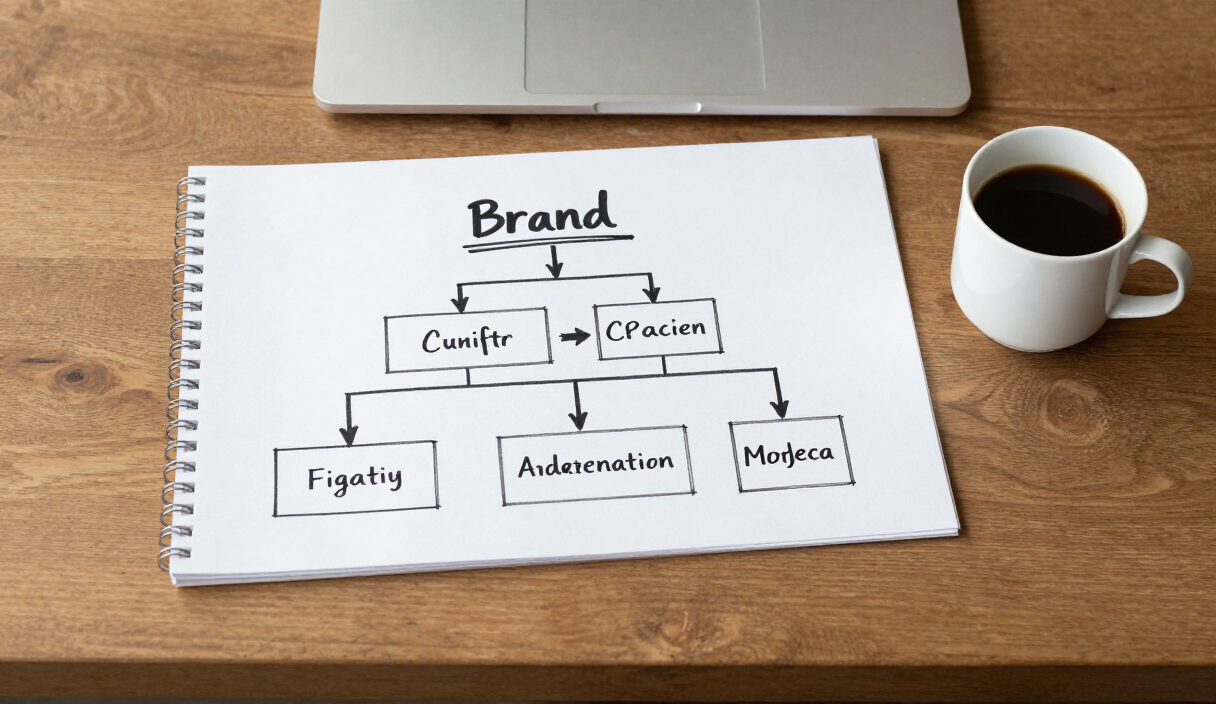
Gewerkton uses a branded-house structure: one brand containing Field, Studio and Cloud. That sounds simple, but simplicity at the surface usually depends on strict decisions underneath. Each product line needs a distinct job while still strengthening the same overall system.
Gewerkton Field is the voice-first construction site app. Its scope runs from dictation to evidence, defects, daywork reports, takt and portal workflows. It is the line closest to the physical work: people speaking on site, documenting what happened and turning that capture into usable project records.
Gewerkton Studio is the browser workspace for plans and models. Where no model exists, the site team can create one in the browser. Its role is not simply “more Field”; it gives plans and models a workspace of their own while remaining part of the same product logic.
Gewerkton Cloud handles operations and model or data coordination between Field, Studio and third parties. It connects the other two lines without turning the portfolio into a collection of unrelated tools.
The structure is easy to explain because the boundaries are legible. Field captures and supports site work. Studio provides the browser workspace for plans and models. Cloud coordinates operations and data across the system and with third parties. One brand holds the three jobs together.
That coherence matters for operators. A branded house reduces the need to explain how several disconnected identities relate to one another. It also raises the standard for every new idea: the idea must strengthen the shared system, not merely justify another product name.
product development tracking tools
As an affiliate, we earn on qualifying purchases.
As an affiliate, we earn on qualifying purchases.
Ten domains became one destination
Consolidating ten domains to one applies the same discipline to the company’s public presence. A collection of domains can preserve every past idea, naming experiment or possible route to market. One domain forces a decision about where attention should go.
Consolidation is therefore not merely website housekeeping. It removes competing destinations and makes the brand architecture concrete. The product lines remain available as clear parts of the main brand, but the company no longer asks visitors to assemble the relationship themselves.
The EUIPO trademark supports that concentration around one identity. The important lesson for founders is not that every branding decision should look identical. It is that names, domains and product architecture should express the same strategic choice. If the company claims to operate as one brand while maintaining a maze of competing destinations, the public structure contradicts the internal story.
Gewerkton’s marketing site carries that approach further. It is available in 27 languages, uses zero trackers, has no cookie banner and runs on a fully egress-free architecture. Its media bank contains more than 51 self-produced clips and posters. These are not separate brand universes; they are assets and language layers attached to the same central identity.

product lifecycle management software
As an affiliate, we earn on qualifying purchases.
As an affiliate, we earn on qualifying purchases.
The rejected list is more revealing than the roadmap
Roadmaps show where a company may go. Rejected ideas reveal whether it understands what it is. Gewerkton’s decision not to build a CAD clone is instructive because Studio already works with plans and models, and it lets site teams create a model in the browser when none exists. The nearby opportunity could easily become an excuse for uncontrolled expansion.
But working with models does not require the company to reproduce an entire neighbouring software category. The decision preserves a boundary around the job Studio is meant to perform. That boundary makes the product line easier to understand and protects the wider branded house from drifting into a different proposition.
The same applies to the decision not to build a payment product. Construction workflows can touch commercial processes, but proximity is not destiny. Gewerkton’s deepest commercial integration is in the German market through GAEB, REB, XRechnung and DATEV. Integrating with commercial formats and systems does not oblige the platform to become a payment business.
This is the founder skill hidden behind the build-in-public story. Shipping proves execution, but rejection proves judgement. A capable team can generate many plausible additions. The founder’s responsibility is to distinguish an adjacent possibility from a necessary part of the product.
A rejected list also protects speed from becoming random motion. Gewerkton is built by a solo founder directing a fleet of coding agents using Codex and Claude. In one night, that fleet shipped 21 software packages, verified with negative controls and mutation tests. That degree of output makes selection more important, not less. When production capacity rises, the cost of pursuing a weak idea may look smaller, but the cost to product coherence remains.
Fast production increases the need for restraint
Agent-assisted development changes the practical limits around what one founder can produce. It does not remove the need to choose. If anything, it shifts the bottleneck from typing and implementation towards direction, verification and scope.
The 21-package night illustrates the distinction. The noteworthy point is not only that software was shipped quickly. The output was checked with negative controls and mutation tests. Speed was paired with attempts to verify whether the work behaved as intended. In the same way, product expansion needs its own negative control: a serious process for deciding which apparently attractive ideas should not enter the system.
Founders can mistake capacity for strategy. If an agent fleet can build an adjacent feature, it is tempting to treat feasibility as sufficient justification. Yet “can be built” and “belongs in the company” are different tests. The branded-house model, the consolidated domain and the rejected CAD and payment directions act as filters before implementation begins.
This is also why visible planning labels matter. Coding capacity can compress development cycles, but it should not compress the distinction between concept and delivery. An “in planning” chip remains an “in planning” chip until the work moves beyond that state. A beta badge remains necessary while the product is in beta, regardless of how much code has been produced.
A broad market does not require an unfocused product
Gewerkton is intended for global markets, although it was born in the German market and has its deepest German commercial integration. It supports 27 content languages and offers a regional choice of AI providers across the EU, US and Asia, including mainland China.
Its BYO-AI model covers 13 AI providers. Users bring their own keys and select a region, avoiding vendor lock-in. For data residency, the choice is an EU cloud or the user’s own infrastructure.
Those choices support several deployment settings without requiring separate brands for each one. Wind farms and renewables involve distributed sites, rotating crews, field acceptance and offline capture in dead zones. Data centres and industrial plants bring many trades working in parallel under tight deadlines, with meeting decisions becoming trade-sorted task lists.
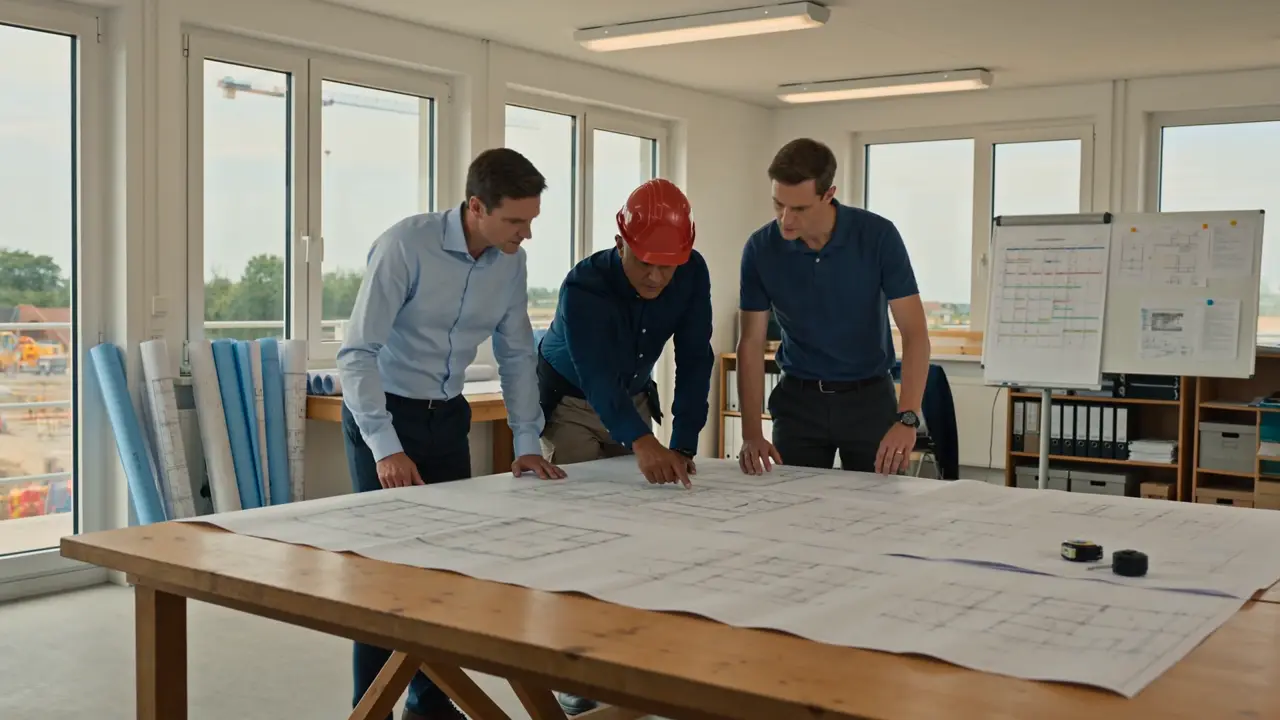
In housing and building construction, the platform addresses defects with a photo and deadline, dictated daywork reports and a signature on the device at handover. Infrastructure and tunnel projects involve long durations, many change orders and instructions backed by original audio.
Cross-border teams can include people in the EU, US and APAC working on the same project, each in their own language, while the original evidence remains unambiguous. On projects in Asia, Chinese, Korean and Vietnamese crews can work through multilingual capture and reporting with data residency selected by the user.
This breadth could have led to a portfolio fragmented by geography, project type or language. Instead, the three-line structure remains constant. The deployment context changes; the brand architecture does not.
Evidence provides the centre of gravity
Gewerkton’s marketing line is: “On site, what counts is what’s proven.” It works as more than a slogan because it gives the product family a common centre. Field turns dictation into evidence and site records. Studio gives plans and models a browser workspace. Cloud coordinates operations and model or data flows across the environment.
The same idea can be applied to company communication. A shipped capability is evidence. A beta label is evidence of current maturity. An “in planning” chip is evidence that something has not yet shipped. A rejected idea is evidence that the company is willing to protect its scope.
That makes the roadmap useful even when it contains less than an ambitious founder might initially want to promise. Its value comes from accurately representing the current state, not from displaying the largest possible future.
Saying no is an operating system
The practical lesson is not to reject ideas for the sake of appearing disciplined. It is to establish a structure in which rejection is possible. One brand creates a test for naming. Three product lines create a test for product placement. One domain creates a test for public attention. Beta badges and planning chips create a test for claims. The rejected list creates a test for scope.
Together, those choices form a decision system. A proposed addition must answer where it belongs, how it supports the shared brand and whether it advances the core job. If it instead requires a new identity, a new category and a different operating model, its adjacency may be a warning rather than an opportunity.
This is especially important for solo founders using coding agents. The ability to direct a fleet can widen the feasible set dramatically. It cannot determine which subset deserves to exist. That remains the founder’s work.
Gewerkton’s build-in-public story is therefore less about exposing every act of production than making the important boundaries visible. The platform is in beta now, and its public beta is planned for fall 2026. Field, Studio and Cloud define the branded house. Ten domains have become one. The EUIPO trademark reinforces the single identity. Planned work is labelled as planned. A CAD clone and a payment product remain outside the product.
For founders and operators, that rejected list may be the most valuable part. Products do not become coherent merely because everything was built well. They become coherent because someone kept deciding what not to build.
Halloween Picks
halloween
As an affiliate, we earn on qualifying purchases.