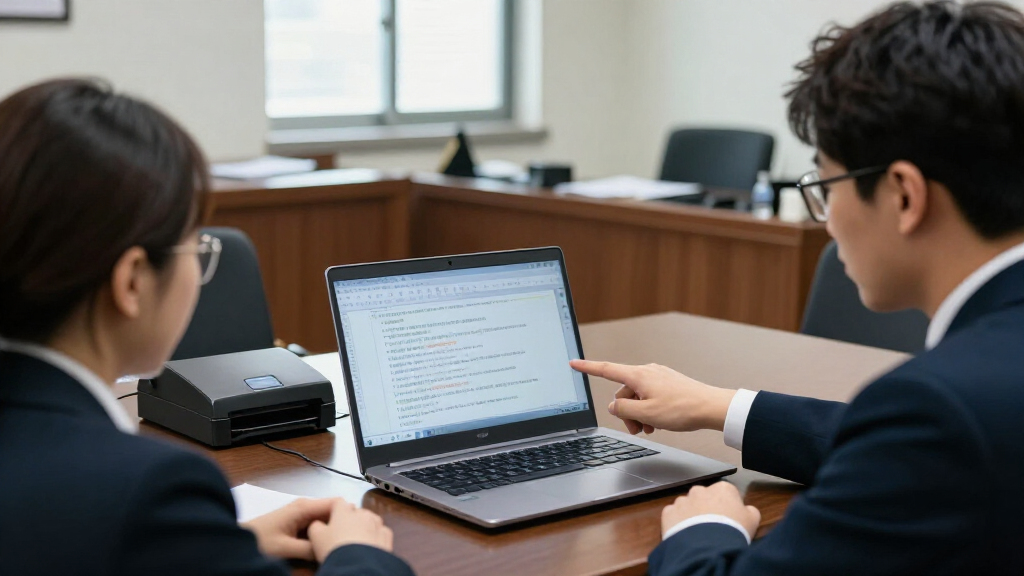

🔍 Read the full analysis: Do Korean Judges Encounter Fake Precedents? A Survey Of 360 on ThorstenMeyerAI.com

Get business pricing on office and shipping supplies
- Business-only prices and quantity discounts
- Tax-exempt purchasing
- Multiple users, one account, clear invoices
TL;DR
South Korea’s National Court Administration published results from a survey of 360 judges, finding that many civil, family and administrative judges had encountered nonexistent or distorted legal citations. Judges called for an institutional response, including possible fines and duties to verify citations and disclose AI use. The survey measures judges’ reported experience, not the share of court filings containing false citations.
South Korea’s National Court Administration said many judges handling civil, family and administrative cases had encountered filings with nonexistent or distorted legal citations, according to survey results published November 2. The survey of 360 judges also found broad support for an institutional response, as the court administration considers procedural-law changes that could allow fines.
The survey was conducted from October 6 to 16, 2026, among judges at courts at all levels. The court administration’s release says about 80% of responding judges assigned to civil, family and administrative cases had encountered false or nonexistent precedents. That figure does not describe all 360 respondents: Kyunghyang Shinmun reported that 243 of the 360 judges, or 67.5%, said they had encountered fake citations.
Among judges who reported seeing false material, 196 (80.7%) identified precedents that did not exist, while 159 (65.4%) identified real precedents cited with false content. Respondents could select more than one type. The survey also recorded reports of false or nonexistent statutes and legal papers or literature, though at lower rates.
Judges identified both litigants and lawyers as sources of the material. 164 judges (69.5%) named the parties themselves, and 136 (57.6%) named lawyers acting as representatives or defense counsel. Those figures are responses about who submitted the material; they are not findings that particular individuals deliberately fabricated citations. The release describes examples including fabricated judgments formatted like Supreme Court decisions, real rulings misrepresented in filings, and AI chat text or litigation-strategy notes copied into documents.
Pressure for Courtroom Safeguards
The results point to a practical problem for courts: judges and opposing parties may have to spend time checking citations that appear authoritative but cannot be verified or do not reflect the cited ruling. The National Court Administration said false citations can create an unnecessary verification burden and hinder the speedy progress of trials.
91.7% of respondents supported an institutional response, according to the release. The most frequently selected options included a legal basis for fines, a duty to verify cited precedents, and a duty to disclose AI use. The findings do not establish how often false citations affect decisions or delay cases, but they show that judges view the issue as requiring more than informal correction.
Any new rules could affect lawyers and self-represented litigants differently. A verification obligation would put responsibility on people filing documents, while fines would introduce a potential penalty. The survey records support for these measures; it does not settle how they should be designed or applied.
Popular right now

Dyson V15 Detect Cordless Stick Vacuum

Samsung 55-Inch S90H OLED 4K UHD Smart TV Bundle with Full-Motion Mount and Surge Protector

Dyson V8 Cyclone Cordless Vacuum
As an affiliate, we earn on qualifying purchases.
What the Survey Actually Measures
The National Court Administration, the administrative arm of South Korea’s Supreme Court, described this as its first survey on fake citations in court filings. Its four-page release, issued by the Judicial Support Office, links the issue to AI systems producing hallucinated legal authorities. The administration says such citations can burden other parties and interfere with timely proceedings.
The survey measures judges’ reported experiences, not the number or proportion of filings containing false material. The court release does not state how many judges were invited or provide the survey’s question wording. Percentages use the respondents to each question as their denominator, and some questions allowed multiple answers. These limits matter when interpreting the widely reported “about eight in ten” figure: it applies to responding judges in specified case areas, while the overall figure reported by Kyunghyang Shinmun was about two in three.
The release also lists examples that extend beyond invented case numbers. Some involved genuine rulings whose holdings were altered or presented out of context; others included text from AI conversations left in a filing. The examples show different forms of inaccurate material, but the survey does not determine how each arose or whether it was submitted knowingly.
Limits and Open Questions
The survey does not show how common fake citations are across all court filings, because it asked judges about their experiences and the release does not provide a filing-based audit. It also does not state how many judges were invited, how representative the respondents are, or the precise wording of each question.
The results do not establish whether false citations were knowingly submitted, whether they changed case outcomes, or how much time they took to verify. The court administration’s examples include material associated with AI, but the survey does not quantify what share of incidents involved AI rather than other sources. Some figures also have different denominators, so they should not be combined as if they describe the same respondent group.
A separate translation issue illustrates the need to check source wording: an English-language report described 164 judges as saying they themselves cited false precedents. The Korean release, according to the source account, says those judges identified the litigants themselves as a source. The survey does not say that judges admitted submitting false citations.
Proposed Rules Still Ahead
The National Court Administration plans to propose changes to South Korea’s Civil and Criminal Procedure Acts that would provide a legal basis for fines, according to the source material. The survey results establish support among respondents for possible measures, but the release does not specify a timetable for submitting legislation or the final wording of any proposal.
Any proposal would still need to move through the relevant lawmaking process. Details remain pending on who would have a duty to verify citations, how AI use would be disclosed, what conduct could trigger a fine, and what process would apply before a penalty was imposed. The next concrete development will be whether the court administration formally submits amendments and what safeguards they include.
Key Questions
What did South Korea’s judges report?
The National Court Administration said about 80% of responding civil, family and administrative judges had encountered false or nonexistent precedents. Kyunghyang Shinmun reported that 243 of all 360 respondents, or 67.5%, said they had encountered fake citations.
Does the survey show that 80% of court filings contain fake citations?
No. It measures judges’ reported experience, not the proportion of filings containing false material. The survey release does not provide a filing-based count.
What kinds of false citations did judges encounter?
Reported examples included nonexistent precedents, real rulings cited with false content, false statutes and legal literature, and AI-generated text or chat material copied into filings.
What action are judges seeking?
The court administration said 91.7% of respondents supported an institutional response. Popular options included a legal basis for fines, a duty to verify citations, and a duty to disclose AI use. These are survey preferences, not enacted rules.
What happens next?
The National Court Administration plans to propose amendments to the Civil and Criminal Procedure Acts to allow fines. A timetable, final proposal and details of any verification or AI-disclosure duties have not been provided in the source material.
Source: ThorstenMeyerAI.com