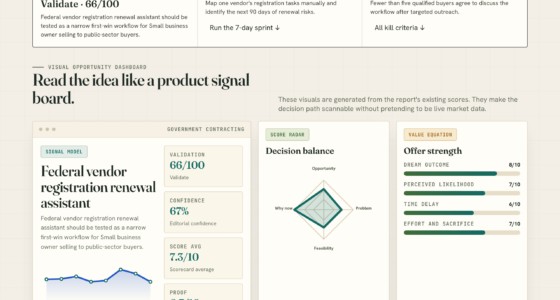

📊 Full opportunity report: Capital: The Lever Beneath the Levers on ThorstenMeyerAI.com — validation score, market gap, and execution plan.

Get business pricing on office and shipping supplies
- Business-only prices and quantity discounts
- Tax-exempt purchasing
- Multiple users, one account, clear invoices
TL;DR
In 2026, the core funding of AI’s rapid expansion is concentrated among a few private giants. These firms are moving risk into the public markets through record valuations, creating potential economic vulnerabilities due to circular capital flows and high debt levels.
In 2026, the fundamental role of capital in AI development has become unmistakably clear, as the largest private companies, including SpaceX, Anthropic, and OpenAI, have moved billions in private funding into public markets. This surge in valuations and the circular flow of capital among tech giants, cloud providers, and chipmakers now form the core of AI’s explosive growth, but also pose systemic risks that could ripple through the broader economy.
On June 12, SpaceX, which now includes xAI, listed on the Nasdaq with a valuation near $1.77 trillion, briefly surpassing $2 trillion in early trading, and offering more than 30% of shares to retail investors. This IPO was part of a broader pattern, with Anthropic filing confidentially at a valuation of around $965 billion and OpenAI preparing for a fall listing estimated between $730–850 billion. Collectively, these companies represent about $4 trillion in private value set to enter public markets within 18 months.
Bank of America described this cycle as a large-scale transfer of risk from early investors to the public, with insiders already cashing out billions in stock before the listings. Meanwhile, the flow of capital is highly circular: Microsoft, Amazon, and Google inject money into Nvidia, which supplies chips to AI firms; these firms then reinvest in Nvidia and cloud providers, creating a feedback loop. This circularity has led to concerns about demand being driven by internal demand rather than genuine market needs, risking a cascade of demand pullbacks if any node slows.
Capital: The Lever Beneath the Levers
Every chokepoint costs money — so whoever can fund the buildout decides who builds at all. In 2026 the bill came due in public: a trillion-dollar IPO wave, financed by a circle of firms paying each other, now sold to everyone else.
The meta-chokepoint: it gates the other five, because you can’t build any of them without clearing the capital bar. A synchronized machine has no natural brake — no one can slow first — and the IPO wave moves the risk to the public as insiders take gains. The hedge is solvency that doesn’t depend on the music playing: sane burn, own what’s cheap, self-host where you can.
Why AI Funding and Valuations Could Trigger Economic Risks
The concentrated flow of capital into AI infrastructure and valuations creates a fragile financial ecosystem. With over $3 trillion in planned global data-center spending between 2025 and 2028, much of it debt-financed, the risk of a downturn is heightened. The slender base of paying customers—only about 3% of consumers currently pay for AI—means that a slowdown in demand could have outsized effects, potentially leading to broader economic instability. This interconnected, circular funding model amplifies the risk, making the entire system vulnerable to shocks.
As an affiliate, we earn on qualifying purchases.
The 2026 AI Capital Boom and Its Underlying Mechanics
The current AI funding environment is shaped by a rapid escalation of private valuations, with companies like SpaceX, Anthropic, and OpenAI preparing for public listings at valuations collectively approaching $4 trillion. This surge is driven by a cycle of internal demand among tech giants, with investments flowing from mega-corporations into chipmakers and cloud providers, which in turn support AI startups. Historically, such concentration of funding and valuation has often preceded market corrections, especially given the high debt levels and limited real-world demand for AI services.
As of early 2026, insiders and early investors have already begun cashing out billions, signaling that some see the valuations as unsustainable. Meanwhile, the circular investment loop has kept demand artificially high, masking underlying vulnerabilities that could surface if any node in the chain pulls back.
“There is more greed than fear right now, and plenty of liquidity—conditional on continued optimism.”
— Goldman Sachs chief executive
AI infrastructure investment guides
As an affiliate, we earn on qualifying purchases.
As an affiliate, we earn on qualifying purchases.
Unconfirmed Risks and Potential Market Reversals
It remains unclear whether the current valuations and circular funding model will sustain or trigger a significant market correction. While insiders are cashing out and demand appears artificially inflated, the precise timing and scale of any downturn are uncertain. Economists warn that the fragile debt levels and limited real demand could amplify shocks, but no definitive trigger has yet emerged.
As an affiliate, we earn on qualifying purchases.
Upcoming Public Listings and Market Monitoring
The next major step is the scheduled public listing of OpenAI, expected to occur in the fall of 2026 at a valuation of around $750–$850 billion. Market analysts will closely watch investor appetite, demand signals, and any signs of retreat from key players like Microsoft and Google. Additionally, monitoring the broader economic impact of high-capex spending and debt levels will be critical, as any signs of stress could precipitate a correction.
As an affiliate, we earn on qualifying purchases.
Key Questions
Why are AI company valuations so high in 2026?
Valuations are driven by rapid private funding rounds, circular investment loops among tech giants, and expectations of future growth, despite limited current demand.
What risks does the circular funding model pose?
It can create demand artificiality, inflate valuations, and amplify shocks if any node in the loop slows or pulls back, risking systemic fragility.
Who holds the most influence over the capital flow in AI?
Major tech firms like Microsoft, Amazon, and Google dominate the funding landscape, acting as the primary levers of capital in the ecosystem.
Could a market correction impact the broader economy?
Yes, given the high debt levels and the reliance on AI infrastructure spending, a downturn could have ripple effects beyond the tech sector, affecting the economy at large.
Source: ThorstenMeyerAI.com
Halloween Picks
halloween
As an affiliate, we earn on qualifying purchases.