Understanding the difference between SEO and SEM helps you choose the right strategy to boost your website’s visibility. SEO focuses on optimizing your site for organic rankings through relevant keywords and quality content, offering long-term growth. SEM involves paying for ads to get immediate results and precise targeting. Both methods work best when combined, maximizing quick visibility and sustained online authority. If you want to learn how to balance these, keep exploring the details ahead.
Key Takeaways
- SEO offers long-term organic visibility and cost-effective growth, ideal for sustained online presence.
- SEM provides immediate results through paid ads, suitable for quick campaigns or product launches.
- SEO builds trust and authority with quality content, while SEM allows precise targeting and performance control.
- SEO efforts take time to show results but are more sustainable; SEM results are immediate but depend on ongoing budget.
- Combining SEO and SEM maximizes both immediate visibility and long-term search engine dominance.
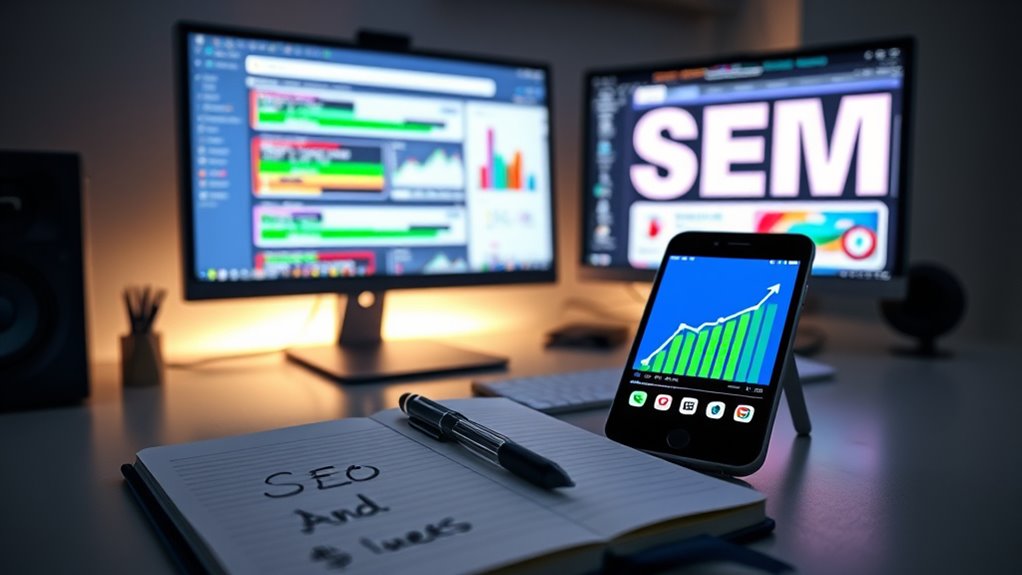
Have you ever wondered how businesses make their websites appear at the top of search results? It’s all about mastering the balance between SEO and SEM. Search Engine Optimization, or SEO, focuses on improving your website’s visibility through organic reach. When you optimize your site with relevant keywords, quality content, and good site structure, you increase the chances that your pages will rank higher naturally. This means your site appears in search results without paying for ad placement. Organic reach is powerful because it builds credibility and trust with users—they tend to trust organic listings more than paid ads. Plus, SEO efforts tend to have a long-lasting effect, so once you’re ranking well, maintaining your position can become more cost-effective over time.
SEO builds long-term trust and visibility through organic search rankings.
On the other hand, SEM, or Search Engine Marketing, involves paying for ad placement on search engine results pages. You bid on keywords, and your ads appear at the top or bottom of search listings, giving you immediate visibility. This method is highly targeted, allowing you to reach specific audiences based on location, device, or search intent. SEM is great when you need quick results or want to promote a time-sensitive campaign. It gives you control over when and where your ads show up, and you can track performance closely—seeing exactly how many clicks or conversions your paid efforts generate. However, once you stop paying for ads, your visibility drops, unlike SEO, which can sustain rankings with ongoing efforts.
Deciding between SEO and SEM depends on your goals and resources. If you’re aiming for sustained, cost-effective growth and want to build authority over time, investing in SEO makes sense. It’s a gradual process, but it pays off with increased organic reach and a stronger online presence. Incorporating technical SEO strategies can further enhance your site’s performance and visibility in search results. Conversely, if you need immediate visibility, perhaps for a product launch or special promotion, SEM is your best bet. Paid ads can quickly put your website at the top, ensuring your target audience sees your message right away.
In most cases, a combined approach works best. You can use SEM to generate quick traffic while simultaneously building your SEO foundation for long-term success. This way, you maximize your visibility through both organic reach and strategic ad placement. Understanding the difference and knowing when to use each approach helps you make smarter decisions for your marketing efforts. Whether you prioritize organic growth or paid campaigns, balancing both strategies can give you a competitive edge in search engine results.
Frequently Asked Questions
How Quickly Can SEO Results Be Seen?
You can start seeing SEO results within 3 to 6 months, but it varies based on your keyword ranking and content optimization efforts. As you improve your website’s content and build quality backlinks, your rankings will gradually increase. Keep in mind that consistent effort and patience are key; quick wins are rare. Regularly monitor your keyword ranking and refine your strategies to achieve better visibility over time.
What Industries Benefit Most From SEM?
Think of SEM as a shortcut to visibility—certain industries reap big benefits. You’ll find retail, travel, and finance thrive with industry-specific strategies and seasonal advertising campaigns. These sectors often need quick results and targeted messaging, making SEM ideal. By leveraging paid ads, you can swiftly reach your audience during peak seasons or promotional periods, ensuring your business stays top-of-mind when it matters most.
Can SEO and SEM Be Integrated Effectively?
Yes, you can effectively integrate SEO and SEM by focusing on content synergy and branding alignment. When you align your keywords and messaging across both strategies, you create a seamless user experience that boosts visibility and reinforces your brand. This integration allows you to maximize your reach, improve your overall digital marketing performance, and make certain your efforts work together cohesively to attract and convert your target audience.
How Do Costs Compare Between SEO and SEM?
Think of SEO and SEM costs like a garden: SEO is a slow-growing, long-term investment, while SEM is a quick bloom. Regarding cost comparison, SEO generally requires less ongoing expense but takes time to see results, fitting smaller budgets or long-term plans. SEM can be more expensive upfront but offers immediate visibility. Your budget considerations will depend on your goals—balance between short-term gains and sustained growth.
What Metrics Should Be Used to Measure Success?
You should track keyword performance and conversion rates to measure success effectively. Keep an eye on keyword tracking to see how your targeted keywords rank and drive traffic. Monitoring conversion rates tells you how well visitors turn into customers. By analyzing these metrics, you can assess your SEO and SEM strategies, refine your approach, and make certain your efforts lead to measurable results and a strong return on investment.
Conclusion
Understanding the difference between SEO and SEM helps you make smarter marketing choices. Did you know that 70% of marketers find SEO more effective for long-term results, while SEM delivers immediate visibility? By combining both strategies thoughtfully, you can boost your online presence and achieve your goals faster. Whether you focus on organic growth or paid ads, knowing when to utilize each ensures you get the best return on your investment.