

To craft content that ranks, focus on strategic keyword placement in your titles, headings, and meta descriptions while keeping your writing natural and engaging. Prioritize user experience by creating clear structure, fast-loading pages, and mobile responsiveness. Use internal links to guide visitors and improve site structure. Valuable, trustworthy content combined with optimized meta tags signals relevance to search engines. Keep these elements in mind, and you’ll discover ways to boost your on-page SEO effectively.

Get office and shipping supplies delivered free — and shop member deals
- Fast, free delivery on millions of items
- Access to Prime Big Deal Days deals on October 6–7
- Prime Video, Amazon Music and more included
Key Takeaways
- Select relevant keywords and incorporate them naturally into titles, headings, and meta descriptions.
- Structure content with clear headings and concise paragraphs to enhance readability and user engagement.
- Optimize meta tags with accurate titles and descriptions that include target keywords to boost visibility.
- Use internal links strategically to distribute link equity and guide visitors to related content.
- Prioritize valuable, user-focused content while ensuring site security to build trust and improve search rankings.
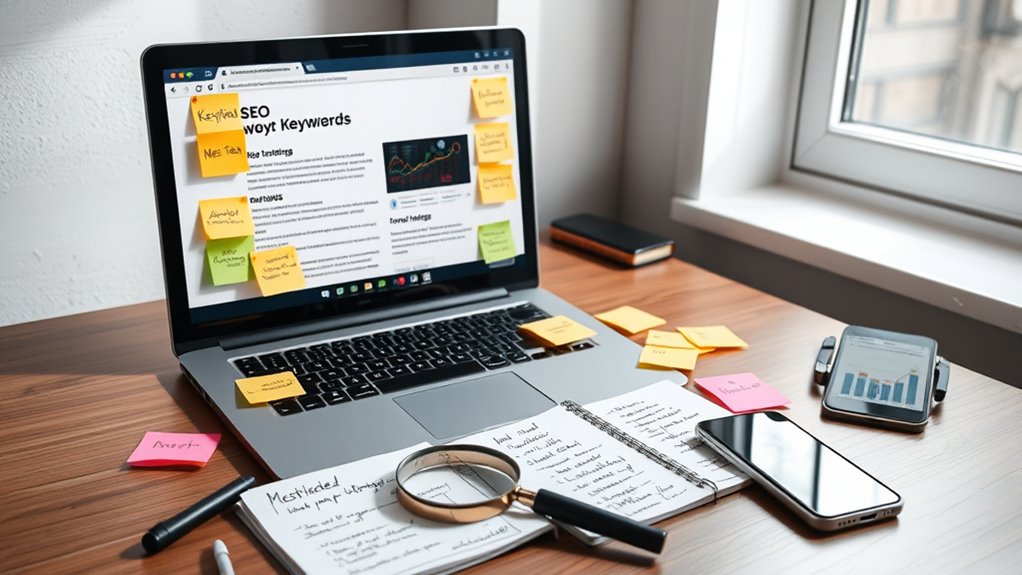
Understanding on-page SEO is essential if you want your website to rank higher in search engine results. The foundation of effective on-page SEO lies in mastering the art of keyword optimization and enhancing user experience. When you focus on these elements, you make your content more discoverable and engaging for visitors. Keyword optimization involves carefully selecting and placing relevant keywords throughout your content, titles, headings, and meta descriptions. This guarantees that search engines understand what your page is about and can match it to users searching for those terms. But don’t overstuff keywords—use them naturally within your content so it reads smoothly and maintains relevance. This balance improves your chances of ranking higher without sacrificing readability. Both keyword placement and content security are critical in ensuring your site remains trustworthy and resilient against malicious attacks.
User experience plays a critical role in on-page SEO because search engines prioritize websites that offer value and ease of navigation. When visitors land on your page, they should immediately find what they’re looking for without frustration. Clear headings, logical structure, and concise paragraphs make your content easier to scan and comprehend. Fast-loading pages, mobile responsiveness, and intuitive menus also contribute markedly to a positive user experience. By prioritizing these aspects, you reduce bounce rates and increase the likelihood of visitors staying longer, engaging with your content, or converting into customers. Search engines interpret these signals as indicators that your site provides valuable, user-centered content.
Another important aspect of on-page SEO is optimizing your meta tags, including titles and descriptions, to accurately reflect your content while incorporating your target keywords. Well-crafted meta descriptions can improve click-through rates because they act as a mini advertisement for your page. Additionally, internal linking helps search engines understand your site’s structure and distributes link equity across important pages, boosting their authority and visibility. When you strategically link related content, you also enhance user experience by guiding visitors to additional relevant information, keeping them engaged longer.
Frequently Asked Questions
How Often Should I Update My On-Page SEO Strategies?
You should update your on-page SEO strategies at least every three to six months to maintain content freshness and stay ahead of algorithm changes. Regular strategy revision helps guarantee your keywords, meta tags, and content remain relevant and optimized. Keep an eye on performance metrics and industry trends, so you can adapt promptly. Consistently refining your approach boosts rankings and keeps your website competitive in search results.
What Are Common On-Page SEO Mistakes to Avoid?
Avoid keyword stuffing, ignore poor meta descriptions, overlook mobile-friendliness, and neglect internal links. These common on-page SEO mistakes can hurt your rankings. You want to craft clear, concise content that naturally incorporates keywords, write compelling meta descriptions that entice clicks, optimize for mobile devices, and use internal links to guide visitors. By steering clear of these errors, you help search engines understand your site and improve your visibility.
How Does Site Speed Impact On-Page SEO Rankings?
Site speed directly impacts your on-page SEO rankings because faster sites provide a better user experience. When your site loads quickly, visitors stay longer and engage more, signaling to search engines that your content is valuable. Conversely, slow site speed frustrates users, increases bounce rates, and hurts your rankings. To improve your on-page SEO, optimize images, leverage browser caching, and reduce server response times for a seamless user experience.
Can On-Page SEO Improve Local Search Visibility?
Ever wonder how to boost your local search visibility? On-page SEO plays a vital role by optimizing your content with relevant keywords, local listings, and structured data. Implementing effective SEO strategies guarantees your website appears prominently in local search results, attracting nearby customers. By focusing on on-page SEO, you enhance your chances of ranking higher locally, making it easier for potential clients to find your business when they need your services.
What Tools Are Best for Analyzing On-Page SEO Performance?
You should use tools like SEMrush, Ahrefs, or Moz to analyze your on-page SEO performance. These tools help with keyword analysis, showing you how your keywords perform and where to improve. They also assist with content optimization by identifying gaps, tracking rankings, and analyzing competitor pages. Regularly using these tools guarantees your content remains SEO-friendly, helping you rank higher and attract more organic traffic effectively.
Conclusion
Think of your webpage like a well-tended garden. When you plant the right keywords, optimize your content, and keep things fresh, your site grows strong and attracts visitors. Just like a gardener regularly weeds and waters, you need to review and refine your on-page SEO. Remember, even the best seeds won’t flourish without care—so stay consistent, and watch your rankings bloom! With patience and effort, your content can truly thrive.
Halloween Picks
halloween
As an affiliate, we earn on qualifying purchases.