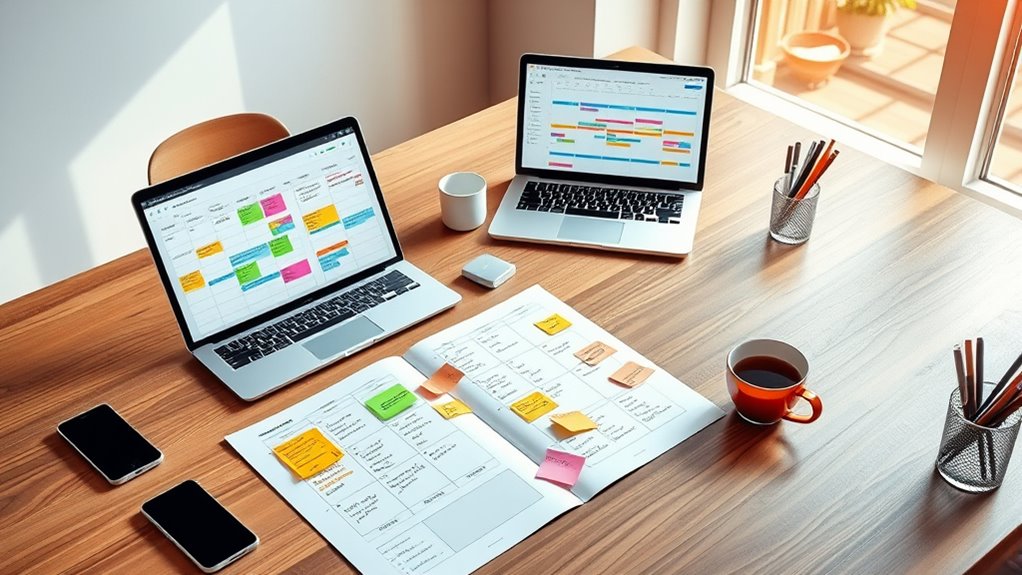

A content calendar helps you organize and schedule your marketing efforts to stay consistent and aligned with your goals. It guarantees your social media and content strategy work together smoothly, avoiding last-minute rushes. With tools like calendars or scheduling apps, you can plan your posts ahead, monitor performance, and make adjustments. A well-planned calendar boosts content quality and engagement. Keep exploring to discover how you can craft an effective schedule tailored to your brand.
Key Takeaways
- Define clear goals and target audience to guide your content themes and topics.
- Choose a consistent publishing frequency based on resources and audience engagement.
- Use scheduling tools like Google Calendar or social media apps to plan and automate posts.
- Incorporate key dates, campaigns, and trending topics into your content timeline.
- Regularly monitor performance metrics and adjust your schedule to optimize engagement.

A content calendar is your blueprint for organizing and scheduling your marketing efforts, making it easier to stay consistent and strategic across all platforms. When you plan your content in advance, you guarantee that your social media presence aligns with your overall content strategy. This proactive approach helps you avoid last-minute rushes, maintains a steady flow of engaging content, and keeps your audience interested and engaged over time. With a clear schedule, you can also balance different types of content—such as blog posts, social media updates, videos, and newsletters—so that your message stays varied and relevant.
Creating a content calendar begins with understanding your goals. Ask yourself what you want to achieve—brand awareness, lead generation, community engagement—and then map out the types of content that will support those objectives. For social media, this means identifying key themes, trending topics, and important dates or campaigns. Your content strategy should guide what you post, when you post it, and on which platforms. For instance, you might decide to share behind-the-scenes content on Instagram, thought leadership articles on LinkedIn, and quick tips on Twitter. Having these plans laid out helps you to coordinate efforts across channels, ensuring your messaging is cohesive and reinforcing your brand voice.
Start with clear goals to shape your content themes and platform strategies.
Next, determine a publishing frequency that fits your resources and audience expectations. Consistency is crucial; if you post irregularly, your followers might forget about you or lose interest. A well-structured calendar lets you plan content ahead, so you can batch-create materials and avoid gaps. Using tools like Google Calendar, Trello, or dedicated social media scheduling apps makes this process smoother. These tools enable you to visualize your schedule, set reminders, and automate postings where possible, freeing up time for content creation and engagement.
Remember, flexibility is key. Your content calendar isn’t set in stone. Monitor your performance regularly—check engagement metrics, website traffic, and follower growth—and adjust your plan accordingly. If certain topics resonate more with your audience, prioritize those. If some posts underperform, tweak your strategy or try different formats. Staying adaptable ensures your social media and overall content strategy remain effective and aligned with your audience’s interests.
Ultimately, a well-maintained content calendar empowers you to be more intentional with your marketing efforts. It keeps you organized, ensures you hit your posting deadlines, and helps you deliver valuable content consistently. By investing time in planning ahead, you create a more strategic social media presence that builds trust, fosters relationships, and drives your business goals forward. Additionally, understanding your audience’s preferences and the importance of content quality can significantly enhance your engagement and results.

Seamless Scheduling: Automating Content Distribution with AI: “Automate Your Creative Process and Focus on What Truly Matters.”
As an affiliate, we earn on qualifying purchases.
As an affiliate, we earn on qualifying purchases.
Frequently Asked Questions
How Often Should I Update My Content Calendar?
You should update your content calendar at least weekly to maintain timing consistency and stay aligned with your goals. Regular updates allow you to adapt to new trends or unexpected changes, offering editorial flexibility. By reviewing your schedule frequently, you ensure your content remains relevant and engaging. This proactive approach helps you keep your audience interested and your content strategy effective, ultimately boosting your online presence and engagement.
What Tools Are Best for Managing Content Schedules?
Think of scheduling software as the backbone of your content management. Tools like Trello, Asana, and Buffer shine in managing your content schedule seamlessly. They help you organize ideas, assign tasks, and set deadlines with ease. You’ll stay on top of your content game and avoid chaos, turning your plan into a well-oiled machine. Pick the one that fits your workflow best, and watch your content calendar run smoothly.
How Do I Handle Last-Minute Content Changes?
When last-minute content changes happen, stay flexible by implementing flexibility strategies like buffer times and adaptable content slots. Use emergency planning to have backup content ready, so you can quickly swap out or update posts without chaos. Keep your team informed, communicate changes promptly, and prioritize tasks to minimize disruption. This proactive approach helps you handle last-minute updates smoothly, maintaining your schedule’s integrity while staying responsive to unexpected needs.
Should I Include Holidays and Special Events in My Calendar?
Yes, you should include holidays and special events in your calendar. Incorporate seasonal trends and key dates to boost audience engagement, making your content more relevant and timely. Planning ahead helps you create themed posts and campaigns that resonate with your audience’s interests. By integrating these events, you increase the chances of your content being shared and remembered, ultimately strengthening your connection with your followers.
How Can I Measure the Success of My Content Plan?
To measure your content plan’s success, you should regularly review analytics and track audience engagement. Check metrics like views, shares, comments, and click-through rates to see what resonates. Analyzing this data helps you understand your audience’s preferences and adjust your strategy accordingly. By consistently reviewing your analytics, you can optimize your content to boost engagement and achieve your goals effectively.
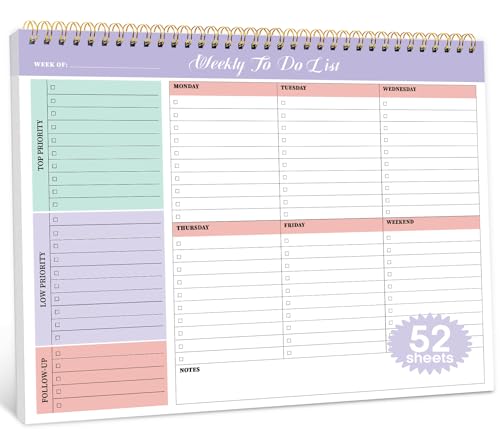
Taja Weekly To Do List Notepad with 52 Undated Sheets(8.5"×11")- Weekly Desk Planner for Women & Man, Work and Home -1 Pack Violet Dream
Unleash Your Productivity Potential – Our weekly to do list notepad provides a complete system for managing your…
As an affiliate, we earn on qualifying purchases.
As an affiliate, we earn on qualifying purchases.
Conclusion
Now that you know the essentials of building a content calendar, you’re equipped to conquer your scheduling like a pro. With consistent planning, your content will flow smoother than a river of gold, keeping your audience engaged and your brand thriving. Remember, a well-organized calendar isn’t just helpful—it’s your secret weapon to staying ahead in the content game. So start mapping out today, and watch your content empire rise to legendary heights!

Documentum Content Management Foundations: EMC Proven Professional Certification Exam E20-120 Study Guide
As an affiliate, we earn on qualifying purchases.
As an affiliate, we earn on qualifying purchases.

FUCINMTO Rechargeable Auto Clicker for Smart Phone, Adjustable Speed Clickers for iPhone iPad Apps Tiktok, Instant Click Simulation Finger Continuous Click for Game, Live Broadcasts Likes, Lightning Deal, Social Media Tasks
【No plug needed during operation】: This screen tapper has a built-in battery that delivers 4-8 hours of use….
As an affiliate, we earn on qualifying purchases.
As an affiliate, we earn on qualifying purchases.