
🔍 Read the full analysis: What The New Wage Board Means For Bangladesh’s Garment Industry on ThorstenMeyerAI.com

Get business pricing on office and shipping supplies
- Business-only prices and quantity discounts
- Tax-exempt purchasing
- Multiple users, one account, clear invoices
TL;DR
Bangladesh’s labour ministry named a six-member garment wage board on Nov. 1, while protests over pay disrupted production at 529 factories, according to the owners’ association. Workers are demanding 30,000 taka a month, against a current minimum of 12,500 taka; the board has not announced a meeting date or timetable for a new wage structure.
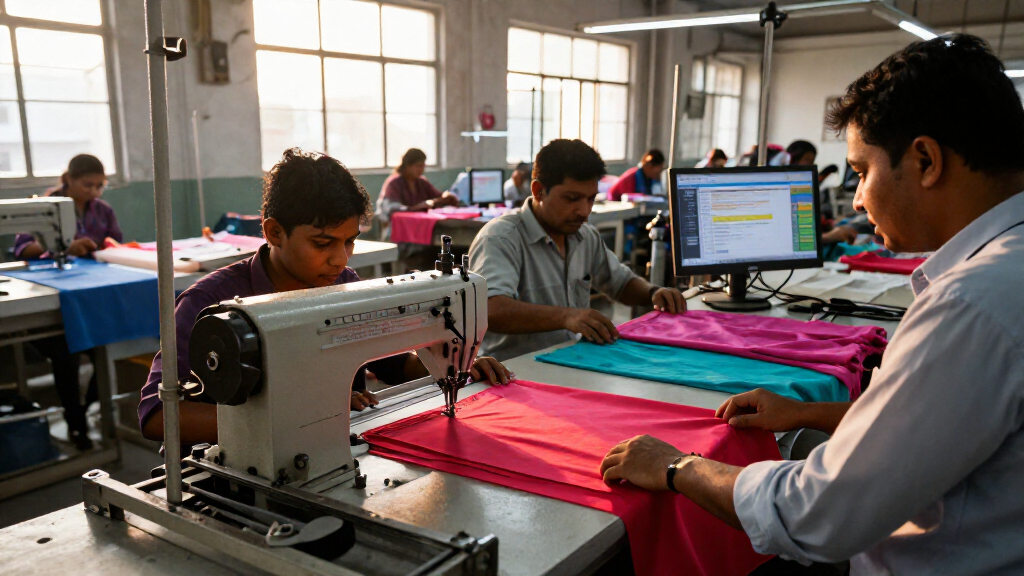
Bangladesh’s labour ministry named a six-member minimum wage board on Nov. 1 as garment workers protested for higher pay, with the owners’ association reporting disruptions at 529 factories. Workers are demanding 30,000 taka a month, more than twice the current minimum of 12,500 taka; the board is expected to consult its members on a new wage, but no meeting date or decision deadline has been announced.
The appointments came as protests spread across industrial areas around Dhaka. Reuters reported road blockades in Dhaka and Gazipur on Nov. 1, and said police used tear gas and water cannon after bricks were thrown at officers. A police vehicle and a police box were set alight, according to Reuters, and Border Guard Bangladesh personnel were deployed. Reports also said several people, including police officers, were injured in clashes in the preceding days.
The Bangladesh Garment Manufacturers and Exporters Association (BGMEA) counted 529 disrupted factories among 2,134 factories covered in five industrial regions, and reported that 987,190 workers had left their workplaces on Nov. 1. The Daily Star reported the association’s figures. The count describes workplaces where production was disrupted as workers walked out; it does not mean that the factories were shut by their owners. BGMEA reported the largest number of affected factories and workers in Gazipur and Mymensingh.
The board’s members include chair Sheikh Ashfaqur Rahman, independent member Mosleh Uddin Ahmed of the University of Dhaka, two employer representatives and two worker representatives, according to The Daily Star. Labour and Employment Minister Ariful Haque Choudhury said the board followed talks with worker representatives and industry leaders, Reuters and Al Jazeera reported. He urged workers to return, warning that prolonged disruption could delay export shipments and payments from foreign buyers.
Reuters reported that factories reopened on Monday, Nov. 2, though owners remained concerned about further unrest. That report does not establish that production had returned to normal across the industry. The wage dispute, and the board’s work, remain unresolved.
Pay Dispute Meets Export Pressures
The decision places an official wage review alongside immediate pressure to restore production. Bangladesh is a major garment manufacturing base, and delays can affect shipment schedules and the payments that factories receive from overseas buyers. The minister’s warning connects the protests to those risks, while factory owners’ concerns reported by Reuters point to the possibility of more disruption if workers remain dissatisfied.
The gap between the demand and current minimum is substantial: workers seek 30,000 taka monthly, compared with a floor of 12,500 taka in force since December 2023. The final wage is not yet known. A board recommendation and the process for adopting a new structure will determine whether the review eases workers’ concerns or leaves the dispute active.
The dispute also involves the prices paid by international buyers. Reuters reported that workers, employers and an economist it interviewed pointed to buyers’ purchasing prices as part of the industry’s wage debate. An ILO survey from 2016 found that suppliers in Bangladesh said only 17% of their customers were willing to reflect minimum-wage increases in the prices they paid. That historical survey does not establish how buyers will respond to this wage round, but it gives context to the question of who will bear any increase in labour costs.
Popular right now

Ninja Air Fryer XL, 6.5 Qt, 6-in-1, MaxCrisp, Dark Grey (AF181)

Vitamix Touch & Go Advance 32-Ounce Bar Blender, White

Ninja Foodi 7-Qt MegaZone FlexBasket Air Fryer, 6-in-1, Black, DZ071
As an affiliate, we earn on qualifying purchases.
A Review Due Under New Rules
The current minimum wage has applied since December 2023. The Daily Star reported that a 2026 amendment to Bangladesh’s Labour Act shortened the interval between minimum-wage reviews from five years to three. A review was therefore due, though the timing of the board’s appointment coincided with escalating protests.
Demonstrations had been building for weeks. The Daily Star reported that workers had blocked roads from mid-October. On Oct. 31, around 30 factories near Ashulia declared holidays, according to Mohammad Mominul Islam Bhuiyan, superintendent of the Ashulia Industrial Police, as cited by Reuters and Al Jazeera. The following day, the BGMEA reported a much broader set of walkouts and production disruptions.
The debate takes place amid concerns about employment and automation as well as pay. Research cited by the Centre for Policy Dialogue warns that automation could threaten up to 1.22 million garment jobs. That figure is a warning about potential exposure, not a count of jobs already lost, and it does not determine what wage the board will set.
“After paying rent, there is very little left for food, our children’s education and other essential expenses.”
— Mahin Hossain, a garment worker, speaking to Reuters
Board Timetable and Wage Still Unknown
The ministry notifications did not specify when the board would first meet or when a new wage structure would be announced, The Daily Star reported. No public deadline was provided. The board chair is to work out a minimum wage in consultation with the other members, but the available reports do not set out a proposed figure or explain how the members will resolve differences.
It is also unclear whether factories’ reopening on Nov. 2 brought production back to normal or ended the risk of further protests. The BGMEA figures are the association’s own count, reported by The Daily Star, and measure disruptions and workers leaving work on Nov. 1. They do not by themselves show how much production or export output was lost. The response of international buyers to any wage increase is also not yet known.
Board Talks and Factory Reopening
The next formal milestone is the wage board’s deliberation, but no first-meeting date or wage announcement schedule has been published. Workers, employers and the independent member are due to be part of the consultation under the board arrangement. Until a proposed wage and its implementation details emerge, the size and timing of any increase remain unsettled.
In the near term, factory operations and worker responses will indicate whether the reopening reported on Nov. 2 holds. The government has urged workers to return, while owners have said they remain concerned about renewed unrest. Further updates are needed on the board’s timetable, whether protests continue and whether shipment schedules are affected.
Key Questions
What did Bangladesh announce?
The labour ministry appointed a six-member garment wage board on Nov. 1, 2026, as protests over pay escalated.
How much are workers demanding?
Workers are demanding 30,000 taka a month. The current minimum wage is 12,500 taka and has applied since December 2023.
How many factories were affected by the protests?
The BGMEA reported disruptions at 529 of 2,134 factories covered across five industrial regions on Nov. 1, with 987,190 workers leaving workplaces. These are figures from the owners’ association, reported by The Daily Star.
When will the board announce a new wage?
No meeting date or deadline for announcing a new wage structure had been published in the reports available after the board’s appointment.
Did factories reopen after the protests?
Reuters reported that factories reopened on Nov. 2, while owners remained concerned about further unrest. The report did not establish that operations had returned to normal at every factory.
Source: ThorstenMeyerAI.com