
To detect SERP fragmentation during keyword research, start by analyzing the variety of content types that appear for your target keywords, such as articles, videos, images, and local packs. Notice how these formats serve different user intents and segments. Use tools to see which features dominate and identify less competitive areas. Observing these patterns helps you understand how search results are split and tailored to user needs. If you keep exploring, you’ll uncover even more strategies to optimize your approach.

Get office and shipping supplies delivered free — and shop member deals
- Fast, free delivery on millions of items
- Access to Prime Big Deal Days deals on October 6–7
- Prime Video, Amazon Music and more included
Key Takeaways
- Analyze the diversity of content types (articles, videos, images) in search results for the target keyword.
- Identify the presence of different SERP features like local packs, snippets, and carousels.
- Compare rankings across various content formats to spot fragmentation and segment dominance.
- Use tools or manual review to observe how search intent manifests through different result types.
- Monitor shifts in content distribution over time to detect emerging trends and fragmentation patterns.
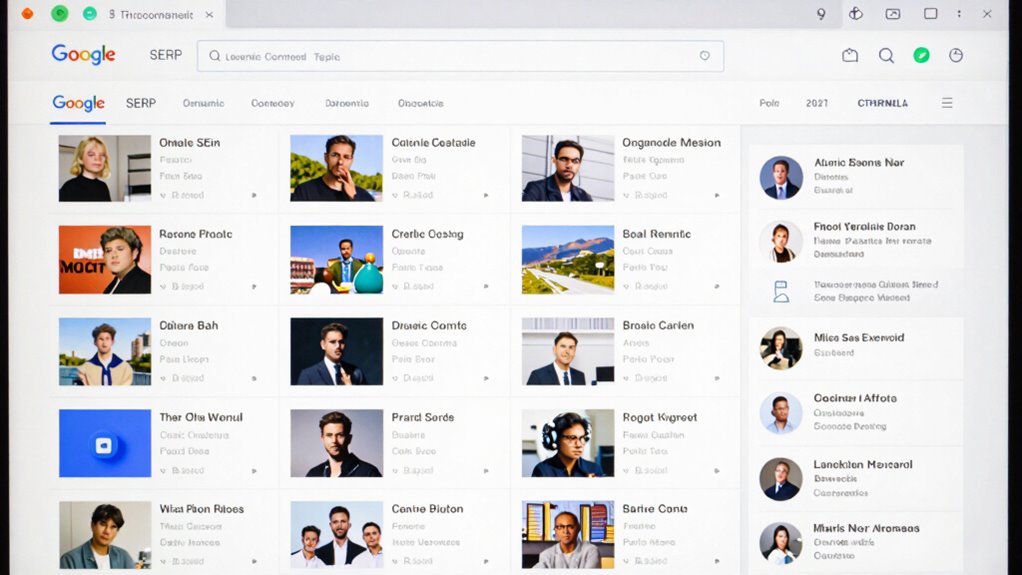
During keyword research, identifying SERP fragmentation is essential for developing effective SEO strategies. When you analyze the search engine results pages (SERPs), you need to understand that they aren’t uniform. Instead, they’re often fragmented across different types of content, formats, and user intents. Recognizing this fragmentation helps you tailor your approach, ensuring your content aligns with what users are truly seeking. One of the first signs of SERP fragmentation is observing a mix of different content types—such as articles, videos, images, and local packs—appearing for the same keyword. This diversity indicates that the search intent isn’t singular but varies across segments, making it vital to analyze which content types dominate the results and how they cater to user needs.
You should also pay close attention to the ranking difficulty associated with each segment within the SERP. Some parts of the page might be easier to rank in than others, depending on the competitiveness of the niche and the specific format. For example, if the top results are dominated by authoritative websites or large brands, your chances of ranking high in those areas decrease. Conversely, if the SERP shows less competitive formats like Q&A snippets or local listings, you might find opportunities to rank more easily, even with a smaller domain authority. This variability in ranking difficulty across different segments underscores the importance of understanding the fragmentation, so you can focus your efforts where they’re most likely to succeed. Additionally, understanding content diversity within the SERP can help you identify emerging trends and adapt your strategy accordingly. Recognizing SERP features and their impact on visibility is also crucial for refining your SEO approach.
As an affiliate, we earn on qualifying purchases.
Frequently Asked Questions
How Does SERP Fragmentation Impact Overall SEO Strategy?
SERP fragmentation impacts your overall SEO strategy because it introduces more SERP diversity, meaning different search results appear for the same query. This affects your keyword targeting, as you need to optimize for multiple features like snippets, local packs, or videos. By understanding fragmentation, you can tailor your content to appear in various SERP elements, increasing your visibility and driving more targeted traffic.
Can SERP Fragmentation Vary by Location or Device?
Ironically, your search results can vary wildly based on location and device. You might find your perfect ranking on desktop in one city, but on mobile elsewhere, it’s a completely different game. Local variations and device differences cause SERP fragmentation, making it tricky to track your true SEO performance. So, always consider where and how your audience searches, or risk missing out on key opportunities.
What Tools Are Best for Monitoring SERP Fragmentation?
You should use tools like SEMrush, Ahrefs, and SERPChecker to monitor SERP fragmentation effectively. These tools analyze keyword diversity and observe changes in the SERP layout across locations and devices. They help you identify how results vary, revealing fragmentation patterns. Regularly checking these tools allows you to adapt your strategies, ensuring your content stays optimized despite evolving SERP structures and maintaining visibility across diverse search environments.
How Often Should I Check for SERP Fragmentation?
You should check for SERP fragmentation every couple of weeks, especially when you’re focusing on keywords with diverse search intent. Regular monitoring helps you understand how search results evolve and whether your keyword diversity strategy remains effective. By staying consistent, you can adapt your content to target different SERP features and guarantee your SEO efforts align with current search engine behaviors, maximizing your visibility across various search intents.
Does SERP Fragmentation Influence Ranking Difficulty?
Some might think SERP fragmentation doesn’t affect rankings, but it actually influences ranking difficulty. When the SERP layout varies due to keyword diversity, it’s harder for your content to rank consistently across different search results. Fragmentation means your competitors also face this challenge, but understanding it helps you tailor your SEO strategy. Recognizing how SERP layout impacts your target keywords allows you to optimize effectively and improve your chances of ranking higher.
As an affiliate, we earn on qualifying purchases.
Conclusion
Think of SERP fragmentation like a puzzle with scattered pieces—you need to see how the pieces fit together to find the full picture. During your keyword research, spotting these fragments helps you understand where your content fits best. I once watched a fellow marketer uncover hidden SERP segments, like finding missing puzzle pieces, and it transformed his strategy. By detecting fragmentation early, you can craft targeted content that seamlessly completes the picture and boosts your rankings.
As an affiliate, we earn on qualifying purchases.
search engine results page analyzer
As an affiliate, we earn on qualifying purchases.
As an affiliate, we earn on qualifying purchases.
Evergreen bestsellers Picks
bestsellers
As an affiliate, we earn on qualifying purchases.