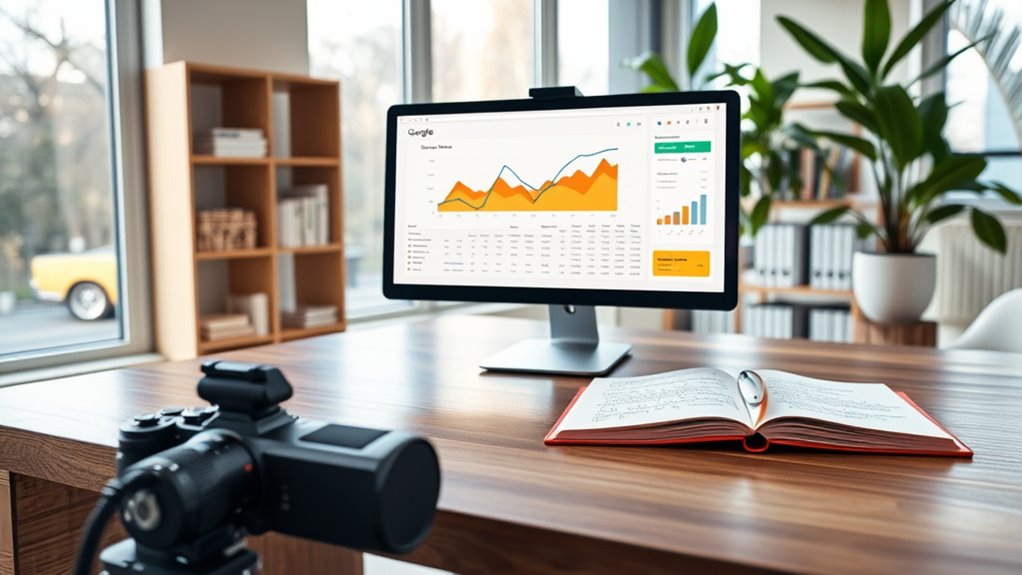

Using Google Trends helps you spot seasonal spikes and emerging topics, so you can plan your content around peak interest times. By analyzing search patterns, you’ll know when specific keywords gain popularity, allowing you to publish at the right moment for maximum engagement. Comparing multiple keywords also shows you which trends are on the rise. Keep exploring how this tool can give you a competitive edge and improve your content strategy.
Key Takeaways
- Analyze seasonal and trending keywords to schedule content during peak interest periods for maximum visibility.
- Use trend pattern insights to publish content just before search interest surges.
- Compare multiple keywords to prioritize topics gaining momentum and stay ahead of competitors.
- Incorporate emerging trends early to build authority and relevance in your niche.
- Leverage regional trend data to tailor content strategies for specific markets and audiences.

Google Trends is a powerful tool that can help you optimize your content strategy by revealing when certain topics are most popular. When you leverage this tool effectively, you can identify seasonal keywords that align with your target audience’s interests, allowing you to plan content around peak search times. Seasonal keywords are terms that gain popularity during specific times of the year, such as holidays, seasons, or annual events. Recognizing these keywords through trend analysis enables you to create timely, relevant content that resonates with your audience and draws more traffic.
By analyzing trend patterns over time, you can pinpoint the exact moments when interest in particular topics surges. For example, if you notice increased searches for “summer travel tips” every June, you can prepare and publish related content just before the peak. This proactive approach ensures your content appears when potential readers are most engaged, increasing your chances of ranking higher in search results. Trend analysis also helps you discover emerging topics before they become saturated, giving you a competitive edge and the opportunity to establish authority early.
Using Google Trends, you can compare multiple keywords to see which ones are gaining momentum and identify seasonal variations. This comparative insight allows you to prioritize topics that are trending upward, ensuring your content remains fresh and relevant. Incorporating seasonal keywords into your content planning means you can align your editorial calendar with natural search behaviors, leading to better engagement and higher conversion rates. For example, if you’re in the retail industry, tailoring your promotions and content around holiday shopping periods can considerably boost your sales.
Furthermore, trend analysis helps you adapt your content strategy to changing consumer interests. If a particular topic starts trending unexpectedly, you can quickly create content to capitalize on that momentum. This agility is critical in today’s fast-paced digital environment, where timely content often outperforms stale material. Tracking seasonal keywords and analyzing search data also provides insights into regional trends, allowing you to customize content for different markets or demographics.
Additionally, understanding the color accuracy of projectors can help you select equipment that produces more vibrant and true-to-life images, enhancing viewer satisfaction. Ultimately, integrating Google Trends into your content planning process ensures you’re not just guessing what your audience wants but making data-driven decisions. By focusing on seasonal keywords and conducting thorough trend analysis, you position yourself to publish content that meets timely demands, increases visibility, and strengthens your overall digital presence. It’s about staying ahead of the curve and making your content work smarter, not harder.
Google Trends keyword research tool
As an affiliate, we earn on qualifying purchases.
As an affiliate, we earn on qualifying purchases.
Frequently Asked Questions
How Accurate Are Google Trends Predictions for Future Search Behaviors?
Google Trends offers helpful insights, but its prediction reliability isn’t perfect. You can trust trend accuracy for short-term search behavior shifts, especially around seasonal events or breaking news. However, for long-term forecasts, it’s less reliable because search patterns can change unexpectedly. Use Google Trends as a guide rather than a crystal ball, and combine it with other data sources to improve your understanding of future search behaviors.
Can Google Trends Data Be Used for International Content Planning?
You can definitely use Google Trends data for international content planning, giving you a compass in the vast ocean of global markets. It helps you navigate cultural differences by revealing regional interests and search behaviors. While it’s not a crystal ball, it offers valuable insights to tailor your content for diverse audiences. Keep in mind, understanding local nuances enhances engagement and guarantees your content resonates across different cultural landscapes.
How Often Should I Check Google Trends for Optimal Results?
You should check Google Trends regularly, ideally once a week, to keep up with search frequency and trend monitoring. This frequency allows you to spot emerging patterns early and adjust your content strategy accordingly. If you’re targeting seasonal or timely keywords, increase your checks to every few days around key dates. Consistent trend monitoring helps you stay relevant and optimize your content for maximum engagement.
Are There Limitations to Using Google Trends for Niche Topics?
Yes, Google Trends has limitations for niche topics. You might face issues with data granularity, as it often provides only broad insights, making it harder to analyze smaller niches accurately. Additionally, regional biases can skew results, especially if your niche is popular in specific areas but underrepresented globally. Relying solely on Trends can lead to incomplete insights, so supplement your research with other tools for a thorough view.
How Do Seasonal Trends Impact Long-Term Content Strategies?
Imagine a world where seasonal fluctuations shape your content calendar, much like the tides of the ocean. Seasonal trends markedly impact your long-term strategy, as holiday peaks drive higher interest at specific times. By anticipating these patterns, you can plan content that aligns with audience demand, ensuring your content remains relevant and engaging year-round. Timing your efforts to seasonal fluctuations helps maximize reach and sustain growth.
seasonal keyword planner for content
As an affiliate, we earn on qualifying purchases.
As an affiliate, we earn on qualifying purchases.
Conclusion
By leveraging Google Trends, you can plan your content effectively, target the right keywords at the right time, and stay ahead of your competition. Use it to discover seasonal opportunities, spot emerging topics, and refine your strategy continually. Embrace the insights it offers, adapt your content accordingly, and watch your audience grow. With consistent analysis, strategic timing, and informed decisions, you’ll turn data into success, making your content more relevant, timely, and impactful.
![Audacity - Sound and Music Editing and Recording Software - Download Version [Download]](https://m.media-amazon.com/images/I/B1WE7w810rS._SL500_.png)
Audacity – Sound and Music Editing and Recording Software – Download Version [Download]
Record Live Audio
As an affiliate, we earn on qualifying purchases.
As an affiliate, we earn on qualifying purchases.

NIV, KJV, NASB, Amplified, Parallel Bible, Hardcover: Four Bible Versions Together for Study and Comparison
Side-by-side comparison of four Bible versions: NIV, KJV, NASB, and Amplified
As an affiliate, we earn on qualifying purchases.
As an affiliate, we earn on qualifying purchases.