
To audit search visibility by funnel stage, start by analyzing your website’s keyword rankings and traffic data, then categorize keywords based on user intent—awareness, consideration, or decision. Identify visibility gaps at each stage and compare your performance with competitors. Use analytics tools to track changes over time and spot bottlenecks that prevent users from moving forward. Continuing will reveal specific strategies to optimize your content and improve your overall funnel performance.
Key Takeaways
- Segment keywords based on user intent into awareness, consideration, and decision stages for targeted analysis.
- Use analytics tools to track keyword rankings and visibility metrics at each funnel stage regularly.
- Analyze competitor performance at each stage to identify gaps and opportunities in your own strategy.
- Evaluate content performance and landing pages to ensure alignment with user intent at each funnel point.
- Identify funnel bottlenecks by comparing visibility across stages and implement targeted SEO and content improvements.
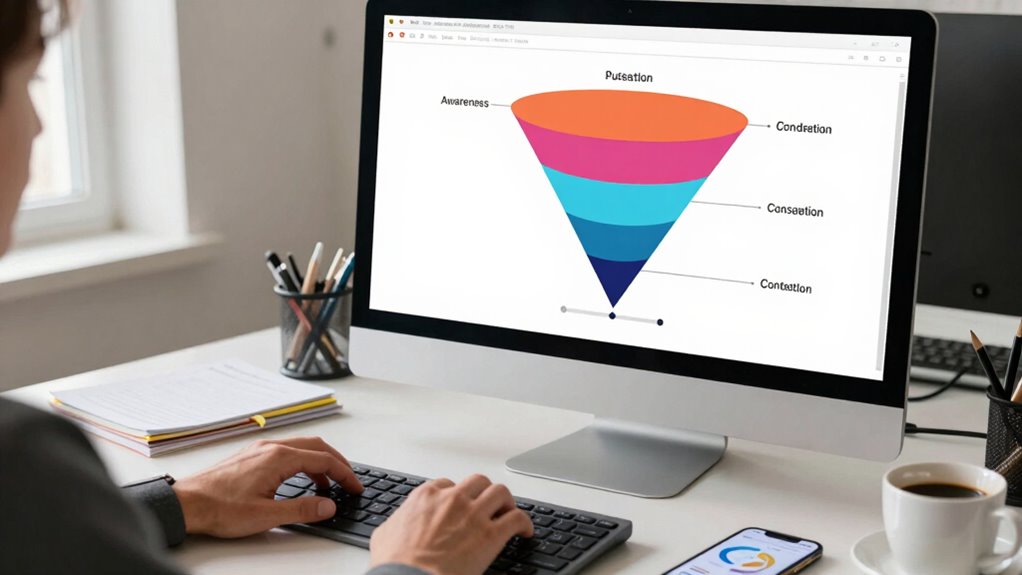
Understanding your search visibility at each stage of the funnel is vital for optimizing your marketing efforts. When you start analyzing how your website performs at different points — from awareness to conversion — you gain valuable insights that help you refine your strategies. One effective way to do this is through keyword segmentation, which involves categorizing keywords based on the intent behind them. For example, you might segment keywords into awareness, consideration, and decision stages. By doing this, you can identify which keywords are driving traffic at each phase and adjust your content accordingly. If you notice that your top-of-funnel keywords aren’t performing as well as expected, you can pivot your content or improve your SEO efforts to better target those early-stage searches. Additionally, understanding your security, storage, and compliance measures can influence the content you create to assure prospects at different funnel stages. Competitor analysis also plays an indispensable role in understanding your search visibility across the funnel. By examining what your competitors are ranking for at various stages, you can spot gaps in your own strategy and opportunities to outrank them. Look at their keyword segmentation strategies, the content they create for different funnel stages, and their overall visibility. If your competitors are dominating awareness-stage searches with blog posts, videos, or guides, it’s a sign that you might need to develop similar or better content to improve your visibility early on. Conversely, if they’re strong in decision-stage keywords, review their landing pages and calls to action to see how you can optimize your own pages for better conversions. Tracking your search visibility involves more than just checking rankings; it requires an all-encompassing approach that considers user intent, competitive landscape, and content performance. Using analytics tools that provide insights into how your keywords perform at different funnel stages can help you make data-driven decisions. Regularly updating your keyword segmentation based on shifting trends and search behavior is crucial for maintaining relevance. This ongoing process is also supported by content performance analysis, which helps you evaluate which types of content resonate most with users at each stage of their journey. This ongoing process ensures your content remains relevant and targeted. When you analyze your visibility by funnel stage, you can identify bottlenecks or weak spots—perhaps your brand is visible at the awareness level but drops off during consideration and decision phases. Recognizing these gaps allows you to tailor your SEO efforts, improve your content, and ultimately guide prospects smoothly through their journey, increasing your chances of converting visitors into customers.

Keywords – Keyword Planner Tool for SEO, 6×9 Notebook, Research Tool Book
As an affiliate, we earn on qualifying purchases.
As an affiliate, we earn on qualifying purchases.
Frequently Asked Questions
How Often Should I Perform a Search Visibility Audit?
You should perform a search visibility audit every three to six months. Regular audits help you spot gaps in your keyword research and guarantee your content optimization strategies are effective. By consistently reviewing your search performance, you can adjust your approach, refine keywords, and improve rankings. This routine keeps your site competitive, helps track progress, and ensures your content aligns with your audience’s evolving search intent.
What Tools Are Best for Tracking Search Visibility?
You might think tools like SEMrush, Ahrefs, or Moz are the best for tracking search visibility, and you’re right. They help you monitor keyword fluctuations and perform competitor analysis effectively. These platforms provide insights into your rankings, organic traffic, and keyword opportunities. By consistently using them, you can identify trends, spot issues early, and refine your SEO strategy, ensuring you stay ahead in search visibility across funnel stages.
How Do I Interpret Search Visibility Data Effectively?
You interpret search visibility data effectively by focusing on keyword segmentation and competitor benchmarking. Break down your data by funnel stages to see where your strengths and gaps lie. Compare your performance with competitors to identify opportunities and threats. Look for trends and patterns in keyword rankings and visibility scores, and use this insight to refine your SEO strategies. This targeted approach helps you make informed decisions that boost your overall search presence.
Can Search Visibility Vary by Device or Location?
Just like a traveler’s journey varies by destination, your search visibility can differ by device and location. Device-specific trends influence how your content performs on smartphones versus desktops, while location-based fluctuations impact regional search results. You’re likely to see different visibility patterns depending on where users are searching from and what device they’re using. Regularly analyzing these variations helps you tailor your strategy, ensuring you’re visible wherever your audience is searching from.
How Do I Prioritize Issues Found During an Audit?
You should prioritize issues based on their impact on your visibility and the difficulty to fix them. Focus first on high-priority problems like keyword difficulty, which directly affect your rankings, and consider your backlink profile’s health. Address issues that hinder your ability to rank for key terms, especially those with a competitive keyword difficulty rating. Fixing backlink profile issues can also boost your authority, making your site more visible across funnel stages.

Empowering Marketing and Sales with HubSpot: Take your business to a new level with HubSpot's inbound marketing, SEO, analytics, and sales tools
As an affiliate, we earn on qualifying purchases.
As an affiliate, we earn on qualifying purchases.
Conclusion
Now that you’ve mapped out how to audit search visibility by funnel stage, you’re like a skilled detective uncovering hidden clues in your data. Remember, this process isn’t just about numbers—it’s about understanding your audience’s journey and guiding them smoothly to conversion. With each insight, you sharpen your strategy, turning the puzzle into a masterpiece. So, keep analyzing, keep optimizing, and let your search visibility be the lighthouse guiding customers home.

Content Gap Analysis in SEO: Overtake Competitors with Strategic Content (Short guidebook)
As an affiliate, we earn on qualifying purchases.
As an affiliate, we earn on qualifying purchases.

The Art of Learning: An Inner Journey to Optimal Performance
Great product!
As an affiliate, we earn on qualifying purchases.
As an affiliate, we earn on qualifying purchases.