

To build trust on high-stakes content sites, you should add multiple layers like transparent privacy policies, clear communication channels, and verified content from reputable sources. Incorporate visual cues such as badges of approval and high-quality images to signal credibility. Engage users actively through interactive features, and address concerns openly to reinforce integrity. Using recognizable trust signals and maintaining consistent transparency will strengthen your credibility—keep exploring to learn more ways to create unwavering trust.

Get business pricing on office and shipping supplies
- Business-only prices and quantity discounts
- Tax-exempt purchasing
- Multiple users, one account, clear invoices
Key Takeaways
- Implement rigorous fact-checking and credible sourcing to ensure content accuracy and build user trust.
- Display trust signals like badges, seals, and expert contributions to verify content authenticity.
- Maintain transparent privacy policies and data protection measures to reassure users of ethical handling.
- Use consistent, high-quality visuals and technical indicators to reinforce site professionalism and reliability.
- Foster open communication, promptly address concerns, and openly correct mistakes to strengthen credibility.
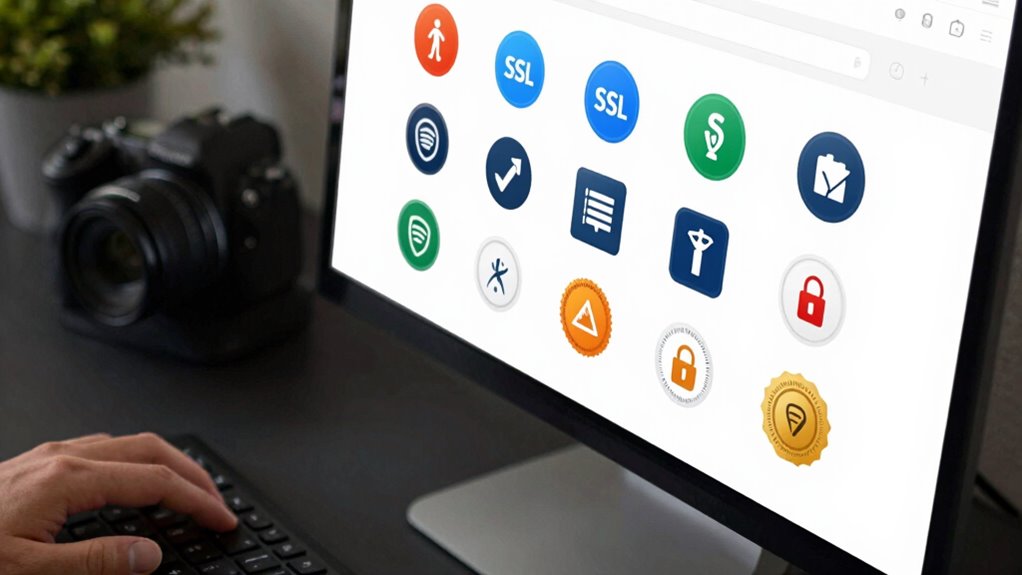
In today’s digital landscape, trust is the foundation that keeps high-stakes content sites thriving. When users visit your site, they’re looking for reliability, accuracy, and transparency. Without these, their confidence diminishes, and so does your credibility. You need to implement trust layers that reassure visitors and foster ongoing engagement. One essential layer is prioritizing user engagement by creating interactive features, clear communication channels, and prompt responses. When users feel heard and valued, they’re more likely to stay, explore, and share your content. Engagement isn’t just about comments or likes; it’s about building a community where users actively participate and trust your expertise. Additionally, ensuring color accuracy and consistent image quality in visual content can significantly enhance perceived professionalism and trustworthiness.
Another crucial layer involves content verification. You need to establish rigorous processes to ensure that every piece of information you publish is accurate and credible. This might include fact-checking protocols, sourcing from reputable authorities, and regularly updating content to reflect the latest developments. Content verification demonstrates your commitment to truth and reduces misinformation, which is vital in high-stakes environments like news, health, finance, or legal sites. When your audience sees that your content is verified, they’re more inclined to trust your site as a reliable source. Incorporating resale value and other key factors into your content can also serve as trust signals, especially when discussing product quality and longevity. Additionally, incorporate transparent citations and provide clear attribution to reinforce your verification efforts. Understanding paint sprayer maintenance and how it impacts performance can also serve as a trust-building detail for technical audiences. Recognizing the importance of content accuracy and implementing quality controls further strengthens your credibility and reassures users that they can rely on your information.
Building trust also means making it easy for users to identify trustworthy content quickly. Use visual cues like badges or seals of approval for verified information, expert contributions, or secure transactions. These trust signals serve as visual reassurance, especially when users are making critical decisions based on your content. Additionally, maintaining a transparent privacy policy and showing your commitment to data protection can bolster confidence. When users see that their personal information is handled responsibly, their trust deepens, encouraging repeated visits and user engagement.
Finally, don’t forget the power of consistent communication. Be proactive in addressing concerns, clarifying ambiguities, and acknowledging mistakes when they happen. When you openly admit errors and take corrective action, you reinforce your integrity. Combining high user engagement, rigorous content verification, and transparent communication establishes multiple trust layers that help your site stand out in high-stakes environments. These layers work together to create a trustworthy ecosystem where users feel safe, valued, and confident in the content you provide, ultimately helping your site thrive in a competitive digital world.
verified content badges for websites
As an affiliate, we earn on qualifying purchases.
As an affiliate, we earn on qualifying purchases.
Frequently Asked Questions
How Do Trust Layers Impact User Engagement and Retention?
Trust layers considerably boost your user engagement and retention by addressing user skepticism and providing emotional reassurance. When you implement clear trust signals, users feel more confident, reducing doubts and encouraging them to stay longer and interact more. These layers create a sense of safety and credibility, making your audience more likely to return. Ultimately, trust layers foster loyalty by reassuring users that their experience and data are secure.
What Are the Costs Associated With Implementing Trust Layers?
Implementing trust layers is like planting a sturdy fence around your site’s garden; it requires resources upfront. The cost analysis reveals expenses for technology, staff training, and ongoing maintenance. You may face implementation challenges like integrating new tools or aligning team efforts. While initial investments can seem high, they protect your reputation and user trust, ultimately saving costs by reducing disputes and boosting user confidence.
How Do Trust Layers Affect SEO Rankings?
Trust layers boost your SEO rankings by enhancing your credibility signals and demonstrating transparency practices. When you implement features like clear author information, SSL certificates, and detailed privacy policies, search engines recognize your site as trustworthy. This increases user confidence and engagement, leading to higher rankings. Fundamentally, trust layers act as signals that you prioritize transparency, which search algorithms favor, helping your content perform better in search results.
Can Trust Layers Be Customized for Different Content Types?
You can definitely customize trust layers for different content types. In fact, 78% of users prefer personalized experiences, making personalization strategies essential. By tailoring trust signals—like reviews, author credentials, or source citations—you enhance content differentiation and build credibility. Whether for blogs, product pages, or news articles, customizing trust layers guarantees your audience feels confident, boosting engagement and trust across varied content formats.
What Are Common Pitfalls When Adding Trust Layers?
When adding trust layers, you might overlook user privacy and data security, leading to vulnerabilities. Common pitfalls include over-reliance on generic solutions that don’t suit your audience, neglecting clear communication about privacy practices, and failing to update security measures regularly. You also risk losing trust if you don’t transparently handle data and privacy concerns. Always prioritize user privacy and data security to maintain credibility and safeguard your high-stakes content.
As an affiliate, we earn on qualifying purchases.
Conclusion
By layering trust, you build a fortress around your site—shielding your reputation, safeguarding your users, and strengthening your credibility. Each trust layer acts like a brick, a mortar, a sturdy wall that resists doubt and disarms suspicion. When you prioritize transparency, security, and authenticity, you create a foundation that’s unbreakable. Trust isn’t just built in moments; it’s woven through every interaction, every detail, every step—making your high-stakes content site a sanctuary your audience can rely on.
high-quality visual content images
As an affiliate, we earn on qualifying purchases.
As an affiliate, we earn on qualifying purchases.
interactive user engagement tools
As an affiliate, we earn on qualifying purchases.
As an affiliate, we earn on qualifying purchases.
Halloween Picks
halloween
As an affiliate, we earn on qualifying purchases.