
🔍 Read the full analysis: Why We Started Over On Our AI Horror-Comedy, Hollow House on ThorstenMeyerAI.com

Get business pricing on office and shipping supplies
- Business-only prices and quantity discounts
- Tax-exempt purchasing
- Multiple users, one account, clear invoices
TL;DR
Thorsten Meyer says Hollow House, a 97-second AI-generated horror-comedy, was made in three versions overnight on Oct. 27–28. The first cut looked polished but was too slow; the final version used three roughly 30-second segments generated with one model given references for the full cast.
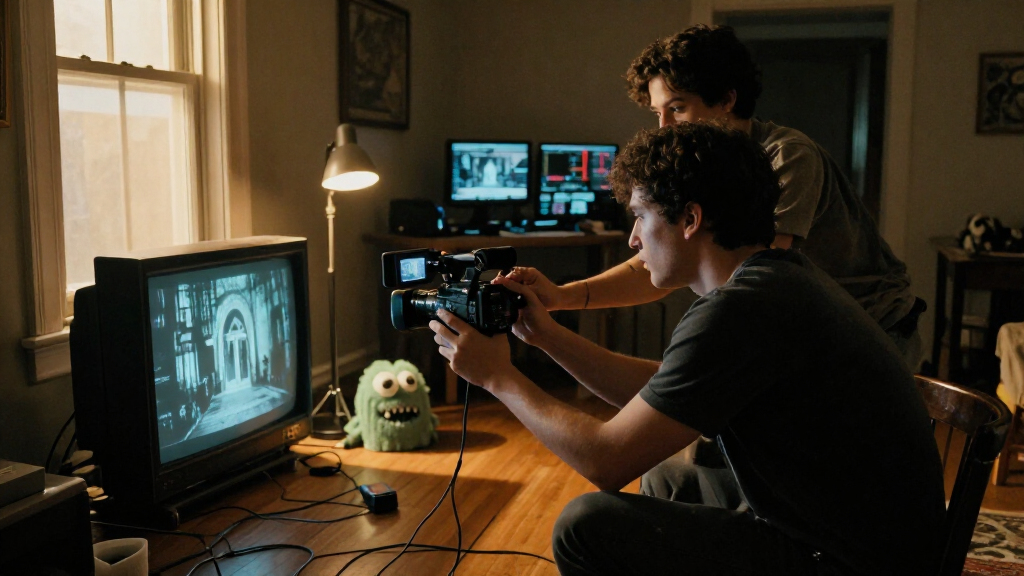
Filmmaker Thorsten Meyer says he rebuilt his 97-second AI horror-comedy Hollow House twice after an initial version looked convincing but felt “terribly boring and amateurish.” In a production account published Oct. 28, Meyer describes three versions made overnight: the final cut used three roughly 30-second segments generated with one video model supplied with references for the full cast.
The short’s premise puts a real ghost to work at an extreme haunted attraction, where staff treat the supernatural arrival as a workplace problem. When a guest says the attraction’s safe word, “cotton candy,” the scare does not stop. Shift lead Ray asks whether the ghost signed a waiver, while a worker in a priest costume is pulled into an exorcism. Meyer says the characters, voices and sets were all AI-generated.
Meyer reports that the first version used 20 individual shots and ran 2 minutes 15 seconds. He generated still frames for each shot and animated them with Google’s Veo 3.1 fast mode. Though the images and character continuity looked good to him, the edit averaged 5.6 seconds per cut, and he judged the result too slow for comedy.
The second version had 66 fast cuts and ran 2 minutes 21 seconds, but it also did not work. For the third, Meyer says he generated three segments of about 30 seconds using one model that had references for the whole cast. The finished short runs 1:37. Across all three versions, he reports using 2,220 Higgsfield credits, which he valued at roughly $95 under his plan, plus about 2,100 ElevenLabs characters for music and sound effects.
Why We Started Over on Our AI Horror-Comedy, Hollow House
Thorsten Meyer made three versions of his 97-second short overnight. The first looked polished, but its pacing drained the comedy. The final cut came from a new structure, full-cast references and a human editor’s choices.
“Terribly boring and amateurish.”
Good images could not fix the rhythm
The premise treats a real ghost as a workplace problem: an extreme haunted attraction keeps operating even after a guest says the safe word, “cotton candy.” Meyer says the first edit had convincing visuals and character continuity, but comedy needed a faster pulse.
Polished, too slow
20 individual shots ran 2:15. At an average 5.6 seconds per cut, Meyer felt the jokes had too little momentum.
Rejected: pacingMore cuts, still not right
66 fast cuts stretched to 2:21. Meyer says this attempt also failed to make the short work.
Rejected: editThree longer segments
One model generated three segments of roughly 30 seconds, with references for the full cast supplied to support consistency.
Finished: 1:37Cut count is a clue, not a recipe
Meyer compared the first version with an AI horror-comedy short that inspired the project. He counted about 74 cuts over 2:14 in that reference, averaging 1.8 seconds per image. These are his counts, not an independently verified comparison.
Average time per image
The bars show relative durations on a shared scale. Faster cutting can change comic timing, but cut speed alone does not guarantee a better joke.
What changed the outcome?
Meyer credits the revision process: rejecting a visually successful cut, changing how the cast was referenced, and applying a final color grade. Generated footage still needed selection, timing and judgment.
“Did you even sign the waiver?”
Shift lead Ray responds to a supernatural arrival like an operational hazard. The workplace logic gives the horror-comedy its central contrast.
A workflow shaped by both models and retakes
The account describes a fast generative process with practical limits: dialogue errors, awkward motion and blocked actions all required Meyer to review and revise the material.
Eight character reference images, made with Google’s Nano Banana 2 through Higgsfield, helped carry hair and costume details across shots.
For version one, Meyer made a 20-shot list, created start frames, then animated them with Veo 3.1 fast mode.
Whisper transcripts were compared with the script to catch dialogue mistakes and identify clips that needed retakes.
Three cast-referenced segments formed the final structure, followed by editorial selection and a final color grade.
Some ideas needed another way in
Meyer’s examples show how a model can produce usable material while still missing the intended performance or physical action.
“HEY!” became letter-by-letter
The model spoke the letters separately instead of delivering the intended shout.
A head turn moved the body
A planned full head turn rotated the character’s body too, changing the intended shot.
Floating barely lifted off
A first attempt was blocked. Rewording the action passed, though the guest’s feet barely left the floor.
From haunted attraction to finished short
Meyer says the characters, voices and sets were AI-generated. He describes the script, characters and jokes as his own; the film’s structure was inspired by another short shared on X.
One production account, project-specific figures
The reported details are useful as a case study, not a universal benchmark. The source is Meyer’s own account and does not independently verify settings, costs or comparisons.
How much did it cost?
Meyer reports 2,220 Higgsfield credits across all three versions, worth roughly $95 under his plan, plus about 2,100 ElevenLabs characters for music and sound effects. Other plans may cost differently.
Why were there three versions?
The first seemed too slow; the second used 66 cuts but still did not work for Meyer. He says the third version’s structure produced the finished short.
What details are missing?
The account gives limited detail on why version two failed, the final model’s settings, generation time, tool-by-tool costs, and any edits after the overnight process.
Where can readers watch it?
Meyer published the 1:37 short alongside his production account on October 28, 2026. The source does not announce another cut or a follow-up release schedule.
Why the First Cut Felt Slow
Meyer’s account points to an editing problem, not simply a failure to produce attractive AI images. His first cut had consistent faces, costumes and a red-and-teal haunted-house look, but he says its longer shots and limited rhythm weakened the comedy. He compared it with the short that inspired the project, which he counted at about 74 cuts over 2:14, or an average of 1.8 seconds per image. Those figures are Meyer’s counts, not an independently verified comparison.
The production also shows the amount of human judgment involved in a generative-video workflow. Meyer identifies the decision to reject the first cut, change how the cast was supplied to the model and apply a final colour grade as key choices. The tools generated material, but his account credits selection, timing and revision with making the final version work.
For readers following AI filmmaking, the case offers a specific example of both capability and constraint: a short can be assembled quickly, but producing usable footage does not by itself solve pacing, performance or continuity. Meyer’s reported credit cost also gives one indication of the expense for this project, though it cannot establish what similar films would cost for other users or plans.
Popular right now

Bose QuietComfort Wireless Noise Cancelling Headphones – Twilight Blue Limited Edition
Philips 5500 Series Fully Automatic Espresso Machine with LatteGo Milk System

Ninja Foodi 6-in-1 DualZone FlexBasket Air Fryer, 7-Qt MegaZone, Black, DZ071
As an affiliate, we earn on qualifying purchases.
From Character Sheets to Three Cuts
Before generating video, Meyer created one reference image for each of the eight characters using Google’s Nano Banana 2 image model through Higgsfield. He says each 2K image cost two credits and that the set was made in under two minutes. The images served as visual references for later frames and clips, helping keep details such as hair and costumes consistent as shots changed.
For the first version, Meyer wrote a 20-shot list, made a start frame for every shot with the character references, then animated the frames with Veo 3.1 fast mode. He says Veo generated speech and sound alongside the video. He also ran the clips through OpenAI’s Whisper speech-recognition model and compared the transcripts with the script, catching dialogue errors that required retakes.
Meyer describes several other production limits. Veo rendered “HEY!” as the letters spoken separately; a planned full head turn rotated the character’s body too; and a first attempt to show a guest lifted off the floor was blocked. Rewording the action as floating passed, but the feet barely left the ground. The film’s structure, Meyer says, was inspired by an AI horror-comedy short shared on X, while he describes Hollow House’s script, characters and jokes as his own.
““Terribly boring and amateurish.””
— Thorsten Meyer, describing the first version
What the Production Account Leaves Open
The account is Meyer’s own description of the project, and it does not provide independent confirmation of the production figures, software settings or cost estimate. The roughly $95 figure is tied to his Higgsfield plan price; other users’ costs could differ. The comparison with the short shared on X is also Meyer’s count, and the source does not identify that short or provide an independently checked cut count.
The available material gives limited detail on the second version beyond its length and number of cuts, so it is not possible to determine exactly why that edit failed or how each revision changed the story. Meyer’s account also does not provide a separate breakdown of the final version’s generation time, the cost of individual tools, or whether any additional edits were made after the overnight process.
Where to Watch the Finished Short
Meyer published Hollow House alongside his production account on Oct. 28, with the short listed as 1 minute 37 seconds. The source describes the film as complete and does not announce another cut, a release schedule beyond the posted video or a follow-up project. Readers can compare the finished short with Meyer’s account of the three versions, but further details about the workflow may depend on whether he publishes additional production material.
Key Questions
What is Hollow House?
Hollow House is a 97-second horror-comedy short by Thorsten Meyer. Its story follows a ghost working at an extreme haunted attraction, where staff respond to the supernatural problem like a workplace issue.
Why did Meyer make three versions?
Meyer says the first version looked good but was too slow, with 20 shots averaging 5.6 seconds per cut. A second version used 66 fast cuts but also failed to work for him; he says the third version’s structure produced the finished short.
How was the final version generated?
According to Meyer, the final cut consists of three roughly 30-second segments generated using one model supplied with references for the full cast. The published account does not provide a complete technical breakdown of that model or its settings.
How much did the project cost?
Meyer reports using 2,220 Higgsfield credits across the three versions, which he estimates at about $95 at his plan price. He also reports using about 2,100 ElevenLabs characters for music and sound effects. These are his project figures, not a general price estimate.
Are the characters and locations real?
No real cast or set is described in Meyer’s account. He says every character, voice and set was AI-generated, with reference images created for eight characters before the video clips were made.
Source: ThorstenMeyerAI.com