
To build content programs that support both SEO and sales, focus on aligning your storytelling with your audience’s needs and preferences. Use data to personalize content, making it relevant and emotionally engaging. Map out the customer journey to create targeted content that answers key questions at each stage. Integrate industry trends and authoritative sources for credibility. Regularly analyze performance metrics to refine your approach. Keep exploring these strategies to discover even greater impact.
Key Takeaways
- Develop a content strategy aligned with the buyer’s journey, addressing key questions at each stage.
- Integrate relevant keywords naturally into storytelling to enhance SEO and user engagement.
- Personalize content based on audience data to increase relevance and drive conversions.
- Leverage industry trends and authoritative sources to boost credibility and search visibility.
- Regularly analyze performance metrics to refine content, ensuring ongoing alignment with SEO and sales goals.
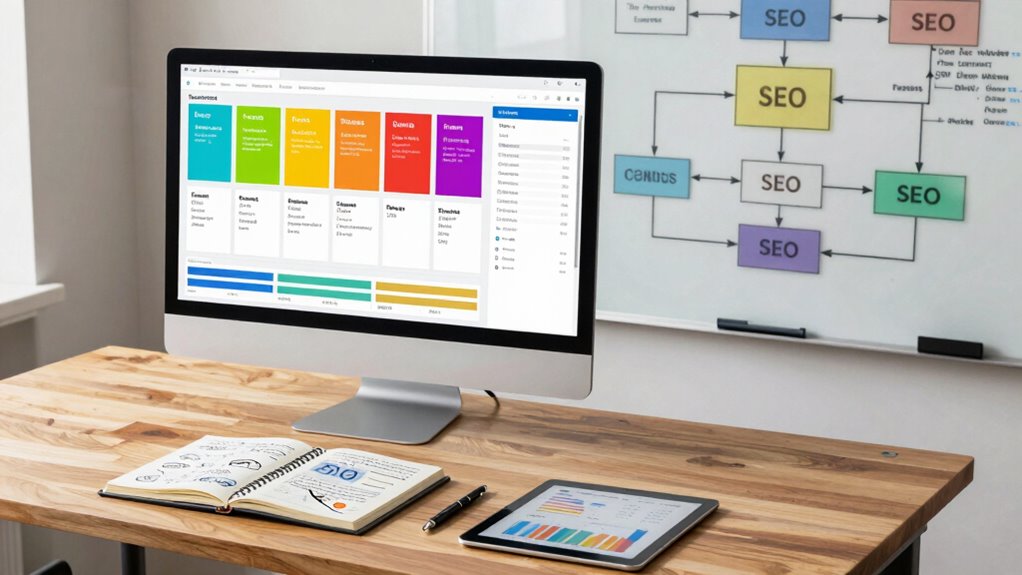
Creating a successful content program is essential for boosting both your SEO and sales, but it requires strategic planning and execution. To do this effectively, you need to focus on how you tell your brand story and how you personalize content to meet your audience’s needs. Brand storytelling isn’t just about sharing your company’s history; it’s about creating a narrative that resonates emotionally with your audience. When your story aligns with their values and experiences, they’re more likely to trust you and stay engaged. This emotional connection can turn casual visitors into loyal customers, boosting your sales over time.
Content personalization plays a critical role in this process. Instead of delivering generic content to everyone, you tailor your messages based on user behavior, preferences, and demographics. Personalization helps your audience feel seen and understood, which increases engagement and conversion rates. When you combine compelling brand storytelling with personalized content, you create a powerful experience that appeals to both the heart and mind. For example, using data to identify what topics your audience cares about allows you to craft stories that are relevant and meaningful to them. This targeted approach improves your SEO because search engines favor content that is relevant and provides value to specific queries.
Personalized content enhances engagement and SEO by making stories relevant and meaningful to your audience.
To build a content program that supports SEO and sales, start by mapping out your audience’s journey. Identify the questions they ask at each stage, and produce content that addresses those needs while reinforcing your brand story. Incorporate keywords naturally within your storytelling elements to enhance your search engine visibility without sacrificing authenticity. Use content personalization not only to serve different audience segments but also to guide them through your sales funnel. For instance, you can recommend related blog posts or products based on their previous interactions, making their experience seamless and intuitive. Additionally, leveraging industry-specific content can help you stand out by providing tailored, authoritative information that appeals to your target market. Staying informed about emerging content trends can also give you a competitive edge by keeping your strategy fresh and aligned with industry best practices.
Additionally, consistently analyze your content’s performance to refine your strategy. Pay attention to engagement metrics, conversion rates, and keyword rankings. Use these insights to improve your brand storytelling and personalization tactics, ensuring your content remains relevant and impactful. Remember, the goal isn’t just to rank higher on Google but to foster genuine relationships that lead to increased sales. When your content program is aligned with your audience’s needs and tells an authentic story, you’ll see your SEO and sales efforts reinforce each other, resulting in sustained growth and brand loyalty.

T-Frame Handwriting Tool for Kids – Letter Size & Alignment Writing Guide – Improves Neat Handwriting & Line Spacing – Classroom, Home & Occupational Therapy Use
- Improves handwriting clarity: Helps kids write neatly and consistently
- Ensures proper letter alignment: Prevents floating and oversized letters
- Boosts student confidence: Transforms messy writing into organized work
As an affiliate, we earn on qualifying purchases.
As an affiliate, we earn on qualifying purchases.
Frequently Asked Questions
How Do I Measure Content Program Success Across SEO and Sales?
You measure content program success by tracking key metrics like organic traffic, keyword rankings, and conversion rates, aligning with your content strategy. Audience engagement metrics such as time on page, bounce rate, and social shares reveal how well your content resonates. Regularly analyze these data points to see how your content boosts SEO and sales, adjusting your approach as needed to maximize impact across both areas.
What Tools Are Best for Tracking Content Performance?
Think of tracking tools as your compass in a vast digital jungle. For a clear map, start with tools like Google Analytics and SEMrush, which act like a content audit flashlight, illuminating what’s working. They help you monitor keyword research success and content performance. Use these tools to identify top-performing content, track engagement, and refine your strategy. This way, you stay on course toward boosting both SEO and sales.
How Often Should I Update or Refresh Content?
You should update or refresh your content at least every 6 to 12 months to maintain content freshness and relevance. Regular updates improve SEO rankings and keep your audience engaged. Monitor content performance and industry trends to decide if more frequent updates are necessary, especially for high-traffic or competitive topics. Consistent update frequency guarantees your content remains current, authoritative, and valuable for both search engines and sales efforts.
How Do I Align Content With Different Buyer Personas?
Aligning content with different buyer personas is like tailoring suits for each client—you need to understand their unique fit. Start by creating detailed buyer personas, then use content tailoring to address their specific needs, pain points, and goals. Customize messaging, tone, and examples for each persona to make your content resonate. This approach guarantees each audience feels understood, increasing engagement and guiding them smoothly through the sales funnel.
What Budget Considerations Are Involved in Content Program Development?
You should budget for content distribution to guarantee your content reaches the right audience effectively, balancing costs with expected ROI. Allocate funds for creating compelling brand storytelling that resonates with your target market. Consider investing in content management tools and, if needed, external expertise. Prioritize high-impact channels to maximize engagement, and regularly review your budget to adapt to changing trends, ensuring your content program supports both SEO and sales goals efficiently.
![Free Fling File Transfer Software for Windows [PC Download]](https://m.media-amazon.com/images/I/41Vq6ZqHfjL._SL500_.jpg)
Free Fling File Transfer Software for Windows [PC Download]
- User-Friendly FTP Interface: Intuitive design similar to traditional FTP clients
- Reliable Site Management: Easy and dependable FTP site maintenance
- Automated File Transfers: FTP automation and synchronization
As an affiliate, we earn on qualifying purchases.
As an affiliate, we earn on qualifying purchases.
Conclusion
Now, imagine your content program seamlessly guiding prospects from curiosity to conversion, each piece strategically crafted to boost your SEO and ignite sales. The next step isn’t just about creating content—it’s about unlocking a powerful system that keeps evolving, revealing new opportunities and untapped audiences. Are you ready to take that leap? Because the secret to sustained growth lies just beyond this moment, waiting for you to access it. The future of your success depends on what you build next.

RCM and Analytics from the U.S. to the World
As an affiliate, we earn on qualifying purchases.
As an affiliate, we earn on qualifying purchases.

Research Methods for Product Design, second edition
As an affiliate, we earn on qualifying purchases.
As an affiliate, we earn on qualifying purchases.