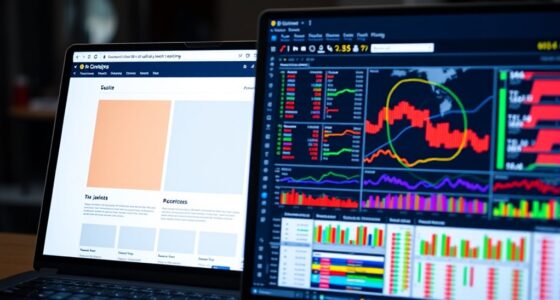
To set up a marketing data dashboard that drives action, start by defining your key objectives and KPIs, focusing on metrics like conversions and engagement. Choose a platform that integrates well with your existing tools and automate data feeds for real-time updates. Regularly analyze trends and anomalies to adjust strategies, and guarantee your data is secure and compliant. By continuously refining your dashboard, you’ll turn raw data into actionable insights—learn how to optimize this process further.
Key Takeaways
- Define clear marketing objectives and KPIs to focus dashboard metrics on actionable insights.
- Select a customizable platform that integrates with existing marketing channels and data sources.
- Automate data feeds and updates for real-time insights and reduce manual data entry.
- Analyze trends and anomalies regularly to inform campaign adjustments and resource allocation.
- Ensure data security, compliance, and ongoing dashboard refinement to maintain relevance and trust.

A marketing data dashboard is an essential tool that provides a real-time overview of your marketing performance. When you set up your dashboard effectively, you gain immediate insights into how your campaigns are resonating with different segments of your audience. Customer segmentation becomes much more manageable because your dashboard allows you to analyze data based on specific groups. Whether you’re targeting new customers, loyal clients, or a niche demographic, you can see how each segment responds to your marketing efforts. This enables you to tailor your messaging, offers, and channels to maximize engagement and conversions. Campaign tracking is another critical feature that your dashboard should support. With proper setup, you can monitor the performance of each campaign as it runs, observing key metrics like click-through rates, conversions, and revenue generated. This real-time data helps you identify what’s working and what’s not, so you can make swift adjustments to optimize results. Incorporating security measures for your data, such as encryption and regular audits, ensures your sensitive marketing and customer information remains protected.
To set up a marketing data dashboard that drives action, start by defining your core objectives. Know what specific outcomes you want to achieve—whether it’s increasing sales, boosting brand awareness, or improving lead quality. Once your goals are clear, determine which KPIs (Key Performance Indicators) will best measure progress. For customer segmentation, this might involve metrics like demographic data, purchase history, or engagement levels. Incorporate tools that allow you to filter and analyze data based on these segments, giving you a granular view of your audience’s behavior. When it comes to campaign tracking, ensure your dashboard integrates seamlessly with your marketing channels, such as email platforms, social media, and ad networks. Use tracking URLs, UTM parameters, and conversion pixels to gather detailed data on each campaign’s performance. Additionally, understanding the importance of industry recognition when selecting your tools can help ensure you choose reputable solutions that meet compliance standards.
Next, choose the right dashboard platform that offers customization options and integrates with your existing tech stack. You want a solution that’s flexible enough to visualize complex data but simple enough to interpret at a glance. Set up automated data feeds so your dashboard updates in real time, eliminating the need for manual data entry. Regularly review your dashboard to spot trends and anomalies. This proactive approach helps you make data-driven decisions quickly. Don’t forget to include actionable insights, such as recommendations for reallocating budget or refining messaging based on customer segments and campaign results. By continuously refining your dashboard setup—adding new metrics, adjusting filters, and integrating fresh data—you create a powerful tool that keeps your marketing efforts aligned with your business goals. Ultimately, a well-structured marketing data dashboard empowers you to act swiftly, optimize campaigns on the fly, and deliver more personalized experiences to your audience.
Top picks for "sett market data"
Open Amazon search results for this keyword.
As an affiliate, we earn on qualifying purchases.
Frequently Asked Questions
How Often Should I Update My Marketing Data Dashboard?
You should update your marketing data dashboard regularly, ideally with a data refresh frequency that matches your team’s needs and decision-making speed. For real-time insights, refresh daily or even hourly, while less critical metrics can be updated weekly. Remember, consistent dashboard maintenance guarantees data accuracy and relevance, helping you spot trends early and act swiftly. Adjust your update schedule based on campaign cycles and business priorities.
What Tools Are Best for Creating Real-Time Dashboards?
Think of your dashboard as a cockpit—tools like Tableau, Power BI, and Google Data Studio offer real-time data visualization and easy dashboard customization. I once helped a team switch to Power BI, transforming their static reports into a dynamic cockpit that instantly highlighted key metrics. These tools sync with your data sources, enabling you to monitor performance continuously and make quick decisions, keeping your marketing strategy sharp and responsive.
How Can I Ensure Data Accuracy in My Dashboard?
You can guarantee data accuracy in your dashboard by implementing data validation processes that check for errors and inconsistencies regularly. Additionally, verify your data sources to confirm they are reliable and up-to-date. Automate validation where possible, and routinely cross-check data with original sources. This proactive approach helps you catch inaccuracies early, ensuring your dashboard provides trustworthy insights that drive effective marketing decisions.
What KPIS Are Most Effective for Marketing Dashboards?
Think of your KPIs as the compass guiding your marketing journey. Focus on lead conversion rates to measure how well campaigns turn prospects into customers, and track customer retention to gauge loyalty and long-term value. These KPIs act as your navigational stars, helping you adjust strategies quickly. Prioritize metrics that reflect real growth and engagement, ensuring your dashboard stays a true reflection of your marketing success and keeps you moving forward.
How Do I Train My Team to Interpret Dashboard Insights?
You should host team workshops focused on data storytelling to help your team interpret dashboard insights effectively. Encourage active participation by analyzing real dashboard examples together, highlighting key KPIs, and discussing their implications. This hands-on approach boosts understanding and confidence, enabling your team to make data-driven decisions quickly. Reinforce learning with follow-up sessions and create a culture where questions and insights are openly shared, fostering continuous improvement.
Conclusion
By creating a marketing data dashboard that highlights key metrics, you can quickly spot trends and make informed decisions. For example, imagine tracking your campaign’s click-through rate and noticing a dip; you can then promptly tweak your ad copy or targeting. With a well-designed dashboard, you’re empowered to act swiftly, optimize campaigns in real-time, and ultimately drive better results. Start building yours today, and watch your marketing efforts become more focused and effective.