
Funnel analysis helps you identify where potential customers drop off during their journey, revealing weak points in your conversion process. By tracking user behavior, segmenting your audience, and mapping every touchpoint, you can better understand why users abandon their path. Focusing on key metrics and specific drop-off areas enables targeted improvements to boost conversions. Keep exploring these techniques to uncover actionable insights and enhance your overall sales strategy effectively.
Key Takeaways
- Identify specific drop-off points by analyzing user progression at each funnel stage.
- Segment users to understand behavior patterns and pinpoint issues within different groups.
- Map the entire user journey to visualize touchpoints and decision points affecting conversions.
- Measure key metrics like conversion rates and time spent to detect weak points in the process.
- Use data insights to implement targeted optimizations that reduce friction and improve overall conversion rates.
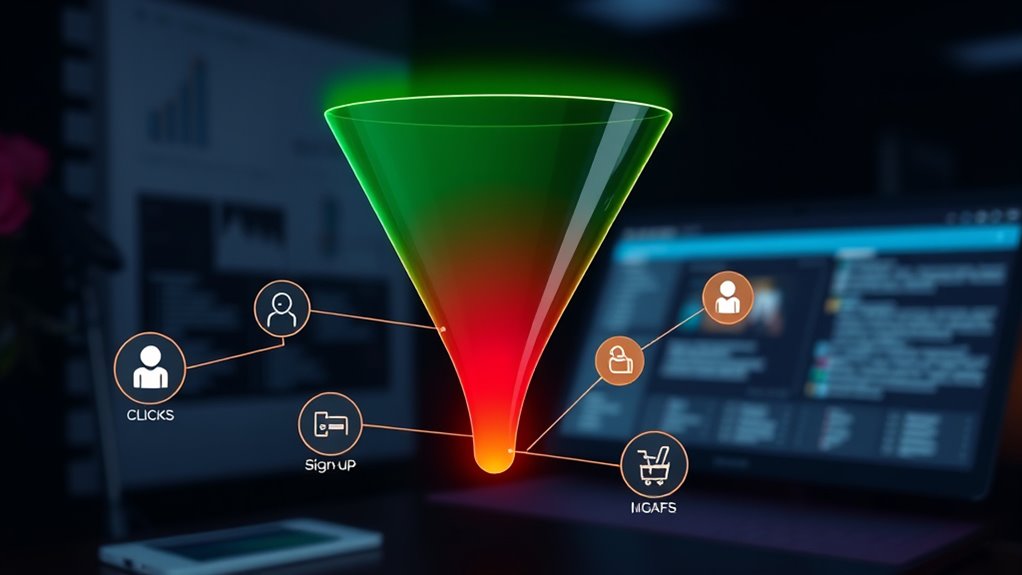
Have you ever wondered how businesses track and improve customer journeys? It’s a question that lies at the heart of effective marketing and sales strategies. Funnel analysis is the tool that helps you do just that by revealing where potential customers drop off along their path to conversion. To get a clear picture of this, you need to understand customer segmentation and user journey mapping. Customer segmentation divides your audience into distinct groups based on shared characteristics, like behavior, demographics, or preferences. This makes it easier to analyze how different segments move through your funnel and pinpoint where issues might be occurring. User journey mapping, on the other hand, charts out every step a customer takes from the first interaction to the final purchase or goal completion. It’s like creating a map that highlights every touchpoint and decision point, allowing you to see exactly where users might be getting stuck or losing interest. Incorporating visual storytelling into your analysis can further clarify complex customer pathways and enhance decision-making.
Understanding customer segmentation and journey mapping is key to optimizing your sales funnel and boosting conversions.
When you combine customer segmentation with user journey mapping, you gain a powerful perspective. You can see how each segment navigates your funnel differently and identify specific drop-off points unique to each group. For example, a segment composed of first-time visitors might drop off early because they don’t find what they’re looking for, while returning customers might abandon their cart at the checkout stage. Recognizing these patterns enables you to tailor your strategies, improve user experience, and ultimately increase conversions.
Funnel analysis involves tracking key metrics at each stage of the customer journey. You examine how many users move from one step to the next, where the numbers decline, and how long they spend at each point. These insights reveal the specific stages where drop-offs are most significant. Once you identify these weak points, you can implement targeted interventions—like streamlining the checkout process, providing clearer calls to action, or offering personalized content—that encourage users to move forward. It’s an ongoing process: continually analyzing and refining your funnel based on the data you gather.
Ultimately, effective funnel analysis hinges on your ability to interpret the data in context. By understanding customer segmentation and user journey mapping, you see beyond raw numbers and grasp the reasons behind drop-offs. This knowledge empowers you to optimize each stage of the funnel, reduce friction, and guide more prospects toward becoming loyal customers. Remember, the goal isn’t just to track users but to understand their behavior deeply enough to influence their decisions positively. When you do this well, your conversion rates will improve, and your business will grow more efficiently.
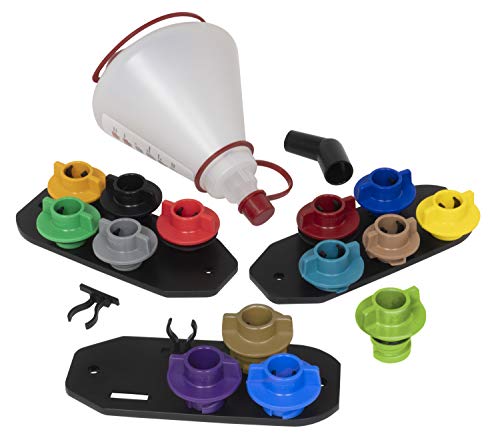
Lisle 19912 Multi-Application Oil Funnel Set, 14 Pc. , Green
Includes two new adapters for Volve and Chrysler/Dodge/Jeep
As an affiliate, we earn on qualifying purchases.
As an affiliate, we earn on qualifying purchases.
Frequently Asked Questions
How Do I Prioritize Which Funnel Stage to Optimize First?
You should prioritize the funnel stage where users drop off most markedly, as improving that step will have the greatest impact on your customer journey. Analyze user experience data to identify these leak points, then focus on optimizing the stage with the highest drop-off rate. By streamlining the process at this critical point, you enhance overall conversions and create a smoother, more engaging customer journey.
Can Funnel Analysis Predict Future Conversion Trends?
While funnel analysis offers valuable insights, it isn’t a crystal ball for future trends. Instead, you can leverage predictive modeling and trend forecasting within your analysis to identify potential shifts. By examining historical data and patterns, you’ll gain a sense of where your conversions might head. This approach helps you proactively adapt your strategies, giving you a better chance to stay ahead and optimize effectively for upcoming opportunities.
What Tools Are Best for Visualizing Funnel Data?
You should use tools like Google Analytics and Hotjar for visualizing funnel data. They offer heat maps and user segmentation features, helping you identify where users drop off. These tools let you see detailed visitor behavior, making it easier to optimize your conversion path. By analyzing heat maps and segmenting users, you gain actionable insights to improve your funnel’s effectiveness and increase conversions.
How Do Seasonal Changes Affect Funnel Performance?
Think of your funnel as a river flowing steadily, but seasonal fluctuations are like sudden storms that cause debris buildup. Holiday effects, in particular, can slow or divert traffic, leading to drop-offs. These seasonal changes impact your funnel’s performance by altering visitor behavior and engagement. To adapt, monitor trends closely, adjust marketing strategies accordingly, and anticipate these fluctuations to maintain smooth conversion flow year-round.
How Often Should I Review and Update My Funnel Analysis?
You should review and update your funnel analysis regularly, ideally monthly or quarterly, to stay ahead of changes. Incorporate customer segmentation to identify different user behaviors and use attribution modeling to understand touchpoints’ impact. This helps you spot drop-offs early, optimize strategies, and improve conversion rates. Frequent reviews guarantee your funnel remains aligned with evolving customer needs and market trends.

Journey to Customer Obsession: A Blueprint for CX Maturity and Enterprise Transformation: Transform your business from fragmented efforts to enterprise-wide customer obsession.1
As an affiliate, we earn on qualifying purchases.
As an affiliate, we earn on qualifying purchases.
Conclusion
Now that you understand funnel analysis, picture your conversion path as a winding river. Each drop-off point is like a shallow pool where potential customers get stuck. By diagnosing these spots, you can smooth the flow, guiding visitors seamlessly toward the finish line. Think of yourself as the explorer, clearing obstacles and carving a clear, inviting stream. When you optimize each step, you create a journey that naturally leads to success, turning visitors into loyal customers.

You Should Test That: Conversion Optimization for More Leads, Sales and Profit or The Art and Science of Optimized Marketing
As an affiliate, we earn on qualifying purchases.
As an affiliate, we earn on qualifying purchases.
![Mrs. D's Corner Frequency Behavior Data Tracking Notepad | 50 Pages 8.5"x11" | Tally Mark Log for Student Behavior & FBA Data [Flexibound] [Flexibound]](https://m.media-amazon.com/images/I/51k75cT-EYL._SL500_.jpg)
Mrs. D's Corner Frequency Behavior Data Tracking Notepad | 50 Pages 8.5"x11" | Tally Mark Log for Student Behavior & FBA Data [Flexibound] [Flexibound]
BEHAVIOR FREQUENCY LOG: Dedicated 8.5"x11" notepad for tracking the occurrence (frequency) of up to three target student behaviors…
As an affiliate, we earn on qualifying purchases.
As an affiliate, we earn on qualifying purchases.