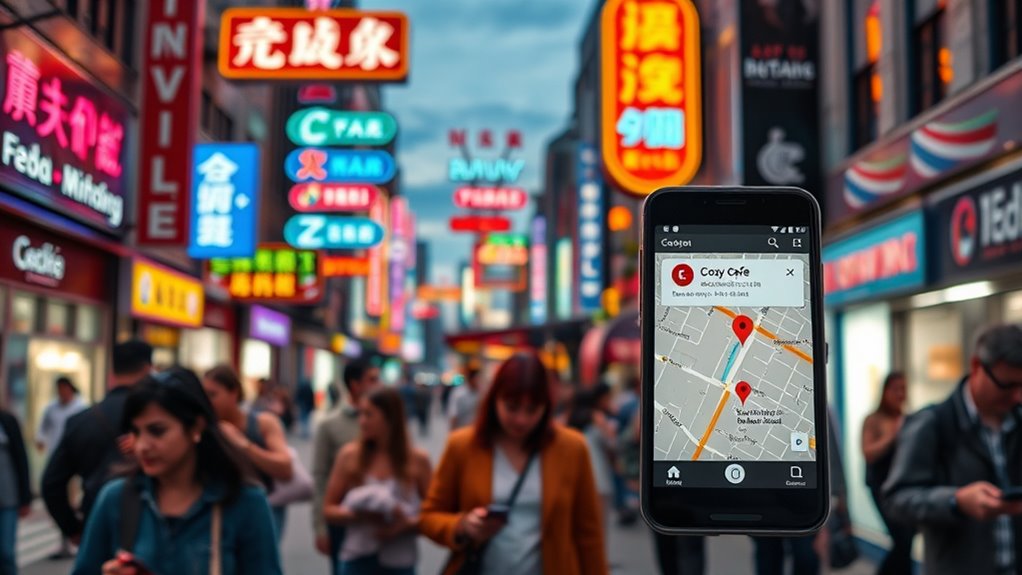

Geo-targeting in PPC allows you to focus your ads on specific locations, making your campaigns more relevant and cost-effective. By targeting cities, neighborhoods, or radius around your business, you can tailor your messaging to local needs and interests. This strategy improves your chances of reaching motivated prospects, boosts engagement, and maximizes your ad budget. To discover how to implement precise geographic targeting and gain better results, keep exploring this powerful tool.
Key Takeaways
- Geographic segmentation allows targeting based on location to enhance ad relevance and engagement.
- Regional ad campaigns customize messaging to local interests, events, and demographics.
- Setting geographic parameters, like radius or specific locations, refines audience targeting.
- Localized ads increase conversions by reaching nearby prospects at optimal times.
- Strategic geographic targeting maximizes ROI and builds stronger community connections.

Have you ever wondered how businesses target nearby customers more effectively? The answer lies in the strategic use of geographic segmentation and regional ad targeting within pay-per-click (PPC) campaigns. These techniques allow you to focus your advertising dollars on the people most likely to convert—those in your immediate vicinity—ultimately boosting your ROI. By narrowing your audience to specific locations, you assure your ads are relevant and timely, which increases engagement and sales.
Geographic segmentation is the foundation of regional ad targeting. It involves dividing your potential customers based on their physical location, such as city, neighborhood, or even radius around your storefront. When you leverage geographic segmentation, you tailor your messaging to resonate with local needs, preferences, and cultural nuances. For example, a pizza shop might highlight daily specials or local ingredients to appeal to nearby residents. The more precisely you define your target area, the better your chances of attracting motivated customers who are more likely to visit or purchase.
Regional ad targeting enhances this approach by allowing you to create specific campaigns for different areas. Instead of a one-size-fits-all ad, you can customize your messaging based on regional interests, events, or demographics. Suppose you own a clothing store with locations across several cities; regional ad targeting lets you emphasize city-specific sales or styles, making your ads more compelling and relevant. This method also helps you allocate your budget more efficiently. Rather than wasting impressions on distant audiences unlikely to convert, you concentrate your spend where it matters most.
Implementing regional ad targeting in your PPC campaigns is straightforward with most advertising platforms. You can set geographic parameters down to a radius around your business or select specific locations to target. Some platforms even allow you to exclude certain areas to refine your reach further. Additionally, combining geographic data with other targeting options, such as device type and time of day, can sharpen your focus even more.
Ultimately, regional ad targeting is about making your ads work smarter, not harder. It guarantees that your message reaches the right people at the right time and in the right place. This local approach not only increases the likelihood of clicks and conversions but also helps build stronger relationships with your community. When you understand the importance of geographic segmentation and regional ad targeting, you unlock the potential to turn nearby prospects into loyal customers, making your PPC efforts more effective and profitable. This is especially true when considering high-precision location targeting, which leverages precise geographic data to maximize ad relevance and impact.
geo-targeting PPC tools
As an affiliate, we earn on qualifying purchases.
As an affiliate, we earn on qualifying purchases.
Frequently Asked Questions
How Does Geo-Targeting Impact Ad Budget Allocation?
Geo-targeting helps you optimize your ad spend by focusing your budget allocation on specific locations where your audience is most active. By narrowing your targeting, you reduce unnecessary ad spend on irrelevant areas and increase your chances of conversions. This targeted approach guarantees your ad budget is used efficiently, maximizing ROI and allowing you to allocate more funds toward high-performing regions, ultimately boosting overall campaign performance.
What Are the Best Tools for Geo-Targeting Analysis?
You want to unlock the power of geo-targeting, and the best tools for analysis are mapping tools and location analytics platforms. These tools reveal detailed insights into audience behaviors, helping you refine your ad strategies. With mapping tools, you can visualize geographic data, while location analytics provides in-depth patterns. Using these, you can identify high-impact areas, optimize your campaigns, and reach the right audience at the right moment—making your efforts truly effective.
Can Geo-Targeting Be Combined With Demographic Targeting?
Yes, you can combine geo-targeting with demographic targeting to enhance your ad campaigns. By leveraging location customization, you guarantee your ads reach users in specific areas, while audience segmentation allows you to tailor messaging based on age, gender, or interests. This combined approach helps you deliver highly relevant ads, increasing engagement and conversions, all while making the most of your PPC budget.
How Does Geo-Targeting Affect Ad Scheduling Strategies?
Imagine your ads dancing to the rhythm of your audience’s day. Geo-targeting influences your ad scheduling strategies by enabling location-based bidding and time zone optimization. You can prioritize showing ads during peak local hours, making your campaigns more efficient. This approach guarantees your message hits at just the right moment, boosting engagement and conversions while maximizing your ad spend across different regions and time zones.
What Are Common Pitfalls in Implementing Geo-Targeted PPC Campaigns?
You should watch out for location inaccuracies, which can cause your ads to reach the wrong audience, wasting your budget. Over-targeting can also limit your reach and reduce engagement, so avoid narrowing your audience too much. Make certain your geo-targeting settings are precise and regularly review your campaign data to adjust for any inaccuracies or over-filtering. Staying vigilant helps you maximize your ad performance and ROI.

Local Raw Honey Feather Flag for Business Advertising 6 FT Swooper Flag for Storefronts Retailers Shops Food Trucks Events and Fairs (Flagpole Not Included)
IDEAL SIZE FOR VISIBILITY: Measuring 73 inches long x 21 inches wide (185cm x 53cm), this beach flag…
As an affiliate, we earn on qualifying purchases.
As an affiliate, we earn on qualifying purchases.
Conclusion
Mastering geo-targeting in PPC is like planting seeds in the right soil—you guarantee your ads reach the right audience at the right time. When you localize your ads effectively, you’re nurturing growth and maximizing your campaign’s potential. Think of your geo-targeting strategy as a compass guiding your ads toward success; with precision and care, you’ll harvest better results and stronger connections with your local customers. Keep refining your approach, and watch your efforts bloom.
radius targeting advertising platform
As an affiliate, we earn on qualifying purchases.
As an affiliate, we earn on qualifying purchases.
regional PPC campaign management
As an affiliate, we earn on qualifying purchases.
As an affiliate, we earn on qualifying purchases.