
To choose between control and automation in Google Ads, consider your campaign goals, resources, and expertise. Manual control gives you precise targeting and bid adjustments but requires ongoing effort. Automation saves time and manages large or complex campaigns efficiently, though it offers less transparency. If you want tailored strategies or have limited time, manual control may suit you. For broader reach with less effort, automation works best. Keep exploring to discover which approach fits your needs best.

Get business pricing on office and shipping supplies
- Business-only prices and quantity discounts
- Tax-exempt purchasing
- Multiple users, one account, clear invoices
Key Takeaways
- Assess your campaign complexity and size; manual control suits smaller, targeted campaigns, while automation benefits large, dynamic ones.
- Consider your team’s expertise; experienced teams may prefer manual control for precision, whereas automation reduces management effort.
- Define your goals; precise targeting and tactical adjustments favor manual control, while scalability aligns with automation.
- Evaluate resource availability; manual strategies require ongoing attention, automation offers efficiency with less oversight.
- Use a hybrid approach; combine automation for broad reach with manual oversight on critical keywords for optimal results.
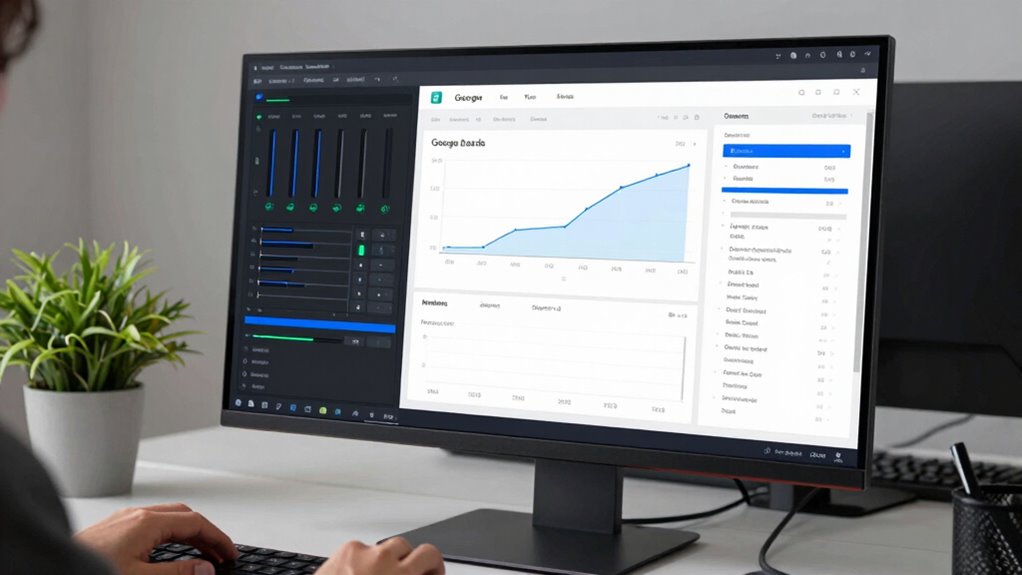
Deciding whether to prioritize control or automation in Google Ads can greatly impact your campaign’s success. Your choice hinges on understanding how each approach aligns with your goals, resources, and expertise. If you prefer fine-tuning every aspect of your campaign, manual control over bid strategies and keyword targeting might be more suitable. Manual bid strategies let you set individual bids for keywords, giving you direct influence over how much you’re willing to pay for each click. This level of control is essential if you want to optimize for specific keywords with high conversion potential or if you have a deep understanding of your audience and market. Similarly, manual keyword targeting allows you to choose precise keywords, exclude irrelevant terms, and craft tightly focused campaigns. This approach ensures you’re targeting the terms that matter most to your business, but it requires ongoing attention and adjustments. Furthermore, exploring emerging trends in digital publishing can help you stay ahead of industry shifts and incorporate innovative strategies into your campaigns.
Manual control in Google Ads offers precise targeting and bid management for optimized, high-conversion campaigns.
On the other hand, automation simplifies many of these processes by leveraging Google’s machine learning algorithms. Automated bid strategies, like Target CPA or Maximize Conversions, adjust your bids in real-time based on user behavior, competition, and other signals. This can help you maximize results without constant manual input, especially if you lack the time or expertise to manage every detail. Automated keyword targeting, through features like Dynamic Search Ads or broad match keywords with smart bidding, enables your campaigns to adapt and reach new audiences you might not have considered. Automation is particularly beneficial if you’re managing large campaigns or dealing with fluctuating markets, as it reduces the risk of human error and ensures your bids and targeting stay aligned with your objectives. Additionally, incorporating advanced automation techniques can further optimize your campaign performance by harnessing sophisticated machine learning models.
Your decision should also consider your appetite for risk and your need for flexibility. Manual control offers stability and precision, but it demands continuous monitoring and adjustments. Automation, meanwhile, can deliver scalable results with less effort, but it might feel like a black box where you relinquish some oversight. If you’re just starting out or have limited time, automation can be a powerful tool to get quick wins. Conversely, if you have a seasoned team or specific tactics to execute, maintaining control over bid strategies and keyword targeting allows you to implement nuanced strategies that automation might overlook.
Ultimately, the best approach may involve blending both methods—using automation for broad reach and efficiency while maintaining manual oversight on critical keywords and bid strategies. This hybrid approach gives you control where it counts while benefiting from automation’s scalability. Whatever route you choose, stay adaptable, analyze your data regularly, and adjust your tactics to stay aligned with your campaign goals.
Google Ads manual bid strategy tools
As an affiliate, we earn on qualifying purchases.
As an affiliate, we earn on qualifying purchases.
Frequently Asked Questions
How Does Budget Size Influence Automation Decisions in Google Ads?
Your budget size substantially influences automation decisions in Google Ads. If you have budget constraints, automation can be highly effective because it maximizes your spend by optimizing bids and targeting. With a smaller budget, automation helps you get the most out of limited funds, while larger budgets may allow for more control. Ultimately, understanding your budget constraints helps determine whether automation’s effectiveness aligns with your advertising goals.
Can Manual Control Outperform Automation in Complex Campaigns?
Manual optimization can outperform automation in complex campaigns if you understand your audience and have the time to fine-tune settings. When campaign complexity increases, automation might struggle to account for nuanced factors, making manual control more effective. You can leverage your expertise to adjust bids, keywords, and targeting precisely, ensuring your campaign responds to intricate market dynamics better than automated tools, which may lack context-specific insights.
What Are the Risks of Over-Relying on Automation?
Over-relying on automation can risk system reliability, as it may lead to unforeseen errors or misjudgments without your oversight. This limits your control over campaign nuances, making risk management harder. If automation fails or makes poor decisions, your campaigns might suffer, so it’s essential to balance automation with manual checks, ensuring you can intervene when necessary to maintain performance and protect your advertising investments.
How Often Should I Switch Between Control and Automation?
You should switch between control and automation every few months, roughly quarterly, to keep user engagement high and data accuracy sharp. Regularly reviewing your campaign performance allows you to adapt to changes and optimize results. Automated tools excel at scaling, but control helps refine targeting and messaging. Balancing both strategies ensures you stay agile, leveraging automation’s efficiency while maintaining oversight to maximize your ad success without risking stagnation.
Do Industry Type and Target Audience Affect the Choice?
Yes, industry considerations and audience targeting profoundly influence your choice. For highly competitive or complex industries, automation can streamline management and optimize results efficiently. If your audience has specific needs or behaviors, maintaining control allows precise targeting and messaging. You should assess your industry’s dynamics and audience characteristics to decide whether to leverage automation for scalability or retain control for tailored campaigns.
automated Google Ads bidding software
As an affiliate, we earn on qualifying purchases.
As an affiliate, we earn on qualifying purchases.
Conclusion
Ultimately, choosing between control and automation in Google Ads is like steering a ship through calm or stormy waters. If you prefer to steer every wave and adjust the sails manually, control is your trusted compass. But if you’re ready to set your course and let the currents carry you, automation becomes your steady wind. Whichever path you choose, remember it’s about steering your campaign to reach your destination—your goals—smoothly and confidently.
Google Ads keyword targeting tools
As an affiliate, we earn on qualifying purchases.
As an affiliate, we earn on qualifying purchases.
Google Ads campaign management automation
As an affiliate, we earn on qualifying purchases.
As an affiliate, we earn on qualifying purchases.
Fall Picks
fall essentials
As an affiliate, we earn on qualifying purchases.