
🔍 Read the full analysis: What Made Workers Resist Machines In The Luddite Era? on ThorstenMeyerAI.com

Get business pricing on office and shipping supplies
- Business-only prices and quantity discounts
- Tax-exempt purchasing
- Multiple users, one account, clear invoices
TL;DR
Luddites were skilled workers who used knitting frames but opposed employers’ use of machinery to lower piece rates and change production. A 1812 magistrate’s report says frame breakers targeted some employers paying below-price rates and wider frames associated with cheaper stockings. Their protests took place when unions were illegal and Parliament had rejected a minimum-wage proposal.
A report published Nov. 5 revisits records from the Luddite protests of 1811–13, arguing that Nottingham’s frame breakers were not simply rejecting technology: they were targeting some employers who used knitting machinery to pay less and produce cheaper goods. A magistrate’s 1812 letter to the Home Office describes those grievances amid unemployment, illegal trade unions and the defeat of a proposed minimum-wage measure.
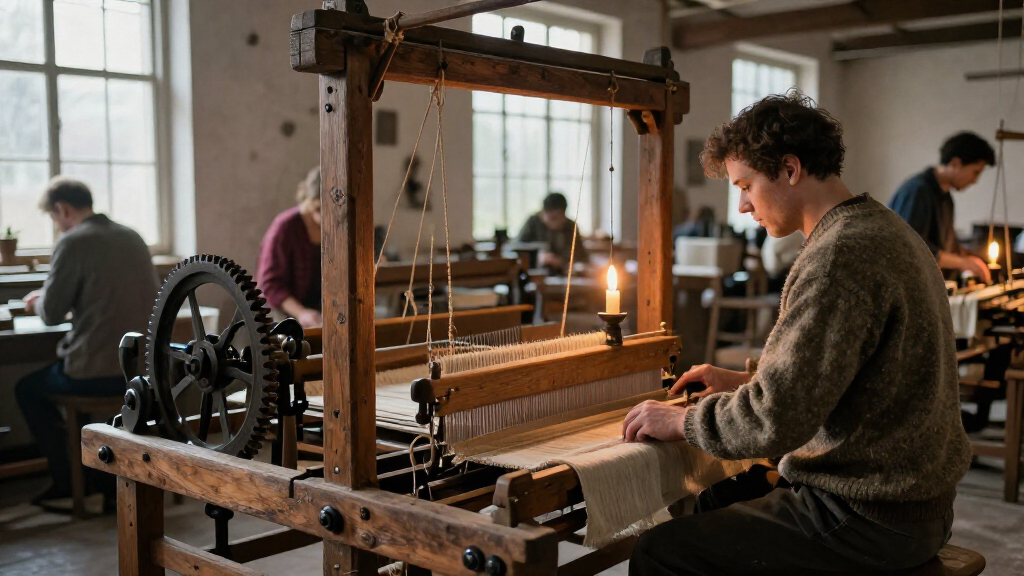
The movement began among framework knitters in Nottinghamshire, skilled workers who made stockings and other goods on mechanical frames operated by hand and foot. Many worked at home or in small workshops, rented their frames and received piece-rate payments from hosiers, the merchants who supplied work and sold the finished goods. In a 1812 Commons speech, Home Secretary Richard Ryder described frames as hired to workers by masters or owned by middle-class investors who rented them out.
In a report dated Feb. 6, 1812, Nottingham magistrate Robert Baker told the Home Office that, in many places, a fifth of frame workers had been out of work. He wrote that some hosiers responded by offering particular work at reduced prices. Baker said the first anger was directed at employers who paid “the under-price,” and that frame breakers also targeted wider machines that facilitated production of cheaper stockings. He said attacks had “seldom made free with other property,” though his account represents an official’s description, not a complete record of every incident or participant’s motive.
The protest was not always directed only at employers accused of underpaying. A Nottingham reward notice from Jan. 25, 1812, offered £200 for information after five frames were broken at a framework knitter’s home; the workers there said those frames had been operating at “the FULL PRICE.” The source account also says frame breaking became a capital felony under the Frame-Breaking Act of March 20, 1812, and that 17 men were executed in 1813. It reports that by December 1811 the government had sent 900 cavalry and 1,000 infantry to Nottingham.
Wages and Control of Production
The records complicate the modern use of “Luddite” as a synonym for someone who dislikes technology. The workers at the center of the Nottingham protests used the machines for their trade; the dispute was over how machinery affected their earnings, working conditions and ability to influence production. Baker’s report links unemployment and reduced piece rates to the choice of some frames as targets. That evidence does not prove every attack had the same motive, but it shows why a technology-only explanation is incomplete.
The conflict also unfolded in a setting where workers had few legal routes to bargain collectively. The source account notes that the Combination Acts of 1799 and 1800 outlawed trade unions and that Parliament rejected a minimum-wage proposal for weavers in 1808. With collective organization restricted and wages under pressure, breaking machinery became one form of protest—one that the government met with troops and severe criminal penalties. The stakes were therefore not just whether a machine would be used, but who set its terms and who bore the costs of change.
The report draws a limited comparison with current workplace technology debates: disputes over contracts, consultation rights and rules for AI concern how tools affect pay, work quality and workers’ say. Those modern institutions and conditions differ from early 19th-century Britain. The useful connection is the recurring question of whether workers share in decisions and gains when production changes, not an assertion that today’s disputes are identical to Luddism.
Popular right now

Dyson Cyclone V10 Origin Cordless Vacuum

Roborock Q7 M5+ Robot Vacuum and Mop with Self-Emptying Dock

TCL 55-Inch T7 Series 4K QLED Smart Google TV, 55T7
As an affiliate, we earn on qualifying purchases.
From Nottingham to Other Districts
The first major episode described in the report took place near Nottingham in 1811, when workers attacked stocking frames. Historian Kevin Binfield, editor of a collection of Luddite writings, identifies an attack on wide frames in Arnold on March 11, 1811, as the beginning of the movement’s most intense period. The National Archives says disturbances began in Nottinghamshire in 1811 and spread to Yorkshire and Lancashire in 1812, as well as Leicestershire and Derbyshire.
“General Ned Ludd” and “King Ludd” appeared as signatures on threatening letters. The National Archives describes Ludd as a mythical figure, and the source account says there is no reliable evidence that a historical Ned Ludd led the movement. The name gave separate protests the appearance of a shared leadership; stories that an apprentice named Ludd smashed a frame are legend rather than established fact.
The government’s response escalated as protests spread. The March 1812 law made frame breaking a capital offense, and the source says 17 men were executed the following year. The report also cites economist Robert Allen’s estimate that British real wages rose 12% from 1780 to 1840 while output per worker rose 46%. Those figures describe a long period and are an economist’s estimate; they do not establish how much machinery alone caused wage outcomes or explain each individual protest.
““For some time before these troubles broke out, in many places a fifth of the frame workers were out of employ.””
— Robert Baker, Nottingham magistrate, in a Feb. 6, 1812, letter to the Home Office
Limits of the Historical Record
The motives of every person who joined the attacks cannot be established from the material summarized here. Baker’s letter is a valuable contemporary document, but it was written by a magistrate reporting to the government during a campaign to suppress the unrest. It should not be treated as a full account of workers’ views. The broken frames at a workshop where workers said they were paid the full rate also show that not every incident fits a single explanation.
The source does not establish how representative Baker’s estimate of one in five unemployed workers was across the region, or provide a complete count of attacks, participants or their individual reasons. Nor do the cited wage and productivity estimates isolate the effects of particular machines from other changes in the economy. The evidence supports a focus on wages and production practices, but the scale and balance of motives remain uncertain.
Reading the Evidence Today
The published account points readers to the primary records behind its interpretation: Baker’s Home Office correspondence, parliamentary debate, the Frame-Breaking Act and reward notices. Comparing those documents with workers’ letters and later historical research can show where official accounts align with, or omit, the concerns of the people involved. No new parliamentary decision or historical finding is announced in the source material; the immediate development is a retrospective report and its presentation of the evidence.
For current workplace debates, the report identifies contract terms, consultation rights and regulation as modern ways of negotiating the effects of new tools. It does not claim that those measures produce the same outcomes as the protests of 1811–13. The practical question raised by the historical record is whether workers can negotiate over pay, quality and the use of machinery before disputes become confrontational.
Key Questions
Who were the Luddites?
They were workers who resisted machinery and production practices in Britain in the early 19th century. The first movement described here grew among framework knitters in Nottinghamshire in 1811 and spread to other industrial districts.
Were Luddites opposed to all technology?
The record summarized in the report does not support that simple description. Nottingham’s frame workers used knitting machines in their trade; some protests targeted employers accused of paying below-price rates and frames associated with cheaper goods.
What did the Luddites target?
Magistrate Robert Baker said frame breakers targeted frames belonging to some hosiers who paid reduced prices and wider frames that facilitated cheaper production. The account also cites an incident in which frames reported to be working at the full rate were broken, so targets and motives varied.
Who was General Ned Ludd?
The National Archives describes him as a mythical figure used in the movement’s letters. The source material says there is no reliable evidence that a real Ned Ludd led the protests.
How did the government respond?
The government sent troops to Nottingham, and Parliament passed the Frame-Breaking Act in March 1812, making frame breaking a capital felony. The source account says 17 men were executed in 1813.
Source: ThorstenMeyerAI.com