
📊 Full opportunity report: A Small Office Approach To OCR And Document Organization on IdeaNavigator AI — validation score, market gap, and execution plan.

Get business pricing on office and shipping supplies
- Business-only prices and quantity discounts
- Tax-exempt purchasing
- Multiple users, one account, clear invoices
TL;DR
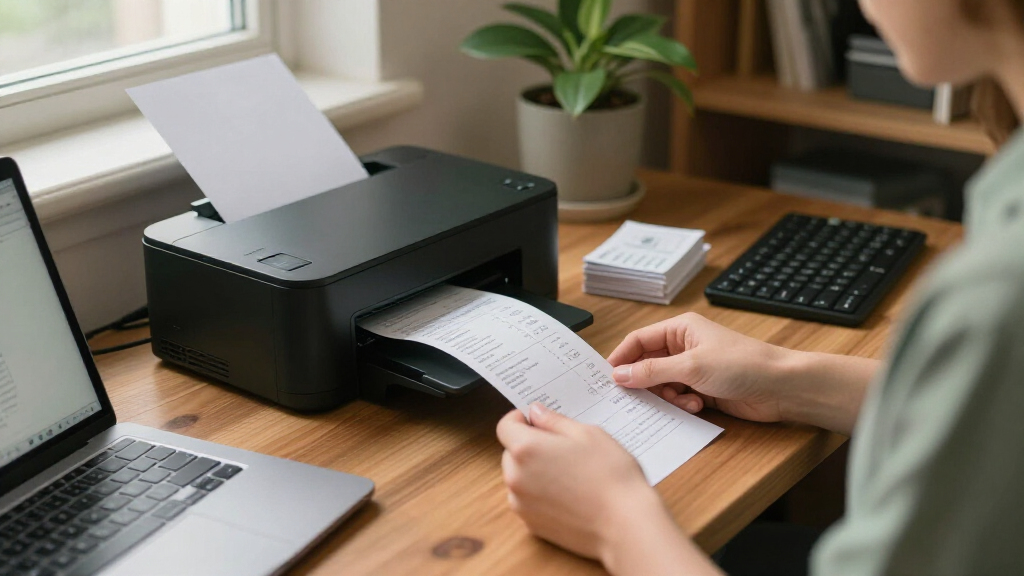
IdeaNavigator AI proposes testing an OCR-based auto-filing workflow for paper-heavy small offices, starting with a one-week pilot at five organizations. The pilot would assess classification accuracy and willingness to pay; no results, product launch or customer demand have been reported.
IdeaNavigator AI has proposed a one-week test of an OCR-based document filing workflow at five small offices, aiming to determine whether it can sort real paper backlogs accurately and whether organizations would pay for it. The plan targets offices such as nonprofits, clinics and law firms, but it describes a concept to validate, not a launched product or proven service.
In its proposal, IdeaNavigator AI describes a workflow in which an office worker photographs a stack of documents with a phone. The software would use optical character recognition (OCR) to read the pages, suggest a document category and filename, and save searchable PDFs to a shared folder. The proposal gives an invoice filename based on its type, date and vendor as an example. It does not specify a product name, technical requirements or which shared-folder services would be supported.
IdeaNavigator AI suggests recruiting five small offices and asking each to scan a real backlog of 200 documents over one week. The proposed measures are the rate of correct automatic classification and each office’s willingness to pay per seat. The proposal reports no completed pilot, accuracy results, pricing, customer commitments or revenue figures.
The suggested business model in the proposal is a per-seat monthly subscription, with a page-volume limit and extra charges above that cap. This is a proposal rather than an established pricing plan. IdeaNavigator AI aims the concept at office managers in paper-heavy small organizations that need searchable records but may lack dedicated IT staff.
Testing the Cost of Manual Filing
If the proposed workflow performs reliably, it could reduce the manual effort involved in naming and sorting documents and make stored records easier to find. That could matter to small offices where intake forms, invoices and other records are held in filing cabinets or scattered digital folders. The stated problem is practical: a scanner that produces unsorted image files may digitize paper without making the information useful to search.
But the value depends on more than whether software can read text. Incorrect document labels or extracted details could create extra review work, and offices handling sensitive records may need safeguards before using a shared digital archive. The proposed pilot could offer an initial measure of classification performance and buyer interest, but five offices and one week would not establish how the system performs across different document types, longer periods or a wider market.
OCR document scanner for small offices
As an affiliate, we earn on qualifying purchases.
As an affiliate, we earn on qualifying purchases.
From Scanned Images to Searchable Files
IdeaNavigator AI’s proposal distinguishes the idea from a basic scanner app: instead of leaving users with a pile of image files, it would attempt to extract text, identify document types and apply useful filenames. OCR converts text in an image into machine-readable text; the suggested classification and naming steps would organize that text into a filing workflow. The proposal points to on-device or API-based OCR and layout-aware models as technologies that may make such a service feasible without a dedicated IT team. It provides no comparative testing or cost data to substantiate that assessment.
The plan is framed as a narrow first workflow rather than a broad office-records system: scan a backlog, classify and name each page, then place searchable PDFs in a shared folder. Its proposed test focuses on the first questions a small service would need to answer—whether automated filing is sufficiently accurate and whether a business would pay per user. IdeaNavigator AI gives no timeline beyond the suggested one-week pilot.
As an affiliate, we earn on qualifying purchases.
Accuracy, Privacy and Pricing Remain Open
No measured results are available. IdeaNavigator AI’s proposal does not report whether any offices have agreed to participate, how “correct” classification would be judged, or what level of accuracy would be acceptable. It also does not say how the workflow would handle unreadable pages, documents containing multiple record types, handwritten information or mistakes in dates and vendor names.
Other practical details are unspecified in the proposal, including where images and extracted text would be stored, who could access them, how long records would be retained and what protections would apply to confidential clinic, nonprofit or legal documents. No subscription price, page cap, overage rate or willingness-to-pay findings have been established. These gaps matter because the intended users may handle sensitive information, and an automated filing error can make a record harder to retrieve rather than easier.
office document organization tools
As an affiliate, we earn on qualifying purchases.
As an affiliate, we earn on qualifying purchases.
Pilot Results Would Set the Next Step
IdeaNavigator AI’s proposed next step is to run the one-week pilot with five offices, each processing 200 documents from its backlog. The suggested evaluation would record correct auto-classification rates and ask participants whether they would pay per seat. The proposal does not provide a launch date or confirm that the test is underway.
Before a wider rollout could be assessed, organizers would need to report the pilot’s results and explain how accuracy was measured, how often users had to correct suggested labels, and how the system handled sensitive records. Pricing and the page-volume allowance would also need definition. Until those details and findings are available, the concept remains an early proposal for testing, not evidence that small offices can already automate their filing reliably.
Source: IdeaNavigator AI
automatic document classification software
As an affiliate, we earn on qualifying purchases.
As an affiliate, we earn on qualifying purchases.
Key Questions
Is the OCR filing product available now?
No product launch is reported. IdeaNavigator AI’s material describes a proposed workflow and a pilot intended to test it.
What would the proposed app do?
As described by IdeaNavigator AI, it would let users photograph documents, use OCR to read them, suggest a type and filename, and save searchable PDFs in a shared folder.
How would the pilot work?
IdeaNavigator AI suggests a test involving five small offices, each scanning 200 backlog documents over one week. The plan would measure classification accuracy and willingness to pay per seat.
What remains unknown about the service?
IdeaNavigator AI provides no pilot findings, confirmed pricing or launch date. Accuracy across document types, privacy protections, storage arrangements and error-handling procedures are also unspecified.
Source: IdeaNavigator AI
Halloween Picks
halloween
As an affiliate, we earn on qualifying purchases.