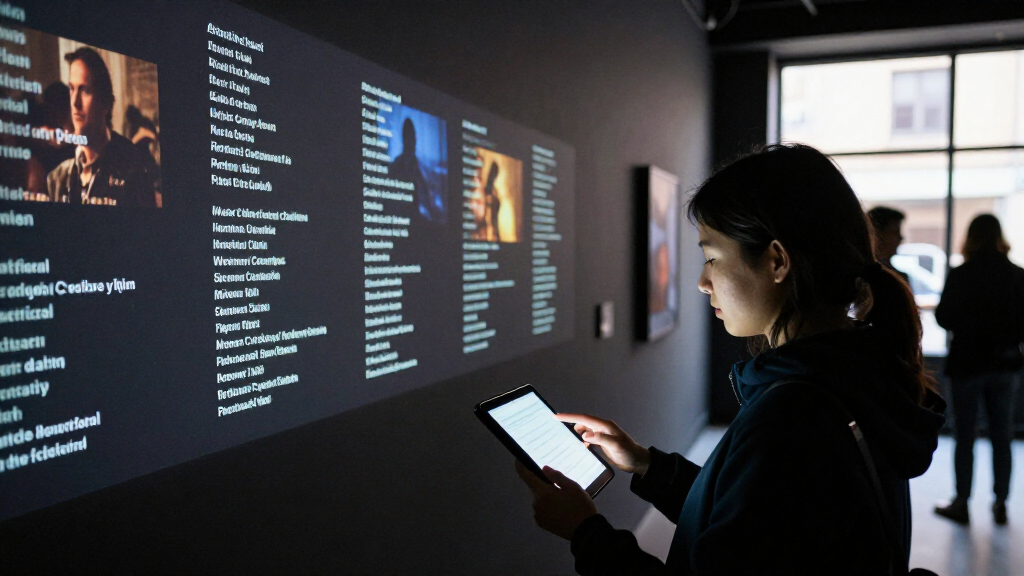

🔍 Read the full analysis: A Film Credits Exhibition, Reimagined Through AI In “After Action” on ThorstenMeyerAI.com

Get office and shipping supplies delivered free — and shop member deals
- Fast, free delivery on millions of items
- Access to Prime Big Deal Days deals on October 6–7
- Prime Video, Amazon Music and more included
TL;DR
After Action is an AI-built exhibition website that presents 24 web experiences as productions in a fictional cinema’s rolling credits, intercut with miniature, code-generated scenes. The supplied description says it is an artwork, not a real company or account of military activity; details such as independent testing and audience response are not provided.
After Action, an AI-built exhibition presented as a fictional Wing V debrief theater, turns the credits for 24 web experiences into a continuous, navigable film roll punctuated by small, code-built sand-table scenes, as explored in the original analysis. The project’s description frames the room as an artwork about interaction design, not a real company or record of military activity.
Rather than arrange its subjects in a conventional grid, the exhibition asks visitors to watch a continuous sequence of credits. Chapter stops coordinate a time display, locator, section label and jump controls, allowing visitors to pause or move among sections. The listed productions appear as linked entries, followed by a stationary text register intended to offer another way to browse the same material.
After roughly every eight productions, the roll gives way to a miniature scene. The description identifies three motifs: a shield formation, a catapult’s arc and two keys approaching a shared lock. These scenes are assembled with CSS techniques, including perspective, tilted terrain panels, contour gradients and raised markers, rather than a separate image for each vignette.
The visual design draws on cinema: black, warm white, amber and gold, with compressed display lettering for credits and monospace text for labels and controls. The project description says JavaScript times the roll and moves one track using a GPU-friendly transform. Motion pauses when the theater is not visible or the browser tab is hidden; reduced-motion settings switch to a manual-scroll alternative. Optional synthetic projector audio starts off and can be stopped.
Exhibition File / Wing V / Fable 125
A Film Credits Exhibition, Reimagined Through AI in “After Action”
A described live web artwork turns 24 digital experiences into a continuous cinematic credit roll, punctuated by small, code-built scenes. Its military theater is fictional; the subject is interaction design.
A credit roll becomes the exhibition
Instead of isolating each work in a grid, the experience gives the collection one shared sequence, visual frame and pace.
One continuous reel
Credits for 24 linked web experiences move through a nearly empty, fictional cinema. Visitors can pause or jump between chapter stops.
Chapters in sync
Chapter stops coordinate a time display, locator, section label and jump controls, helping visitors orient themselves within the roll.
A stationary register
A linked text index follows the theater sequence, offering another way to browse without tracking moving credits.
Three motifs, made from code
Roughly every eight productions, the rolling credits give way to a miniature scene assembled from CSS perspective, tilted terrain, gradients and raised markers.
A shield formation
Small markers gather into a protective shape across layered, angled terrain.
A catapult’s arc
A stylized launch line turns military vocabulary into a compact visual interlude.
Two keys, one lock
Two forms approach a shared point, making connection the scene’s central image.
Terrain without a vignette image
Contour gradients, perspective and raised markers create the miniature scenes. The described hero, separately, uses a locally stored still image.
Motion with alternate paths
The project description outlines controls and fallbacks for the moving presentation. It does not include independent test results.
JavaScript times the roll and moves one track with a GPU-friendly transform. Motion pauses when the theater is out of view or the browser tab is hidden. Reduced-motion settings switch to a manual-scroll alternative. Optional synthetic projector audio starts off and can be stopped.
The brief calls for responsive targets, keyboard focus styling, reduced-motion behavior, and a three-pass design process. Those are requirements described in the brief, not independently verified results. No audit data is supplied for keyboard access, contrast, screen-reader use, target widths or frame rate.
The brief asks for visuals without image assets; the account of the described live build says its hero uses a local still image because the intended ambient video was unavailable. The miniature scenes and atmospheric layers are described as code-generated.
Documented claims, open questions
The available material describes the work and its intended behavior, but leaves several outcomes unconfirmed.
| Topic | What the description says | What remains unknown |
|---|---|---|
| Project identity | ✓ AI-built web exhibition in a fictional Wing V theater | It is not a real company or account of military operations |
| Collection | ✓ 24 linked web experiences presented as productions | Whether every listed link remains available |
| Accessibility | ✓ Brief describes controls and a reduced-motion mode | ~ No independent audit or user feedback supplied |
| Performance | One track uses a GPU-friendly transform; motion pauses in some states | ~ No frame-rate or performance measurements |
| Status & response | Described as live; listed as room 125 of 175 and called the finale | ~ No dated launch, visitor figures or future schedule |
From cinematic premise to visitor choice
The staging borrows a military theater’s visual language; the described subject is a designed exhibition about interaction, presented through linked digital works.
What visitors should know
What is After Action?
An AI-built web exhibition framed as a fictional Wing V debrief theater. It presents 24 web experiences as film credits, with miniature scenes between sections.
Is it a real military project?
No. The supplied project description says the theater is fictional and does not document real military activity. The imagery is part of the artwork’s staging.
How can visitors navigate?
The described interface has pause and jump controls at chapter stops, plus a stationary linked register as an alternative to following the moving roll.
Has the site been independently tested?
The supplied material gives no independent test results or user feedback. It describes requirements and features but does not document an audit.
A Credit Roll Becomes the Interface
The project makes its browsing method part of its subject. Treating websites as productions in a film’s credits gives the collection a shared sequence and visual frame, rather than presenting each experience as an isolated card. The miniature interludes provide pauses in that sequence and translate the exhibition’s military-themed vocabulary into small, stylized models.
Its technical choices also illustrate how an animated showcase can offer alternatives to motion-led navigation. A linked stationary index, chapter controls and a reduced-motion mode provide routes through the content beyond following the moving roll. The source describes these features as part of the build; it does not provide independent accessibility testing, performance measurements or user feedback.
The distinction between the fictional setting and the work’s real subject matters: the theater borrows military imagery, but the supplied account identifies the 24 entries as web experiences and describes the project as a designed exhibition. It should not be read as reporting on military operations.
CSS animation tools for web design
As an affiliate, we earn on qualifying purchases.
As an affiliate, we earn on qualifying purchases.
The Brief Behind Wing V
The supplied material describes After Action as room 125 of 175 in a broader sequence, and calls it the Wing V debrief theater and finale. Its premise is a nearly empty cinema in which closing credits become the exhibition. The room’s continuous roll is meant to connect the collection while the scenes interrupt it at intervals.
The accompanying art-direction brief specifies 24 named site slugs, department-style credit headings and an accessible plain-text index. It calls for a single-page site built with HTML, CSS and JavaScript, without frameworks, content-delivery networks or external requests. The brief also describes responsive targets, keyboard focus styling, reduced-motion behavior and a three-pass design process. These are requirements stated in the brief, not independently verified results.
There is one distinction between the requested direction and the described implementation: the brief asks for visuals made without image assets, while the account of the live build says its hero uses a locally stored still image. It says an intended ambient video was unavailable, so visual effects were layered over that still. The miniature scenes and atmospheric layers are described as code-generated.
“War, staged. Craft, real. — WING V / FABLE 125”
— The supplied art-direction brief
interactive web experience development kit
As an affiliate, we earn on qualifying purchases.
As an affiliate, we earn on qualifying purchases.
What the Project Description Cannot Verify
The source describes the intended design and behavior but does not supply independent confirmation that every brief requirement was met. It gives no audit results for keyboard accessibility, contrast, screen-reader use, responsiveness at the specified widths or frame rate. The claims about pausing animation, supporting reduced motion and limiting external requests therefore remain descriptions of the build, not reported test findings.
The material also does not state when the site went live, whether the exhibition has changed since launch, who reviewed it, or how visitors have responded. It says the ambient video was unavailable in the described build and that a local still image was used instead; it does not explain whether video will later be added. No audience figures or independent evaluation are supplied.
web-based cinematic credit roll generator
As an affiliate, we earn on qualifying purchases.
As an affiliate, we earn on qualifying purchases.
The Live Theater and Its Next Steps
The project description directs readers to visit the live After Action site, but provides no dated schedule for a launch event, update or future iteration. For now, the next step for visitors is to explore the credit roll and compare it with the stationary index, using the manual-scroll option if they prefer reduced motion.
Any later account of the exhibition could clarify whether the ambient video has been restored, whether the listed experiences and links remain available, and whether accessibility and performance checks were completed. Until such information is provided, the documented status is a described live web exhibition with a still-image hero and interactive, code-generated interludes.
GPU-accelerated JavaScript animation software
As an affiliate, we earn on qualifying purchases.
As an affiliate, we earn on qualifying purchases.
Key Questions
What is After Action?
After Action is an AI-built web exhibition framed as a fictional Wing V debrief theater. It presents a collection of 24 web experiences as film credits, with miniature scenes between sections.
Is it a real military project?
No. The supplied project description says the theater is fictional and is not an account of real military activity. Its military imagery is part of the artwork’s staging.
How can visitors navigate the credits?
The described interface has pause and jump controls linked to chapter stops. A stationary linked register after the theater provides an alternative to following the moving roll.
What are the sand-table scenes made from?
The project description says the miniature terrain and markers are built with CSS effects, including tilted panels, gradients and perspective. It separately says the hero uses a locally stored still image in the described build.
Has the site been independently tested?
The supplied material does not include independent testing results or user feedback. It describes accessibility and performance requirements and features, but does not document an audit confirming them.
Source: ThorstenMeyerAI.com
Fall Picks
fall essentials
As an affiliate, we earn on qualifying purchases.