📊 Full opportunity report: Training And Response: How AI Models Come To Life on ThorstenMeyerAI.com — validation score, market gap, and execution plan.
TL;DR
AI language models are built through a three-stage process: pre-training for raw capability, post-training for behavior shaping, and inference for real-time responses. This article explains each stage and why understanding this pipeline matters.
AI language models are not a single, continuously learning system. Instead, they are built through a three-stage pipeline: pre-training to develop raw language capability, post-training to shape behavior, and inference for real-time responses. This process is crucial for understanding how these models work and why they do not learn from individual interactions after deployment.
The first stage, pre-training, involves training on trillions of text tokens over months, using a simple objective: predict the next token in a sequence. This creates a base model with broad language skills but without specific manners or guidelines. The second stage, post-training, refines the model’s behavior through instruction tuning, reward modeling, and reinforcement learning, embedding principles such as helpfulness and safety. These steps transform the raw model into a usable assistant. Once deployed, the model’s weights are frozen, meaning it does not learn or remember individual conversations; responses are generated purely based on the fixed weights, without ongoing learning.
This layered process explains why AI models can appear intelligent and adaptable but do not improve from user interactions after deployment, contrary to common misconceptions.
One map, three timescales. Capability is built once over months; behaviour is set over weeks; and every answer is assembled in seconds from parts that learned nothing new. Three points along the way are where alignment actually lives.
Implications of the Three-Stage AI Training Process
Understanding this process clarifies why AI models behave consistently and do not evolve from interactions. It highlights the importance of careful design during the training phases to ensure models align with desired values and behaviors. For users, this means interactions do not influence the model's underlying capabilities or safety features, which are set during development. Recognizing these distinctions is vital as AI becomes more integrated into daily life and decision-making processes.
As an affiliate, we earn on qualifying purchases.
Background on AI Model Development and Deployment
The concept of training AI models over multiple stages has been evolving over recent years, with major advances in large language models like GPT. Pre-training on vast datasets creates a broad language understanding, while post-training fine-tunes behavior through supervised and reinforcement learning. This layered approach addresses earlier limitations where models could produce plausible but unhelpful or unsafe responses. The understanding that models do not learn from individual interactions after deployment marks a significant shift in how developers and users perceive AI capabilities and safety.
"The misconception that models learn from talking to users is incorrect; their weights are fixed once deployed."
— Thorsten Meyer
As an affiliate, we earn on qualifying purchases.
What Aspects of Model Learning Are Still Unclear?
It is not yet fully understood how future models might incorporate ongoing learning after deployment, or whether techniques like continual learning will become standard. The current consensus is that most models, as of now, do not learn from individual interactions once deployed, but research continues into adaptive systems that could change this in the future.
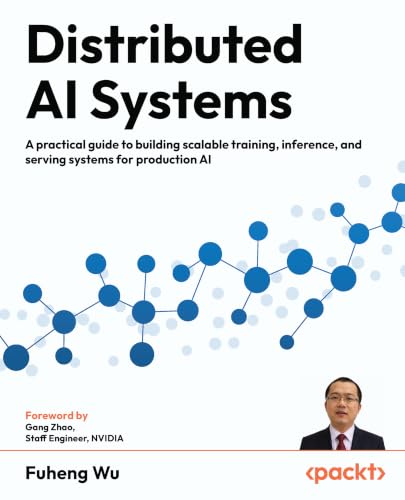
Distributed AI Systems: A practical guide to building scalable training, inference, and serving systems for production AI
As an affiliate, we earn on qualifying purchases.
As an affiliate, we earn on qualifying purchases.
Future Developments in AI Training and Interaction
Developers are exploring methods to enable models to learn continuously or adapt based on user feedback without risking safety or bias issues. Further research will clarify whether models can safely incorporate ongoing learning, potentially transforming how AI systems evolve post-deployment. Meanwhile, understanding the current fixed nature of models remains key for responsible AI use and development.
AI training data annotation software
As an affiliate, we earn on qualifying purchases.
As an affiliate, we earn on qualifying purchases.
Key Questions
Do AI models learn from user conversations?
No, once deployed, AI models do not learn or remember individual interactions. Their responses are generated based on fixed weights established during training.
What is the main purpose of post-training?
Post-training shapes the model’s behavior, ensuring it responds helpfully, safely, and according to specified principles, transforming raw capability into a usable assistant.
Can AI models be updated after deployment?
Yes, models can be retrained or fine-tuned with new data, but this is a separate process from real-time learning during conversations.
Why do models not improve from individual interactions?
Because their weights are frozen after deployment, responses are based solely on prior training, not ongoing learning.
Source: ThorstenMeyerAI.com