
📊 Full opportunity report: What Makes Mixture-of-Experts Essential For Frontier AI Growth on ThorstenMeyerAI.com — validation score, market gap, and execution plan.
TL;DR
Mixture-of-Experts (MoE) models are key to advancing large-scale AI by decoupling total parameters from per-token compute. This allows trillion-parameter models to run efficiently, supporting frontier AI growth.
Recent industry analysis confirms that Mixture-of-Experts (MoE) models are now the primary approach enabling the development of trillion-parameter AI models at feasible costs. This shift is crucial for the future of frontier AI growth, as it allows models to expand their total knowledge without proportional increases in per-token compute and memory costs.
Traditional dense transformer models use all their parameters for every token processed, resulting in costs that scale directly with total parameter count. As models grow beyond a few hundred billion parameters, this approach becomes economically unsustainable. MoE models address this issue by dividing the model into many smaller sub-networks called experts, with only a subset activated per token. This design separates memory costs—which depend on the total number of experts—from compute costs, which depend on the number of experts activated for each token.
For example, a model like Kimi K3, with 2.8 trillion total parameters, activates only about 104 billion parameters per token, significantly reducing the per-token compute while maintaining extensive knowledge capacity. This enables models to scale in size without the exponential cost increase typical of dense models, making trillion-parameter models feasible for research and deployment.
Industry experts emphasize that the core advantage of MoE is its ability to break the traditional lockstep between model size and operational costs. The router within the MoE architecture learns during training which experts to activate for different patterns, resulting in emergent specialization that enhances efficiency and flexibility.
Every serious open model this year quotes two parameter counts instead of one — a huge total and a much smaller active. That split is the single highest-leverage concept for reasoning about how these models run, what they cost, and why they behave as they do.
Instead of one monolith where everything activates for every token, an MoE splits its capacity into many parallel experts. For each token, a small fast router selects only a handful to run. The rest stay dormant.
A dense model welds capability and running-cost together — every added parameter is paid for on every token, forever. MoE breaks the lockstep.
- All 70B run to answer “capital of France?”
- Capability and cost rise in lockstep
- Past a few hundred billion, the per-token bill becomes absurd
- Breadth of a giant model at the per-token compute of a small one
- Grow capability by adding experts, not per-token cost
- The only way trillion-parameter open models are serveable at all
This is the source of the most common expensive mistake in local inference. The two counts are paid to two different pieces of hardware.
The same model, seen through the two-number lens: what fits, and how fast.
Read those two numbers as two questions and you can predict a model before downloading it.
Implications of MoE for Large-Scale AI Development
The adoption of Mixture-of-Experts architectures is transforming the landscape of AI research and deployment. By enabling trillion-parameter models to operate at manageable costs, MoE models support the development of more capable, knowledge-rich AI systems. This is essential for advancing frontier AI applications, such as more sophisticated language understanding, reasoning, and problem-solving capabilities, which require vast model capacities.
Furthermore, separating memory and compute costs allows researchers and organizations to optimize hardware resources more effectively, reducing operational expenses and expanding access to large-scale models. This shift could accelerate innovation and democratize advanced AI technologies, making them more accessible beyond large tech giants.

AI Systems Performance Engineering: Optimizing Model Training and Inference Workloads with GPUs, CUDA, and PyTorch
As an affiliate, we earn on qualifying purchases.
As an affiliate, we earn on qualifying purchases.
Evolution of Large-Scale Model Architectures in 2026
Prior to 2026, dense transformer models faced a fundamental scalability barrier: increasing total parameters directly increased both memory and compute costs, making trillion-parameter models prohibitively expensive. The industry’s response was to develop Mixture-of-Experts architectures, which allow models to scale more efficiently by activating only parts of the network per token.
Leading AI labs and companies have adopted MoE designs to push beyond previous size limits. For instance, models like Kimi K3 and DeepSeek leverage MoE to maintain manageable operational costs while expanding their knowledge base. This approach has become the standard for frontier AI research, enabling models that are not only larger but also faster and more cost-effective to run.
"MoE models break the traditional cost barrier, enabling trillion-parameter models to be feasible by separating total parameters from active compute."
— Thorsten Meyer
Large-Scale AI Engineering: Design, Train, and Optimize Foundation Models on NVIDIA GPU Clusters
As an affiliate, we earn on qualifying purchases.
As an affiliate, we earn on qualifying purchases.
Unresolved Challenges and Limitations of MoE Models
While MoE models offer significant advantages, several challenges remain. These include issues related to expert routing efficiency, training stability, and emergent specialization, which can complicate model optimization. Additionally, the complexity of managing large numbers of experts raises questions about scalability in deployment and robustness.
It is also still unclear how well MoE models will perform across diverse tasks and whether their emergent behaviors will introduce new biases or unintended consequences. Researchers are actively investigating these issues, but definitive solutions are not yet established.
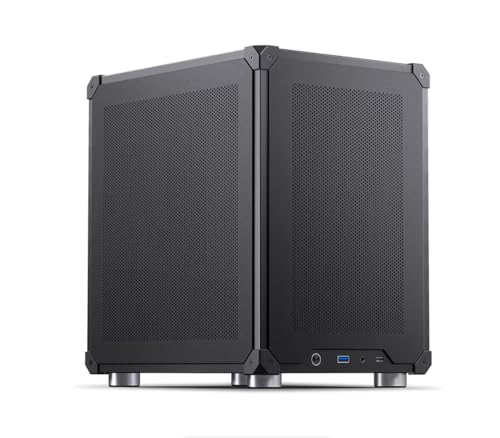
Compact Local AI Server, AI Mini PC,Serve Local LLM Models Right Out of Box, 30+ Tokens/Second, Pre-Installed Ubuntu Linux, Qwen3, LLama3, RAG, OCR, vLLM, TensorRT LLM, NVIDIA RTX 5060 Ti (16GB)
- Easy Setup in 3 Steps: Power, connect, scan QR code
- Pre-Installed Local LLM Models: Qwen3, LLama3, embeddings, rerankers
- Supports Multiple AI Engines: vLLM, TensorRT LLM, RAG framework
As an affiliate, we earn on qualifying purchases.
As an affiliate, we earn on qualifying purchases.
Next Steps for MoE-Driven AI Research and Deployment
Research efforts will focus on addressing training stability and improving routing algorithms to optimize efficiency. Industry players are likely to develop more sophisticated tools for managing large MoE models, including better hardware integration and deployment strategies.
Expect ongoing experimentation with scaling MoE architectures to even larger sizes, alongside efforts to understand and mitigate potential biases. Regulatory and safety considerations will also become more prominent as these models are integrated into real-world applications.

Hands-On LLM Serving and Optimization: Hosting LLMs at Scale
As an affiliate, we earn on qualifying purchases.
As an affiliate, we earn on qualifying purchases.
Key Questions
How does Mixture-of-Experts differ from traditional dense models?
MoE models split their capacity into many smaller experts, activating only a subset per token, which reduces per-token compute costs while maintaining large knowledge bases. Dense models use all parameters for every token, leading to higher costs as they grow.
Why is separating memory and compute costs important?
It allows models to scale in size without proportional increases in operational expenses, making trillion-parameter models feasible and more efficient for deployment.
What are the main challenges facing MoE models today?
Key issues include training stability, routing efficiency, managing large expert sets, and ensuring robustness across diverse tasks. Researchers are actively working to address these challenges.
Will MoE models replace dense models entirely?
Not necessarily; MoE architectures are complementary solutions that enable scaling, but dense models still have applications. The choice depends on specific use cases and cost considerations.
Source: ThorstenMeyerAI.com