
📊 Full opportunity report: SAP’s Strategy For AI Leadership: Own Your Record System, Don’t Rent A Brain on ThorstenMeyerAI.com — validation score, market gap, and execution plan.
TL;DR
SAP has introduced Joule, its new AI layer integrated across major solutions, emphasizing owning enterprise data rather than relying solely on external models. This strategic shift aims to position SAP as the dominant enterprise AI platform.
SAP has launched Joule, an integrated AI layer designed to operate across its core enterprise solutions, emphasizing data ownership over model development. This move aims to solidify SAP’s leadership in enterprise AI by controlling the foundational data substrate that underpins AI applications, rather than competing solely on model sophistication.
As of mid-2026, SAP reports Joule is active in more than 35 solutions, including S/4HANA Cloud, SuccessFactors, Ariba, and Datasphere. The company has also committed a €100 million partner fund to enable system integrators to develop custom agents using Joule Studio, a low-code platform with a VS Code extension and DevOps tools. SAP cites specific customer outcomes, such as a global retailer reducing HR process cycle times by 40–60% and an Argentine airport operator cutting direct costs by 16% and administrative effort by 90%, demonstrating operational benefits of Joule’s AI agents.
SAP’s architecture relies on a Knowledge Graph that reads structured business metadata directly from its Business Technology Platform, ensuring AI understands context-specific workflows and legal implications. This approach differentiates SAP from frontier labs, which often rely on open internet models, by focusing on permissioned, structured enterprise data. The company’s strategy involves consuming third-party foundation models rather than developing proprietary ones, enabling flexible orchestration across various AI models and providers.
Adopting Joule also encourages customers to simplify their data structures, reducing custom code and accelerating migration to SAP’s cloud solutions. This alignment of platform migration and AI deployment creates a cohesive ecosystem designed to reinforce SAP’s market position.
Own the system of record.
Rent nobody’s brain.
SAP’s AI bet is the incumbent’s inversion of the frontier race: don’t build the smartest model — own the data smart models are useless without, and meter access through Joule, an orchestration layer indifferent to which model wins.
The stack — where SAP chose to stand
You can switch AI vendors in an afternoon. You cannot switch your general ledger.
Honest bull / bear
Bull
- Best data-layer position of any incumbent — the one place hyperscalers can’t reach
- Knowledge Graph is context no model scale substitutes for
- Model-agnostic: owns the layer above commoditizing models
- Named, operational customer outcomes (40–60% HR cycle time, 90% admin cut)
Bear
- Consumption pricing is hard for CFOs to forecast — adoption stalls
- “Activated” ≠ “adopted”: the €100M fund admits demand needs subsidizing
- Depends on frontier models it doesn’t control
- Innovation tax: everything must work across a regulated installed base
Design Multi-Agent AI Systems Using MCP and A2A: Engineer your own Python-based agentic AI framework with tool use, memory, and multi-agent workflows
As an affiliate, we earn on qualifying purchases.
As an affiliate, we earn on qualifying purchases.
Why SAP’s Data-Centric Approach Matters for Enterprise AI
SAP’s strategy to own and leverage structured enterprise data positions it uniquely in the AI landscape. Unlike frontier labs focusing on model innovation, SAP’s emphasis on the data substrate aims to provide more trustworthy, compliant, and context-aware AI solutions for mission-critical business processes. This approach could redefine enterprise AI adoption, especially in heavily regulated sectors where data governance and reliability are paramount.
However, this strategy also introduces risks, such as reliance on third-party models and variable AI costs. The success of Joule depends on customer demand, adoption rates, and the company’s ability to maintain control over AI integrations within complex, legacy systems.
The Low-Code AI Maturity Model: Leading Responsible AI Transformation with Microsoft Power Platform
As an affiliate, we earn on qualifying purchases.
As an affiliate, we earn on qualifying purchases.
SAP’s Enterprise AI Evolution and Strategic Positioning
Throughout 2026, SAP has shifted its AI focus from developing large models to creating an integrated platform that leverages existing enterprise data. The company’s acquisition of Prior Labs and investments in the Knowledge Graph reflect its commitment to building a robust data foundation. Historically, SAP’s dominance in enterprise transactions—purchase orders, invoices, payrolls—has given it an unmatched data advantage, which it now aims to capitalize on by embedding AI deeply into its systems.
This strategy contrasts with many frontier labs and hyperscalers that prioritize model scale and open internet data. SAP’s approach leverages its existing installed base of mission-critical, heavily customized deployments, emphasizing trustworthiness, compliance, and operational efficiency as core values.
“Our focus is on owning the data that models need, not just building the smartest model. That’s where the real value lies in enterprise AI.”
— Thorsten Meyer, SAP AI strategist

Fundamentals of Metadata Management: Uncover the Meta Grid and Unlock IT, Data, Information, and Knowledge Management
As an affiliate, we earn on qualifying purchases.
As an affiliate, we earn on qualifying purchases.
Uncertainties Around Adoption and Model Dependence
It remains unclear how quickly SAP’s customers will fully adopt Joule at scale, given the complexity of migrating legacy systems and the variable costs associated with AI consumption. The company’s reliance on third-party models introduces potential vulnerabilities if model quality or access shifts unexpectedly. Moreover, the long-term competitiveness of SAP’s data-centric approach depends on sustained demand and effective ecosystem development, which are still unfolding.
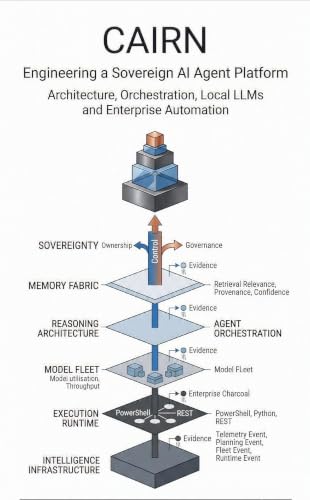
Engineering a Sovereign AI Agent Platform: Architecture • Orchestration • Local LLMs • Enterprise Automation
As an affiliate, we earn on qualifying purchases.
As an affiliate, we earn on qualifying purchases.
Next Steps for SAP’s Enterprise AI Strategy
SAP plans to expand Joule’s capabilities, aiming for 50 assistants and 200 agents by Q3 2026. The company will continue developing its partner ecosystem with targeted funding and tools for custom AI agent creation. Monitoring customer adoption, operational ROI, and the evolution of third-party models will be key indicators of the strategy’s success. Additionally, SAP will likely address cost management and integration challenges as it scales AI deployment across its installed base.
Key Questions
How does SAP’s AI approach differ from frontier labs?
SAP emphasizes owning and leveraging structured enterprise data via its Knowledge Graph, focusing on data control and context-aware AI, rather than competing solely on model scale or open internet data.
What are the main risks for SAP’s Joule platform?
Risks include variable AI costs tied to consumption, dependence on third-party models, and slow customer adoption due to complexity and legacy system constraints.
Why is owning the data substrate important for SAP’s AI leadership?
Owning the data layer ensures more trustworthy, compliant, and contextually relevant AI, especially critical in regulated industries, giving SAP a competitive advantage over model-centric approaches.
What is SAP’s long-term goal with Joule?
To embed AI deeply into enterprise workflows, making agents as integral as humans in managing and automating complex business processes, while maintaining control over data and models.
Source: ThorstenMeyerAI.com