
📊 Full opportunity report: Brazil: Pay the Family, Mind the Child on ThorstenMeyerAI.com — validation score, market gap, and execution plan.
TL;DR
Brazil’s government maintains the Bolsa Família program, providing conditional cash transfers to nearly 46 million people. The program aims to reduce poverty and break intergenerational cycles by incentivizing child education and health. Its continuation highlights ongoing efforts to address inequality in Brazil.
Brazil’s government has reaffirmed its commitment to the Bolsa Família program, continuing the targeted, conditional cash transfer scheme that supports roughly 46 million people. The program links cash payments to families with children, contingent on school attendance and health checkups, aiming to reduce poverty and foster long-term human capital development.
The Bolsa Família program, established in 2003, consolidates earlier social policies into a comprehensive scheme that provides monthly cash transfers to low-income families. The program conditions payments on children’s school enrollment, attendance, and health visits, effectively combining immediate poverty relief with investments in future human capital.
Brazil’s Ministry of Social Development confirmed that the program continues to reach approximately 25% of the population, with payments increasingly delivered via Pix, the central bank’s instant-payment system, which 93% of adults now use. Experts credit Bolsa Família with contributing to reductions in inequality over the past two decades, and the program remains a model for conditional cash transfers globally.
Pay the Family, Mind the Child
The conditional-cash-transfer pioneer: cash in exchange for human-capital investment. Relieve poverty now, break the cycle for the next generation — the model Brazil gave the world.
- a monthly cash transfer
- targeted via the CadÚnico registry
- delivered via Pix (instant, free)
- children enrolled & attending school
- vaccinations kept current
- regular health checkups
Independent commentary, produced with AI assistance under human editorial oversight. The views are the author’s own and may change. This is analysis, not policy, economic, investment, or legal advice. Descriptions of Bolsa Família and its conditionalities, the Cadastro Único, the BPC benefit, and Pix reflect publicly reported information as of mid-2026 and may change; figures are indicative and several are official or institutional estimates. This phase maps differing approaches and endorses none; characterizations of contested arrangements present competing views, not a verdict. Country, program, and company names are referenced for analysis and imply no affiliation.
Impact of Bolsa Família on Poverty and Inequality
The continuation of Bolsa Família underscores Brazil’s ongoing efforts to combat poverty and inequality. The program’s success in reducing extreme poverty and incentivizing investments in children’s education and health demonstrates its importance as a social policy tool. However, as inequality persists, the program’s limitations highlight the need for broader structural reforms to address deeper economic disparities.
child health and education cash transfer programs
As an affiliate, we earn on qualifying purchases.
As an affiliate, we earn on qualifying purchases.
Brazil pioneered conditional cash transfer programs with Bolsa Família, which integrated targeted cash payments with conditionalities since 2003. Inspired by Latin American models and refined over two decades, the program has become a cornerstone of Brazil’s social safety net, reaching millions and influencing policies worldwide. Despite its success, Brazil remains highly unequal, and the program’s modest scale limits its ability to fully transform the social landscape.
“We are committed to maintaining and improving Bolsa Família, ensuring it continues to serve as a vital tool in reducing poverty and promoting human capital development.”
— Brazil’s Minister of Social Development

Família Noturna (Portuguese Edition)
As an affiliate, we earn on qualifying purchases.
As an affiliate, we earn on qualifying purchases.
Unresolved Challenges and Limitations of the Program
It is not yet clear whether Brazil’s government will expand Bolsa Família or introduce new reforms to address structural inequality more broadly. Questions remain about the program’s capacity to reach the most marginalized families and whether conditionalities may inadvertently exclude the poorest.
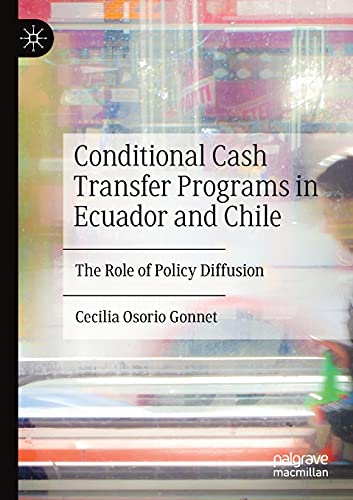
Conditional Cash Transfer Programs in Ecuador and Chile: The Role of Policy Diffusion
As an affiliate, we earn on qualifying purchases.
As an affiliate, we earn on qualifying purchases.
Future Policy Directions and Potential Reforms
Brazil’s government is expected to review and possibly adjust Bolsa Família’s conditionalities and funding levels in upcoming budget cycles. Discussions around integrating broader social and economic reforms to complement the program are ongoing, with potential for expansion or new initiatives to address inequality more comprehensively.

THE SOCIAL WELFARE POLICY IN BRAZIL: yesterday and today: Progress, stagnation and setbacks
As an affiliate, we earn on qualifying purchases.
As an affiliate, we earn on qualifying purchases.
Key Questions
Will Bolsa Família be expanded or reformed in the near future?
Officials have indicated ongoing discussions about reforming and possibly expanding the program, but specific plans have not been finalized.
How does Bolsa Família impact poverty in Brazil?
The program has been credited with reducing extreme poverty and incentivizing investments in children’s education and health, contributing to declines in inequality.
Are there concerns about the program excluding the poorest families?
Yes, some experts warn that conditionalities and administrative hurdles may sometimes prevent the most vulnerable families from participating fully.
What are the main limitations of Bolsa Família?
Its modest scale and targeted approach mean it does not fully address deeper structural inequalities or economic disparities, which require broader reforms.
Source: ThorstenMeyerAI.com