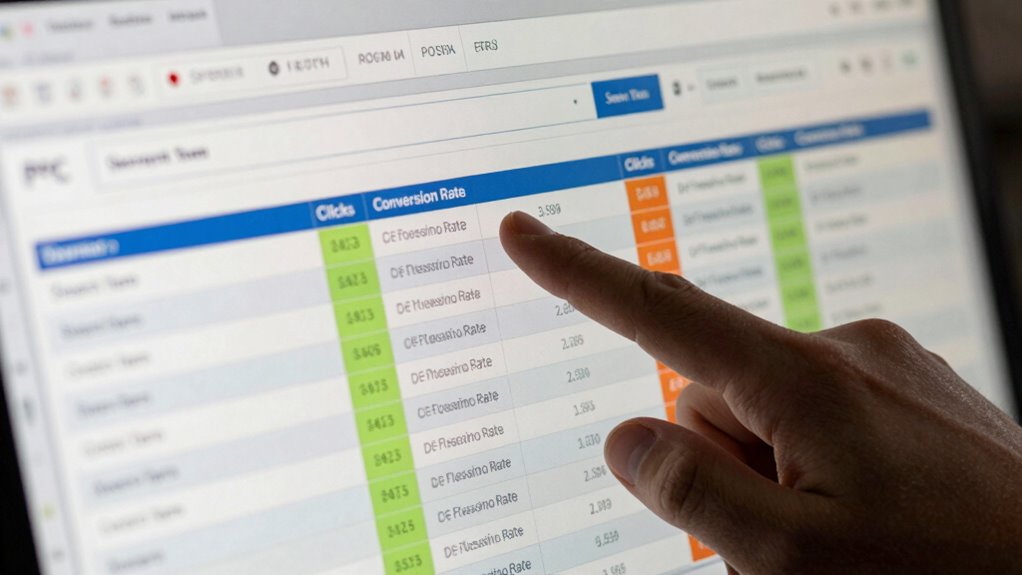

To read a PPC search term report properly, start by examining the actual search queries that triggered your ads. Look for relevance and note which terms match your keywords and audience intent. Analyze performance metrics like click-through rate, conversions, and cost to identify high and low performers. Use this data to add negative keywords or optimize existing ones. With ongoing analysis, you’ll discover valuable patterns that can boost your campaign’s effectiveness—keep exploring for even more insights.
Key Takeaways
- Review search terms to identify relevant keywords and uncover new opportunities for campaign expansion.
- Analyze performance metrics to determine high-converting versus underperforming search queries.
- Spot irrelevant or low-value queries to add as negative keywords and improve targeting.
- Track emerging search trends to refine keyword segmentation and optimize ad spend.
- Regularly monitor and update search term reports for ongoing campaign efficiency and ROI improvement.

Understanding how to read a PPC search term report properly is critical for optimizing your advertising campaigns. This report reveals the actual search queries that triggered your ads, giving you insight into how users are finding your products or services. When reviewing these search terms, you want to focus on keyword segmentation, which involves categorizing search terms based on their relevance and performance. By doing this, you can identify patterns that highlight which keywords are converting well and which are wasting your budget. Segmenting keywords helps you fine-tune your campaigns by emphasizing high-performing search terms and pausing or refining the underperformers.
Master your PPC campaigns by analyzing search queries, segmenting keywords, and optimizing for high-performing terms.
A key aspect of analyzing search term reports is developing a strong negative keyword strategy. Negative keywords prevent your ads from showing for irrelevant or low-value queries, saving you money and improving overall campaign efficiency. As you review search terms, look for those that are irrelevant or don’t align with your goals. If you notice a recurring search query that isn’t relevant but triggers your ads, add it to your negative keyword list. This process requires careful attention because overusing negative keywords can exclude potentially profitable traffic, but underusing them can lead to wasted spend. Balancing this strategy is essential, and your search term report is your primary tool for discovering which terms to block.
Pay close attention to the search terms that perform well—these are your golden nuggets. They tell you exactly what users are searching for, and you can incorporate these into your keyword list for future campaigns. Conversely, look at the poorly performing or irrelevant search queries. These often reveal gaps in your keyword segmentation or opportunities to improve your negative keyword strategy. For example, if you sell premium watches and see many searches for “cheap watches,” you might add “cheap” to your negative keywords to avoid wasting ad spend on low-converting traffic. Additionally, understanding how to utilize landscaping and other backyard transformation techniques can help you target more relevant audiences interested in outdoor enhancements. Keeping an eye on emerging industry trends can also help you stay ahead in refining your keyword list and adjusting your campaigns effectively. Recognizing shifts in search behavior allows you to adapt quickly and capitalize on new opportunities. Incorporating market research into your review process can further refine your targeting and help you better understand your audience’s evolving needs. Staying informed about industry trends, such as the growth of plant-based products, can also guide your keyword refinement process.
Regularly reviewing your search term report is essential because it allows you to adapt quickly to changing search behaviors and market trends. It empowers you to refine your keyword segmentation, eliminate waste, and focus your budget on high-impact keywords. Properly interpreting this report ensures your campaigns are more targeted and cost-efficient, ultimately leading to better ROI. By honing your negative keyword strategy and continuously analyzing search terms, you gain the competitive edge needed to maximize your PPC campaign’s success.
PPC search term report analysis tools
As an affiliate, we earn on qualifying purchases.
As an affiliate, we earn on qualifying purchases.
Frequently Asked Questions
How Often Should I Review My PPC Search Term Report?
You should review your PPC search term report weekly to stay on top of keyword segmentation and spot new opportunities or issues. Regular checks help you refine report customization, ensuring you’re targeting the right audience effectively. Frequent reviews let you quickly identify irrelevant search terms, optimize bids, and adjust your campaigns for better ROI. Consistency is key in maintaining a successful PPC strategy, so make it a routine.
Can I Automate the Analysis of My Search Term Data?
Yes, you can automate the analysis of your search term data using automated tools. These tools help you quickly identify trends and patterns, saving you time. Plus, data visualization features make it easier to interpret complex data at a glance. By setting up automated reports, you stay informed about your PPC campaign performance without manual effort, allowing you to focus on optimizing your ads effectively.
What Metrics Are Most Important in a Search Term Report?
You should focus on metrics like click-through rate (CTR), cost per click (CPC), and conversions for effective analysis. Keyword segmentation helps you see which keywords perform best, while conversion analysis shows how well your keywords turn clicks into actions. By examining these metrics, you can identify high-performing keywords, optimize your bids, and allocate your budget more efficiently to improve overall campaign success.
How Do I Identify Negative Keywords From the Report?
Imagine your search term report as a wild jungle, and negative keyword optimization as a trusty machete. You scan the report for irrelevant or costly terms, then filter them out with search term filtering. Spot search terms that waste your budget or don’t match your goals, and add them as negative keywords. This clears the path, ensuring your ads only chase the right leads, saving money and boosting performance.
What Are Common Mistakes to Avoid When Analyzing Search Terms?
When analyzing search terms, avoid common mistakes like ignoring irrelevant keyword strategies or failing to spot irrelevant ad copy. Don’t assume all high-volume search terms are valuable; some may bring irrelevant traffic. Also, overlook negative keywords or waste budget on irrelevant searches. Regularly review the report to identify patterns, refine your targeting, and eliminate irrelevant keywords. This helps improve ad relevance, reduce waste, and boost campaign performance effectively.

Stop Paying for the Wrong Keywords: A Google Ads Audit for Campaigns That Aren't Working
As an affiliate, we earn on qualifying purchases.
As an affiliate, we earn on qualifying purchases.
Conclusion
By understanding how to interpret your PPC search term report, you reveal valuable insights that can subtly elevate your campaigns. With a keen eye, you’ll uncover hidden opportunities and gently steer your strategy toward better results. Remember, the true power lies in your hands—craft your approach with confidence and a touch of finesse. Mastering this report might just be the gentle nudge your ads need to perform at their very best.

KDP ADS & CONVERSION MASTERCLASS 2026: The Ultimate Guide to Amazon Advertising, High-Converting A+ Content, and ASIN Targeting : A Step-by-Step Blueprint to Scale Your Sales and Lower ACOS on
As an affiliate, we earn on qualifying purchases.
As an affiliate, we earn on qualifying purchases.

MAKE EACH CLICK COUNT GOOGLE ADS 2025 QUICK WINS EDITION: 10 Rapid-Fire Fixes for Google Ads Success in 2025
As an affiliate, we earn on qualifying purchases.
As an affiliate, we earn on qualifying purchases.